Find Apartments in Japan: Complete SUUMO, Homes, Apaman Shop Guide
How to find apartments in Japan using SUUMO, Homes, and Apaman Shop. Decode Japanese rental listings, negotiate with agencies, student tips.
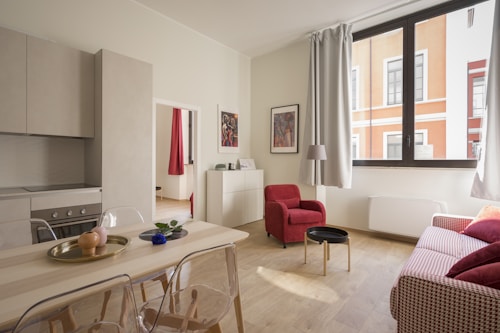
Navigating the Japanese Rental Market: Top Websites and Essential Tips for International Students
Starting your journey as an international student in Japan is an exhilarating experience, but before you can settle into your new life of convenience stores, neon lights, and world-class education, you face one significant hurdle: finding a place to live. Unlike many Western countries where you might simply browse a social media group or a single listing site, Japan’s real estate market is a highly structured, agency-driven ecosystem with its own unique language and set of rules.
For many students, the sheer volume of information—much of it in Japanese—can be overwhelming. Fortunately, the digital landscape in Japan offers several powerful tools to help you narrow down your search. In this guide, we will explore the top real estate websites, decode the complex terminology you’ll encounter, and provide practical advice for securing your first "sweet home" in the Land of the Rising Sun.
1. The "Big Three" Real Estate Portals in Japan
In Japan, most people use massive "aggregator" sites. These platforms do not own the properties themselves; instead, they act as a central hub where thousands of real estate agencies list their available units. If you see a room you like on one of these sites, you contact the agency managing that listing.
SUUMO (By Recruit)
SUUMO is arguably the most famous and widely used real estate website in Japan. Its mascot—a fluffy green ball—is ubiquitous in Japanese advertising.
* Best For: Variety and volume. SUUMO lists everything from tiny budget studios to luxury high-rises.
* The Experience: The search interface is incredibly detailed. You can filter by walking distance to the station, the age of the building, the type of flooring (tatami vs. wood), and even whether the unit has a "designer" feel.
* Pro Tip: While the website is primarily in Japanese, the SUUMO mobile app is very intuitive. Using a browser with auto-translate features can help you navigate the desktop version effectively.
Lifull HOME'S
Lifull HOME'S is SUUMO’s biggest competitor and is often praised for its "transparency" features.
* Best For: Detailed property data and neighborhood insights.
* Unique Features: They provide a "Flood Risk Map" and "Neighborhood Crime Data" for many listings, which is vital for students unfamiliar with the safety of specific districts. Their filters are slightly more user-friendly for niche requirements, such as "foreigners welcome" (Gaikokujin-sodan).
* Pro Tip: Look for the "Notes" section in HOME'S listings; they often provide more context about the neighborhood’s vibe than other sites.
Apaman Shop
Unlike the portals above, Apaman Shop is one of the largest physical real estate franchises in Japan. Their website serves as a gateway to their massive network of physical storefronts.
* Best For: Students who prefer a mix of online searching and in-person support.
* The Experience: Since they are a franchise, they often have exclusive listings that might not appear on the larger aggregators immediately. They also frequently run campaigns specifically targeting students during the peak moving seasons (January to March).
Comparison of Top General Real Estate Sites
| Website | Best For | Inventory Size | Mobile App | Foreigner-Specific Filters |
|---|---|---|---|---|
| SUUMO | Absolute variety | Massive | Excellent | Available, but limited |
| Lifull HOME'S | Detailed info/Safety | Large | Good | Robust search options |
| Apaman Shop | Agency support | Large | Average | High (Student focus) |
| At Home | Local/Niche finds | Medium | Good | Basic |
2. Decoding the Glossary: Essential Real Estate Terms
When you first open a Japanese real estate site, you will be met with a "word salad" of abbreviations and kanji. Understanding these is the difference between finding a cozy home and accidentally renting a room with no shower.
Property Types: Manshon vs. Apaato
In English, "Mansion" implies a luxury estate. In Japan, the distinction is based on construction material:
* Manshon (マンション): Usually three or more stories, built with reinforced concrete (RC) or steel-framed reinforced concrete (SRC). They offer better soundproofing and earthquake resistance but are more expensive.
* Apaato (アパート): Usually two stories, built with wood or light-gauge steel. They are much cheaper but have thinner walls and less insulation.
Room Layout Abbreviations
Japanese layouts use a combination of numbers and letters:
* R (Room): A single-room studio where the kitchen is inside the living space.
* K (Kitchen): The kitchen is separated from the main room by a door or wall.
* D (Dining): A larger kitchen area where you can fit a small dining table.
* L (Living): A dedicated living room area.
| Code | Description | Best For |
|---|---|---|
| 1R | One Room (Kitchen in room) | Minimalists, Budget seekers |
| 1K | One Room + Separate Kitchen | Most International Students |
| 1DK | One Room + Dining/Kitchen | Students who like to cook |
| 1LDK | One Room + Living/Dining/Kitchen | Couples or high-budget students |
The "Initial Costs" Vocabulary
Japan is famous (or infamous) for its high move-in costs. You will likely see these terms on every listing:
* Shikikin (敷金): Security deposit. Usually 1–2 months' rent. It is used for repairs when you move out, and the remainder is theoretically returned.
* Reikin (礼金): "Key Money." A non-refundable "gift" to the landlord. This is a traditional custom, though many modern apartments now offer "Zero Reikin."
* Kanri-hi / Kyoitsu-hi (管理費/共益費): Monthly management or common area fee. This covers hallway lighting and trash collection.
* Toshikin (更新料): Renewal fee. A fee paid (usually one month's rent) when you renew your 2-year lease.
* Chukai Tesuryo (仲介手数料): Agency fee. The commission paid to the real estate agent, usually 0.5 to 1 month's rent.
3. Specialized Platforms for International Students
If the "Big Three" feel too daunting because of the language barrier or the strict guarantor requirements, several services cater specifically to the international community.
GaijinPot Housing
GaijinPot is a staple for foreigners in Japan. Their housing service lists apartments where the landlords are specifically looking for international tenants.
* Advantage: You can search entirely in English, and many listings do not require a Japanese guarantor (Hoshonin), which is often the biggest hurdle for students.
Best-Estate.jp
This is a multilingual site specifically designed to bridge the gap between foreign residents and Japanese landlords.
* Advantage: They offer support in English, Chinese, Korean, and Vietnamese. They handle the communication with the landlord, ensuring you aren't rejected simply because of a language barrier.
Village House & LeoPalace21
These are "branded" apartment chains.
* Village House: Offers renovated older apartments with zero deposit, zero key money, and no renewal fees. It is extremely popular for students on a tight budget.
* LeoPalace21: Specializes in small, functional apartments that often come pre-furnished. They offer short-term "monthly" contracts, which are perfect for students on one-semester exchange programs.
4. The Step-by-Step Search Process
Finding an apartment in Japan is a race. Good rooms, especially those near major universities in Tokyo or Osaka, disappear within days. Here is how to navigate the process:
Step 1: Define Your "Must-Haves"
Before searching, decide on your "Walking Distance." In Japan, "10 minutes from the station" is considered standard. Anything over 15 minutes usually results in a significant rent drop. Also, consider the "Floor Level." First-floor units are cheaper but more prone to humidity and pests.
Step 2: Use the Filters
On sites like SUUMO or HOME'S, look for these specific filters to make your life easier:
* Gaikokujin Konsodan (外国人相談): Foreigners welcome.
* Internet Muryo (インターネット無料): Free internet (saves you ~¥4,000/month).
* Auto-lock (オートロック): Secure entrance (recommended for safety).
Step 3: The Inquiry (Toiawase)
Once you find a place, click the "Inquiry" button. If you are using a Japanese site, you might want to have a Japanese-speaking friend help you, or use a simple template:
"I am an international student from [Country]. I am interested in this room. Is it available for a foreign student?"
Step 4: The Screening (Shinsa)
Once you apply, you must pass a "screening." The landlord and the "Guarantor Company" (Hosho-gaisha) will check your income (or your parents' income) and your enrollment status. As a student, you will need your Certificate of Eligibility (COE) or your Student ID card.
5. Practical Tips for Success
To wrap up your search, keep these professional tips in mind to ensure you don't overspend or get caught in a bad contract.
- Beware of the "Hidden" Costs: Always ask about the "Cleaning Fee" (Mizumawari) and "Fire Insurance" (Kasai Hoken). These are mandatory and can add ¥30,000 to ¥50,000 to your initial bill.
- The "South-Facing" Rule: In Japan, everyone wants a south-facing (Minami-muki) window for natural sunlight and to prevent mold. If you are on a budget, look for north-facing rooms; they are often significantly cheaper.
- Check the "Washlet": While Japan is the land of high-tech toilets, many cheaper "Apaato" still have basic toilets. If a bidet is important to you, check the "Setsubi" (Facilities) list for "Onsu-senjo-benza."
- Visit at Night: If possible, visit the neighborhood of your potential apartment at night. A street that looks quiet during the day might be under a flight path or near a noisy bar district that comes alive after dark.
- Use Google Street View: Before booking a physical viewing, use Street View to look at the trash collection area of the building. If it’s messy, it’s a sign that the building management (and the neighbors) might be negligent.
Conclusion
Finding an apartment in Japan is your first major "test" as an international student, but it is also a rewarding one. By using powerful tools like SUUMO and Lifull HOME'S, and understanding the vocabulary of the market, you can find a space that is not just a place to sleep, but a sanctuary for your studies.
Don't be discouraged if you face a few rejections; the market is fast-moving, and new listings appear every hour. Stay patient, keep your documents ready, and soon you'll be turning the key in the lock of your very own Japanese apartment. Ganbatte (Good luck)!
Related study abroad guides
Was this page helpful?
Your feedback helps us improve our guides
Related schools



Related guides
 Budget
Save with Japanese Budgeting Apps: Money Forward ME vs Zaim for Students
Housing
Find Apartments in Japan: Complete SUUMO, Homes, Apaman Shop Guide
Housing
Student Housing in Japan: Dorms vs Share Houses vs Apartments 2026
Budget