Furnishing Your Apartment on a Student Budget
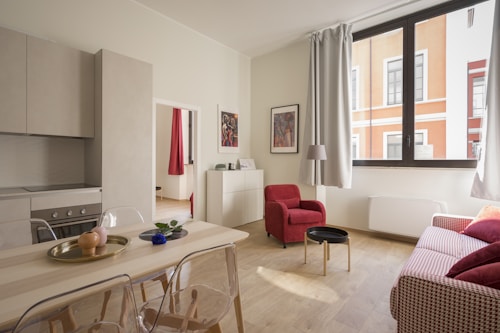
Furnishing Your Apartment on a Student Budget: The Ultimate Guide for International Students in Japan
Congratulations! You’ve navigated the complex world of Japanese real estate, signed your lease, and received the keys to your new home. But as you step inside, you might be greeted by a sight that is common in Japan but startling to many international students: a completely empty shell.
Unlike many other countries where "unfurnished" might still include a refrigerator or a stove, a standard Japanese apartment often lacks everything—including ceiling lights, curtains, and even the gas range for cooking. For a student on a tight budget, the prospect of filling this space can feel overwhelming. However, with a bit of strategy and local knowledge, you can transform your "wan-rumu" (one-room) into a cozy sanctuary without breaking the bank.
In this guide, we will walk through the best places to shop, the hidden gems of the second-hand market, and the logistical tips you need to furnish your apartment affordably and efficiently.
1. Prioritizing Your Essentials: The "First Week" Strategy
Before you rush to the nearest department store, you need a plan. Japanese apartments are notoriously small, and it is easy to clutter your space with "cheap" items that you don’t actually need. Your first priority should be the items that affect your health and basic comfort.
The Must-Haves
- Bedding: You can choose between a Western-style bed or a traditional Japanese futon. Futons are excellent for students because they can be folded and stored during the day, freeing up floor space.
- Lighting: Most Japanese apartments come with bare sockets on the ceiling. You will need to purchase "LED Ceiling Lights" for your main room.
- Curtains: Privacy is paramount in Japan’s dense urban areas. Do not forget to measure your windows before shopping, as Japanese window sizes can be unconventional.
- Appliances: Refrigerator, washing machine, and microwave. In Japan, these are rarely included in the rent.
- Cooking Stove: Check if your kitchen has a built-in burner. If there is just a metal counter, you will need to buy a gas table (ensure you check if your building uses City Gas or LP Gas).
Budget Comparison: New vs. Used
To give you an idea of the financial landscape, here is a breakdown of estimated costs for a basic setup.
| Item | Estimated Price (New) | Estimated Price (Used/Recycle) | Priority Level |
|---|---|---|---|
| Single Futon Set | ¥8,000 – ¥15,000 | Not recommended for hygiene | High |
| Refrigerator (Small) | ¥20,000 – ¥35,000 | ¥8,000 – ¥15,000 | High |
| Washing Machine | ¥25,000 – ¥45,000 | ¥10,000 – ¥20,000 | High |
| Microwave | ¥8,000 – ¥15,000 | ¥3,000 – ¥6,000 | Medium |
| Ceiling Light | ¥4,000 – ¥8,000 | ¥1,500 – ¥3,000 | High |
| Gas Table (2 burners) | ¥15,000 – ¥25,000 | ¥5,000 – ¥10,000 | Medium |
| Total Estimate | ¥80,000 – ¥143,000 | ¥27,500 – ¥54,000 | -- |
2. Where to Buy New: Nitori, Muji, and the 100-Yen Giants
When you want something brand new—especially textiles like towels, curtains, or bedding—Japan has several fantastic options that cater specifically to the "budget-conscious yet stylish" demographic.
Nitori: Japan’s IKEA
Nitori is arguably the most important store for any student moving to Japan. Their slogan, "O-Nedor-Ijou" (More than the price), perfectly describes their value proposition. Nitori offers "New Life Support" (Shin-seikatsu) bundles during the spring (February–April) which include a fridge, washer, and microwave for a discounted package price.
- Why shop here: They have a massive selection of furniture designed specifically for small Japanese dimensions. Their "N-Cool" (cooling) and "N-Warm" (heating) bedding series are essential for surviving Japan’s extreme seasons.
MUJI (Mujirushi Ryohin)
If you prefer a minimalist, "Zen" aesthetic, Muji is the place to go. While generally more expensive than Nitori, Muji offers high-quality, timeless designs.
- Pro-Tip: Check the "Muji Factory Outlets" or look for their occasional 10% off "Muji Week" sales for members (the app is free to join). Their polypropylene storage boxes are legendary for organizing small dorm rooms.
IKEA Japan
IKEA is great for desks, chairs, and shelving. However, be cautious: IKEA furniture is often designed for European-sized homes and can feel bulky in a tiny Tokyo apartment.
- Logistics: Delivery fees for IKEA in Japan can be quite high (starting at ¥3,000+), so it is often better to visit with a friend who has a car or stick to smaller items you can carry on the train.
The 100-Yen Shops (Daiso, Seria, and Can-Do)
Never underestimate the power of the 100-yen shop. For kitchen utensils, cleaning supplies, hangers, and bathroom accessories, these stores are unbeatable.
- Seria is known for more stylish, "cute" interior goods.
- Daiso is the king of variety and functionality.
- Standard Products (a spin-off of Daiso) offers slightly higher-end items (¥300–¥1,000) that look very similar to Muji but at a fraction of the cost.
3. The Magic of "Recycle Shops" and Second-Hand Hunting
In many countries, second-hand stores can be hit-or-miss. In Japan, however, "Recycle Shops" are a goldmine. Because the cost of disposing of large furniture (Sodai Gomi) is expensive in Japan, people often sell perfectly good items to these shops for very little, or even give them away.
Major Chains to Look For
- Hard Off / Off House: Hard Off focuses on electronics and tools, while Off House handles furniture, clothes, and kitchenware. These are usually very clean and offer a 3-month to 6-month warranty on appliances.
- Treasure Factory (Trefac): A bit more "trendy" than Off House, Treasure Factory often carries high-quality furniture and branded appliances. They usually offer a delivery service for a reasonable fee.
- 2nd STREET: While primarily known for clothing, larger "2nd STREET Home" locations carry a wide range of furniture and home goods.
Local Independent Recycle Shops
If you live near a major university, look for small, independent recycle shops. These shop owners are experts at catering to students. They often offer "Student Starter Sets" where you can get a fridge, washer, and microwave delivered and installed for a flat fee of around ¥25,000. This is often the most stress-free way to get your heavy appliances.
Online Marketplaces: Jimoty and Mercari
- Jimoty (ジモティー): This is the Japanese version of Craigslist. It is widely used for local classifieds. Many people post items for ¥0 (FREE) if you are willing to come and pick them up. This is the ultimate way to furnish a room for almost nothing.
- Mercari: Great for smaller electronics or decor. The price includes shipping, which is incredibly convenient.
- Facebook Sayonara Sales: Look for groups like "Tokyo Sayonara Sales" or "Osaka Buy and Sell." These are populated by expats leaving the country who need to clear out their apartments quickly. You can often find high-quality Western-style furniture here.
4. Smart Shopping Logistics and Comparisons
Buying furniture is only half the battle; getting it to your apartment is the other half. Most international students do not own a car, and Japanese taxis are too small for a refrigerator.
Transporting Your Finds
- Store Delivery: Nitori and IKEA offer delivery, but it can take 1–2 weeks during the busy season.
- Truck Rental (Kei-tora): Many home centers like Cainz or Kohnan offer a free 60-minute rental of a small "Kei" truck if you buy large items from them. You will need a valid Japanese or International Driving Permit.
- Kuroneko Yamato (Home Convenience): You can hire Yamato to move single large items (like a sofa) from one location to another. It’s professional and efficient but can be pricey.
Retailer Comparison Table
| Store | Price Range | Quality | Style | Delivery Options |
|---|---|---|---|---|
| Nitori | Low–Medium | Reliable | Functional / Modern | Excellent (In-house) |
| MUJI | Medium–High | High | Minimalist / Natural | Good (Can be pricey) |
| IKEA | Medium | Variable | Scandinavian | Expensive Delivery |
| Recycle Shops | Very Low | Checked / Used | Mixed | Local truck rental/delivery |
| Daiso | Extremely Low | Budget | Utilitarian | Carry-out only |
5. Pro-Tips for a Smooth Move-In
To wrap up your furnishing journey, here are a few expert tips that will save you time, money, and headaches:
1. Measure the "Genkan" and Elevator:
Japanese apartments are famous for narrow hallways and tiny elevators. Before buying that beautiful sofa, measure the width of your front door (genkan) and the elevator. If it doesn't fit, you may have to pay for a crane, which costs more than the sofa itself!
2. Check the "Recycle Fee":
When you buy used appliances, ask the shop if the "Recycle Fee" (re-saikuru-ryo) is included. Japan has strict laws about disposing of electronics, and you usually have to pay a fee of ¥2,000–¥5,000 when you eventually get rid of a fridge or washer.
3. Use "100-Yen" DIY Hacks:
Since you usually cannot put nails in the walls of a Japanese rental, use "S-hooks" and tension rods (tsuppari-bo) from Daiso. These allow you to hang curtains, kitchen utensils, and clothes without leaving a single mark on the walls.
4. The "Sodai Gomi" Strategy:
If you see a nice-looking chair on the street with a sticker on it, do not take it. That sticker means someone has paid the city to dispose of it. However, if you see items in a designated "free" area of your dormitory or apartment complex (common during graduation season in March), feel free to give them a new home!
5. Lighting Temperatures:
In Japan, light bulbs come in "Daylight" (blue-white), "Day White" (neutral), and "Bulb Color" (warm orange). For a cozy student room, look for "Bulb Color" (Denkyu-shoku) for your bedside lamp and "Day White" (昼白色) for your study desk.
Conclusion
Furnishing an apartment in Japan on a student budget is entirely possible with a little patience and a lot of "recycle shop" hopping. By starting with the essentials from Nitori, supplementing with 100-yen shop organizers, and hunting for big-ticket appliances on Jimoty or at local second-hand stores, you can create a functional and stylish home for a fraction of the retail cost.
Remember, your apartment is your sanctuary during your studies. It doesn’t have to be perfect on day one. Take your time, look for deals, and enjoy the process of building your "New Life" in Japan. Happy decorating!
Related Schools
 University
Tokyo University of Social Welfare: 2026 Admission & Tuition Guide
 School
Kobe Toyo Japanese Language Academy
 University
Obihiro University of Agriculture and Veterinary Medicine
 University
Osaka University of Arts 2026: Complete International Student Guide
Related Guides
 Curated List
Top 5 Tokyo Language Schools for Japanese University Prep
 Settlement
Choosing the Best Bank in Japan: Yucho vs. Megabanks
 Curated List
Top 5 Budget-Friendly Schools in Japan with Dormitories (2026)
 Career