Furnishing for Less: Using Second-hand Shops
How to find furniture and appliances at Off-House and local recycle shops.
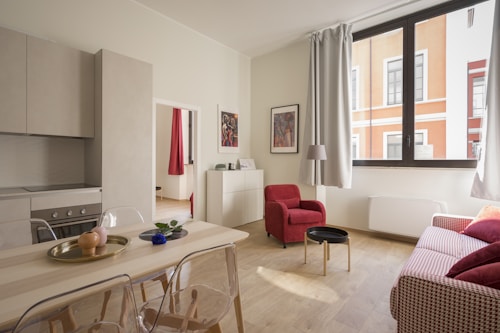
Furnishing for Less: The Ultimate Guide to Japanese Second-hand Shops
Congratulations! You’ve secured your visa, booked your flight, and found an apartment in Japan. But as you step into your new home, reality hits: many Japanese apartments for students are "skeletal." This means they often come without a refrigerator, washing machine, microwave, or even light fixtures and curtains. Buying everything brand new from high-end department stores or electronic giants like Yodobashi Camera can easily cost upwards of 150,000 to 200,000 JPY—a heavy burden for any student budget.
Fortunately, Japan has a thriving "Recycle Shop" culture. Rooted in the concept of Mottainai (the regret of wasting resources), second-hand shopping in Japan is a far cry from the dusty, disorganized thrift stores you might find elsewhere. These shops are clean, organized, and offer high-quality goods at a fraction of the original price. This guide will walk you through everything you need to know about navigating the world of Japanese second-hand shops to furnish your student life for less.
1. Understanding the Landscape: The "Off" Group and Local Gems
The world of Japanese second-hand retail is dominated by a few major players, alongside thousands of independent local shops. Knowing which shop specializes in what will save you hours of wandering.
The "Off" Chain (Hard-Off Corporation)
The most recognizable name in the industry is the "Off" group. You will see these logos everywhere, usually color-coded.
* Hard-Off (Blue Label): Despite the name, they don't sell "hard" furniture. They specialize in electronics, computers, musical instruments, and games. This is where you go for a second-hand monitor or a desk lamp.
* Off-House (Green Label): This is the holy grail for students. Off-House focuses on home goods, including furniture (beds, tables, sofas), kitchen appliances (fridges, washers, rice cookers), and clothing.
* Mode-Off (Green/Blue): Primarily focused on fashion and accessories.
* Hobby-Off (Yellow Label): Great for picking up cheap kitchenware or decorative items that were originally prizes from "crane games" or anime merchandise.
* Book-Off: While primarily for books and media, larger "Book-Off Super Bazaars" often carry everything from refrigerators to surfboards.
Treasure Factory (Trefac)
Treasure Factory is a bit more "upscale" than Off-House. Their items are meticulously cleaned and often look brand new. While prices are slightly higher than a local mom-and-pop shop, the quality is guaranteed, and their furniture selection is often more modern and stylish.
Local "Recycle Shops" (リサイクルショップ)
Don't overlook the independent shops in your neighborhood. You can find these by searching "リサイクルショップ" on Google Maps. These local shops often have lower overhead costs and might be more willing to negotiate on price if you buy multiple items. They are also your best bet for finding unique, vintage pieces that add character to your room.
| Store Name | Primary Focus | Price Range | Best For... |
|---|---|---|---|
| Off-House | Furniture & Appliances | Low - Medium | Essential student furniture and white goods. |
| Hard-Off | Electronics & Tech | Medium | Laptops, monitors, and sound systems. |
| Treasure Factory | Trendy Furniture | Medium - High | High-quality, stylish sofas and dining sets. |
| Book-Off Bazaar | General Goods | Low | Kitchenware, small electronics, and books. |
| Local Shops | Mixed | Very Low - Medium | Bargains and neighborhood-specific finds. |
2. The Student Essentials: What to Buy and How Much to Pay
When furnishing a room, it is helpful to categorize items by priority. In Japan, the "Big Three" for students are the refrigerator, the washing machine, and the microwave. Buying these used can save you roughly 60-70% compared to buying new.
Price Comparison: New vs. Second-hand
To give you an idea of the savings, here is a breakdown of typical prices for standard student-sized items (as of 2024).
| Item | New Price (Approx.) | Second-hand Price (Approx.) | Potential Savings |
|---|---|---|---|
| Refrigerator (110L-140L) | ¥35,000 - ¥50,000 | ¥12,000 - ¥18,000 | ¥23,000+ |
| Washing Machine (5kg) | ¥30,000 - ¥45,000 | ¥10,000 - ¥15,000 | ¥20,000+ |
| Microwave (Basic) | ¥10,000 - ¥15,000 | ¥3,000 - ¥6,000 | ¥7,000+ |
| Rice Cooker (3-cup) | ¥8,000 - ¥12,000 | ¥2,500 - ¥5,000 | ¥5,500+ |
| Low Table (Kotatsu style) | ¥6,000 - ¥10,000 | ¥1,500 - ¥3,000 | ¥4,500+ |
| Total Set | ¥89,000 - ¥132,000 | ¥29,000 - ¥47,000 | ¥60,000 - ¥85,000 |
Pro-Tip: The "New Life" Sets
Many recycle shops offer "Shin-seikatsu" (New Life) bundles during the months of February, March, and April. These bundles usually include a fridge, washer, and microwave for a flat, discounted fee, often including free local delivery. If you arrive in Japan during the spring semester, look for these signs!
3. Quality Control: What to Check Before You Buy
One of the reasons second-hand shopping is so popular in Japan is the high standard of maintenance. However, as a savvy student, you should still perform a thorough inspection before heading to the register.
Checking Appliances (White Goods)
- The "Junk" Label (ジャンク): In shops like Hard-Off, you will see a section labeled "Junk." These items are sold as-is, often without a warranty, and may be broken or missing parts. Unless you are tech-savvy and looking for parts, avoid these.
- Manufacturing Year: Look for a sticker on the side or back of appliances. In Japan, appliances older than 7-10 years are difficult to dispose of (due to recycling laws) and are less energy-efficient. Aim for items manufactured within the last 5 years.
- Cleanliness and Odor: Open the refrigerator and microwave. While shops clean them, a lingering smell of strong food or mold is a red flag. For washing machines, check the lint filter; if it’s clean, it’s a sign the shop maintained the unit well.
- Warranty: Most reputable shops like Off-House offer a limited warranty (usually 1 to 6 months) on electronics. Ensure you get a warranty receipt.
Checking Furniture
- Stability: For desks and chairs, give them a gentle shake. Japanese apartments often have flooring that can be easily damaged, so ensure there are no sharp metal protrusions at the base.
- Dimensions: This is the most common mistake! Measure your apartment’s "genkan" (entrance) and the specific spot where the furniture will go. Second-hand shops generally do not accept returns if the item doesn't fit through your door.
- Hidden Damage: Check the back and bottom of wooden furniture for signs of "Moku-kui" (wood-eating insects) or water damage/swelling, which is common in Japan's humid summers.
4. Logistics: How to Get Your Purchases Home
The biggest hurdle for international students is transport. Most students do not own a car, and a refrigerator won't fit on a bicycle! Fortunately, Japanese recycle shops have excellent systems in place to help you.
Option A: The Free "Kei-Truck" Rental (軽トラ貸出)
Many large shops like Off-House or Treasure Factory offer a brilliant service: if you buy large items, you can borrow their small manual-transmission truck (Kei-tora) for free for about 60 to 90 minutes.
* Requirements: You must have a valid Japanese Driver’s License or an International Driving Permit (IDP).
* Pros: It’s free and immediate.
* Cons: You have to drive it yourself and return it within the time limit. If you aren't comfortable driving a manual truck in Japan, this might not be for you.
Option B: Store Delivery Services
If you don't have a license, you can pay for delivery.
* Cost: Usually ranges from ¥2,000 to ¥5,000 depending on the distance and the number of items.
* The "To the Room" Factor: Check if the price includes "installation" (carrying it up the stairs and into your room). Some budget services only deliver "to the entrance" (front door of the building). If you live on the 4th floor of a walk-up apartment, pay the extra for in-room delivery!
Option C: Kuroneko Yamato "Rakuraku Kasei"
If you find a dream item at a small shop that doesn't deliver, you can hire a professional moving service like Kuroneko Yamato. They have a specific service for single large items. It is more expensive but extremely reliable.
5. Beyond the Physical Store: Sayonara Sales and Online Markets
While physical shops are great for seeing items in person, the digital landscape offers even deeper discounts—sometimes even giving items away for free.
Sayonara Sales
In the expat and student community, "Sayonara Sales" are legendary. When someone finishes their studies or contract and leaves Japan, they often need to clear out their apartment quickly to avoid "Sodai Gomi" (large-size waste) disposal fees.
* Where to find them: Facebook groups (e.g., "Tokyo Sayonara Sales," "Osaka Second Hand"), Craigslist, or university bulletin boards.
* The Catch: You almost always have to arrange your own pickup. This is where services like "Akabou" (a man-with-a-van service) come in handy.
Jimoty (ジモティー)
Think of Jimoty as the Japanese version of Gumtree or Craigslist. It is hyper-local.
* Why use it: Many people list items for "0 JPY" just so they don't have to pay the city to take them away.
* Challenge: The interface is entirely in Japanese, and you will need to communicate with the seller in Japanese. It’s a great way to practice your language skills while scoring a free sofa!
Mercari (メルカリ)
Japan’s most popular flea market app. While great for smaller items (kettles, toasters, decor), large furniture shipping can be expensive. However, look for items marked "Tanomeru Bin," where the shipping price is already included in the displayed cost.
Final Thoughts: The Joy of Sustainable Living
Furnishing your room through second-hand shops is more than just a way to save money; it is a lesson in Japanese culture and sustainability. By choosing used goods, you are reducing waste and giving a second life to perfectly functional items.
When you finally sit at your "new-to-you" desk, sipping tea from a 50-yen cup found at a local recycle shop, you’ll feel a sense of accomplishment. You’ve navigated a foreign retail system, managed logistics, and stayed within your budget. Welcome to your new home in Japan—fully furnished, stylishly eclectic, and incredibly affordable.
Happy hunting, and remember: if you see a great deal at a recycle shop, grab it immediately. In the world of second-hand shopping in Japan, if you wait until tomorrow, it will likely be gone!
Related study abroad guides
Was this page helpful?
Your feedback helps us improve our guides
Related schools



Related guides
 Budget
Build Your PC in Akihabara: Tsukumo, Dospara, Ark - Student Guide 2026
Budget
Save with Japanese Budgeting Apps: Money Forward ME vs Zaim for Students
 Visa
Visa
My COE was Denied: What to Do Next? A Comprehensive Guide to Re-application
Housing