How to Set Up Electricity, Gas, and Water in Japan
A guide to contacting utility companies.
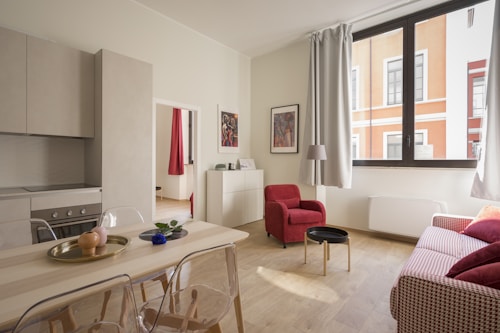
Congratulations on your move to Japan! Whether you are here for a long-term degree, a language exchange, or a specialized technical program, securing your first apartment is a monumental milestone. However, in Japan, most apartments are handed over "empty," meaning the lights won’t turn on, the water won’t run, and the stove won’t light until you’ve officially registered with the utility providers.
Setting up your electricity (denki), gas (gasu), and water (suido) can feel daunting, especially if your Japanese skills are still developing. This guide is designed to walk you through the entire process step-by-step, ensuring your move-in is as smooth as possible.
1. Preparation: What You Need Before Starting
Before you pick up the phone or open a website to apply, you must have specific information ready. In Japan, utility companies are highly organized and will require precise data to process your request.
Timing is Everything
You should aim to contact utility providers at least 7 to 10 days before your move-in date. While some companies can process requests within 24–48 hours, waiting until the last minute risks leaving you in a cold, dark apartment for your first night.
Your Information Checklist
Make sure you have the following documents and details at your fingertips:
* Exact Apartment Address: This includes the postal code, building name, and room number. It is best to have this written in Kanji.
* Full Name: The name used on your rental contract (exactly as it appears on your Residence Card/Zairyu Card).
* Phone Number: A Japanese phone number is preferred. If you don't have one yet, you may need to use a friend's or your school's number initially, though this can be tricky.
* Payment Method: A Japanese bank account or a credit card (international cards are sometimes accepted online, but not always).
* Move-in Date: The specific date you want the services to begin.
2. Electricity (Denki): Powering Your New Home
Since the liberalization of the Japanese energy market in 2016, consumers have the freedom to choose from various "Shin-Denki" (new electricity) companies that often offer competitive rates or green energy options. However, for most international students, starting with the regional "legacy" provider is the simplest and most reliable path.
Finding Your Provider
Japan is divided into regional power grids. Depending on where you live, your primary provider will likely be one of the following:
| Region | Primary Electricity Provider | Website (English Support often available) |
|---|---|---|
| Tokyo/Kanto | TEPCO (Tokyo Electric Power Company) | tepco.co.jp |
| Osaka/Kansai | KEPCO (Kansai Electric Power Company) | kepco.co.jp |
| Nagoya/Chubu | Chuden (Chubu Electric Power) | chuden.co.jp |
| Fukuoka/Kyushu | Kyushu Electric Power | kyuden.co.jp |
| Sapporo/Hokkaido | Hokkaido Electric Power | hepco.co.jp |
How to Apply
- Online: Most major providers have English websites where you can fill out a move-in form. This is the recommended method for students.
- By Phone: If you have a Japanese speaker to help you, calling is the fastest way to confirm.
- Physical Switch: On your move-in day, locate the breaker panel (usually near the entrance or in the kitchen). Flip the main switch to "ON." If your apartment has a "Smart Meter," you may not even need to flip a switch; the power will simply be active on the requested date.
3. Gas (Gasu): The Most Critical Step
Unlike electricity and water, the gas setup requires a mandatory in-person appointment. A technician must visit your home to check for leaks and ensure your appliances are connected safely. You (or a representative) must be present to let them in.
Toshi Gas vs. LP Gas
It is vital to know which type of gas your apartment uses, as appliances (like gas stoves) are specific to one type and are not interchangeable.
* Toshi Gas (City Gas): Common in urban apartment buildings. It is supplied through underground pipes.
* LP Gas (Propane): Common in older buildings or more rural areas. You will see large grey canisters outside the building.
The Opening Appointment (Kaisen)
When you call to set up your gas, you will schedule a time slot (e.g., 1:00 PM – 3:00 PM).
* The Process: The technician will check the gas meter, test the stove, and ensure the water heater (yuto-ki) is functioning.
* Safety Briefing: They will provide a brief explanation of what to do during an earthquake (Japan's gas meters automatically shut off during significant tremors).
Note: If you are moving into a dormitory, the gas might already be managed by the school. Always check with your housing coordinator first.
4. Water (Suido): Managed by the Local Government
Water services in Japan are managed by the municipal water bureau (Suido-kyoku) of your specific city or ward. Unlike gas and electricity, which are private corporations, water is a public utility.
How to Locate Your Water Bureau
To find your local provider, search for "[Your City Name] Water Bureau" or "[Your Ward Name] Suido-kyoku." For example:
* Tokyo: Bureau of Waterworks, Tokyo Metropolitan Government.
* Kyoto: Kyoto City Water and Sewerage Bureau.
Activation Process
Water is often the easiest to set up. In many cases, the water is already "on" when you move in. However, you are still legally required to register your start date to ensure you are billed correctly.
1. Postcard Method: Look for a blue or clear plastic "Start of Water Service" postcard hanging on your faucet or near the entrance when you first enter the apartment. Fill it out and mail it back.
2. Online/Phone: Most major cities now allow you to register via their website.
5. Practical Tools: Phrases and Payments
Navigating the bureaucracy of utilities can be stressful. Use the tables below to help you communicate and understand how to pay your bills.
Essential Japanese Phrases for Utilities
If you choose to call the utility companies, these phrases will be your lifeline. Even if you speak only a little, Japanese staff are generally very patient.
| English | Japanese (Kanji/Kana) | Romaji |
|---|---|---|
| I would like to start [Utility]. | [Utility] no koushi wo onegaishimasu. | [Utility] の開始をお願いします。 |
| Electricity | Denki | 電気 |
| Gas | Gasu | ガス |
| Water | Suido | 水道 |
| My address is... | Jusho wa ... desu. | 住所は ... です。 |
| My name is... | Namae wa ... desu. | 名前は ... です。 |
| Move-in date | Nyuyu-bi / Kaishi-bi | 入居日 / 開始日 |
| Can someone speak English? | Eigo wo hanaseru hito wa imasu ka? | 英語を話せる人はいますか? |
How to Pay Your Bills
Once your utilities are active, you will receive bills monthly or bimonthly. You have three main options:
- Convenience Store (Conbini): This is the most common method for students. You will receive a paper bill with a barcode in your mailbox. Take this to any Lawson, FamilyMart, or 7-Eleven, hand it to the cashier, and pay in cash.
- Automatic Bank Transfer (Kuri-koshi): You can apply for this using your Japanese bank book (通帳 - tsucho). It saves you a trip to the store and ensures you never miss a payment.
- Credit Card: You can register your card on the provider's portal.
Understanding Your Bill
Japanese utility bills are small slips of paper filled with Kanji. Here are the key terms to look for:
* ご使用量 (Goshiyou-ryou): Amount used.
* 請求予定金額 (Seikyu yotei kingaku): Total amount to be billed.
* お支払い期限 (O-shiharai kigen): Payment deadline (Very important!).
* 領収証 (Ryoushuusho): Receipt (This part is handed back to you after you pay at a conbini).
6. Helpful Tips for International Students
To wrap up, here are a few "pro tips" from those who have navigated the Japanese rental market before you:
1. Check for "Free Internet"
Many modern "Leopalace" or student-focused apartments include internet in the rent. Before you go out and buy a router or sign a contract with a provider like NTT, check if your room has a "LAN" port or a Wi-Fi sticker.
2. The "Welcome Pack"
When you receive your keys from the real estate agent (fudosan), they will often give you a folder. Inside, you will usually find brochures and phone numbers for the specific electricity, gas, and water companies assigned to your building. Use these numbers first!
3. Energy Saving in Winter
Electricity in Japan can be expensive, especially in winter when using "Air-con" (AC units) for heating. Many international students are surprised by high bills in January. Consider buying a "Nitori" brand warm blanket (N-Heat) or a small ceramic heater to keep costs down.
4. Moving Out (The Reverse Process)
When your studies end and you prepare to leave Japan, you must "close" these accounts. This is called kaiyaku. For the gas company, you may again need to be present for a final reading if the meter is inside the building. Don't forget this step, or you will continue to be charged!
5. Trash Rules
While not a "utility" in the sense of a bill you pay, setting up your life includes learning the trash schedule. Your real estate agent will provide a map of when to put out "Burnable," "Non-burnable," and "Recyclables." Failure to follow these strictly can lead to friction with your Japanese neighbors.
Conclusion
Setting up your electricity, gas, and water is your first real test of independence in Japan. While the linguistic barrier and the requirement for an in-person gas appointment might seem like hurdles, the systems are incredibly efficient. By preparing your documents in advance, using the regional providers' English websites, and keeping track of your payment deadlines at the convenience store, you will have a comfortable, well-lit home in no time.
Welcome to your new life in Japan—enjoy the hot showers and the convenience of your new apartment! If you ever feel overwhelmed, remember that your university’s international student office is there to help you translate or make those first few phone calls. Good luck!
Related study abroad guides
Was this page helpful?
Your feedback helps us improve our guides
Related schools



Related guides
 Budget
Save with Japanese Budgeting Apps: Money Forward ME vs Zaim for Students
Housing
Find Apartments in Japan: Complete SUUMO, Homes, Apaman Shop Guide
Housing
Student Housing in Japan: Dorms vs Share Houses vs Apartments 2026
Budget