Fujisan Japanese Language School
静岡県富士市横割1-6-16
🗻 1) School Overview & Philosophy
Nestled in the heart of Shizuoka Prefecture, Fujisan Japanese Language School (富士山日本語学校) offers an unparalleled study environment where the majestic silhouette of Mount Fuji serves as your daily backdrop. Located at 1-6-16 Yokowari, Fuji City, the school sits in a peaceful, safe, and highly scenic region of Japan. Fuji City is famous for its clean air, abundance of pure spring water, lush green tea fields, and thriving paper manufacturing industries. Studying here allows you to escape the claustrophobic rush of Tokyo while remaining highly connected to Japan's major metropolitan hubs via the Tokaido Shinkansen.
With a cozy, approved capacity of 160 students, Fujisan Japanese Language School prides itself on a personalized, family-like atmosphere. The school's core philosophy centers on nurturing global citizens who are not only linguistically proficient but also deeply integrated into Japanese society. The administration believes that true language mastery happens when academic excellence meets daily real-world interaction. In a smaller school like this, you are never just a number; the faculty and staff know every student by name, providing individualized pastoral care, career counseling, and academic guidance that massive city schools simply cannot replicate.
For students who want to focus intensely on their studies without the high living costs and distractions of Tokyo, this school offers the perfect balance of serene natural beauty, affordable living, and high-quality educational standards.
📚 2) Courses, Curriculum & Teaching Style
Fujisan Japanese Language School offers flexible, structured courses tailored to different academic and career timelines. Whether your goal is to enter a Japanese university, enroll in a vocational school (Senmon Gakko), or find local employment, the curriculum is designed to take you from your current level to advanced proficiency.
Official Course Offerings
Below is the breakdown of the long-term student visa courses available at the school. Tuition and fees are exceptionally competitive compared to schools in major cities:
| Course Name | Admission Month | Duration | Total Fees (JPY) |
|---|---|---|---|
| General 2 Years Course (一般2年コース) | April | 24 Months | ¥1,210,000 |
| General 1 Year 9 Months Course (一般1年9か月コース) | July | 21 Months | ¥1,070,000 |
| General 1 Year 6 Months Course (一般1年6か月コース) | October | 18 Months | ¥930,000 |
Note: In addition to these long-term programs, the school also offers Flexible Short-Term Study Options for students traveling on working holiday, tourist, or family visas who wish to boost their language skills over a shorter period.
Curriculum Highlights & Academic Features
- Dedicated Higher Education Advancement Track: This track prepares students for the rigors of Japanese higher education. It features comprehensive training in academic writing (essential for university essays), advanced reading comprehension, and speed-reading techniques.
- Specialized EJU Preparation: For students aiming to enter prestigious universities, the school provides focused training for the Examination for Japanese University Admission for International Students (EJU). This includes simulated exam practice, time management strategies, and interview coaching.
- Exclusive Science (Rika/Ika) Stream for STEM Applicants: A standout feature of this school is its specialized support for science, technology, engineering, and mathematics (STEM) applicants. Preparing for the EJU Science subjects (Physics, Chemistry, Biology) and high-level Mathematics in a foreign language is exceptionally difficult. Fujisan Japanese Language School provides targeted academic guidance to help STEM students bridge this gap, a rare offering among standard Japanese language institutions.
- Strong Focus on Conversational Proficiency: Rote memorization will only get you so far. The school places a heavy emphasis on communicative teaching methods. Through pair work, class presentations, and active discussions, students are encouraged to speak from day one, helping them build the confidence needed for daily life and job interviews.
🏡 3) Student Body & Campus Life
With a capacity of 160 students, the student body is tight-knit and highly collaborative. You will study alongside classmates from various countries, creating a multicultural environment where Japanese becomes your primary common language.
Accommodations: On-Campus & Affiliated Dormitories
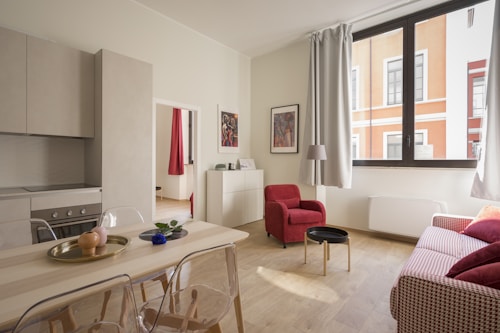
One of the biggest hurdles for international students in Japan is finding affordable, hassle-free housing. Fujisan Japanese Language School addresses this by providing On-Campus/Affiliated Dormitory Accommodation. These dormitories are located within easy walking or cycling distance of the school, eliminating the need for expensive train commutes. Because these accommodations are managed directly by or in partnership with the school, students avoid the complex Japanese rental process, high deposit fees (shikikin/reikin), and the need for a local guarantor. Living in the dorms fosters close friendships and provides a built-in support system from day one.
Life in Fuji City
Fuji City offers a peaceful, laid-back lifestyle that is highly conducive to studying. Located in the Yokowari area, the school is just a short walk from Fuji Station (Tokaido Main Line), giving you easy access to local supermarkets, affordable restaurants, clinics, and public parks.
Living at the foot of Mt. Fuji means you are never far from outdoor adventures. Students regularly enjoy weekend trips to the five lakes of Fuji, hiking, visiting local Shinto shrines, and tasting Shizuoka's world-famous green tea and fresh seafood. The local community in Fuji City is incredibly welcoming to international students, offering a much more authentic immersion experience than the highly internationalized, anonymous neighborhoods of Tokyo.
🎓 4) University & Career Pathways
Fujisan Japanese Language School does not just teach Japanese; it acts as a launchpad for your future in Japan. The school boasts a robust support network for students transitioning to higher education or the professional workforce.
Pathway to Higher Education
Through the school's Dedicated Higher Education Advancement Track, teachers work one-on-one with students to plan their academic paths. This personal guidance includes:
* Assisting with university selection based on the student's academic strengths and career goals.
* Conducting mock admission interviews to build confidence and polish formal Japanese speech patterns.
* Reviewing and refining Statement of Purpose (SOP) essays and research proposals.
* Leveraging the school's unique Science (Rika/Ika) Stream to guide STEM applicants into highly regarded technical universities and science departments across Japan.
Career Opportunities & Local Connections
Shizuoka Prefecture is one of Japan's leading industrial regions, home to major manufacturing, logistics, agricultural, and tourism businesses. For students looking to transition into the Japanese workforce, the school’s focus on practical conversational proficiency is a massive advantage. Local businesses frequently seek bilingual talent, and the school’s staff are always on hand to help students navigate part-time job searches (Arubaito) and full-time employment opportunities after graduation.
💡 5) Practical Tips for Applicants
If you are planning to apply to Fujisan Japanese Language School, here are some practical tips to make your transition smooth and successful:
- Understand the Financial Advantages: The tuition fees here are highly competitive (ranging from ¥930,000 for 1.5 years to ¥1,210,000 for 2 years). When you combine this with the significantly lower cost of rent and food in Fuji City compared to Tokyo or Osaka, your overall study abroad budget will go much further, reducing your financial stress.
- Plan Your Intake Carefully:
- Apply for the April Intake (2 Years) if you are a beginner and need maximum time to prepare for high-level university entrance exams.
- The July (1 Year 9 Months) and October (1 Year 6 Months) intakes are excellent for students who already possess some foundational Japanese knowledge or are aiming for vocational schools and faster employment.
- Prepare for the Commute & Travel: Fuji City is highly accessible. You can easily travel to Tokyo or Nagoya via the Tokaido Shinkansen (using nearby Shin-Fuji Station) or local train lines. Owning a bicycle is highly recommended and is the preferred, cost-effective way for students to navigate the city daily.
- Embrace the Local Culture: Because Fuji City has fewer English-speaking tourists than Tokyo, you will have countless opportunities to practice your Japanese with locals at supermarkets, cafes, and community events. Don't be shy—the residents of Shizuoka are famously friendly and appreciative of students making an effort to speak their language!
- Get a Head Start on Hiragana and Katakana: Even if you are applying as a complete beginner, mastering the basic Japanese writing systems before you arrive will allow you to hit the ground running and focus on conversational fluency from your very first week.
Related study abroad guides
Was this page helpful?
Your feedback helps us improve our guides