Higashikawa International Culture and Welfare College
北海道上川郡東川町進化台
School Overview & Philosophy
Higashikawa International Culture and Welfare College (東川国際文化福祉専門学校) offers a unique and compelling option for international students seeking a high-quality Japanese language education coupled with specialized vocational training in a distinctive environment. Located in Higashikawa Town, within the scenic Kamikawa District of Hokkaido, this institution provides a notable alternative to the bustling urban schools of Tokyo or Osaka. Its location is a key feature: Higashikawa is recognized as Japan's first 'Photo Town,' boasting a unique cultural identity centered on art, nature, and community involvement. Studying here allows students to benefit from a peaceful, supportive atmosphere, lower living expenses, and unparalleled access to the majestic Daisetsuzan National Park—Japan's largest national park. This setting inherently encourages deep immersion, as the local community is actively engaged with the school and its international students, offering daily conversational practice and cultural exchange opportunities that are often hard to find in larger, more impersonal cities. The school's central philosophy focuses not only on linguistic proficiency but also on complete cultural integration and professional preparedness. The inclusion of 'Welfare' (福祉 - Fukushi) in its name is significant, indicating a fundamental commitment to developing students who will contribute positively to society, potentially specializing in service industries, community outreach, or healthcare support, reflecting a growing national demand for skilled bilingual professionals in these areas. For students who find the noise and expense of major cities overwhelming, Higashikawa provides a refreshing, focused, and nature-rich alternative.
The institutional structure is also unique, operating as a Senmon Gakko (Professional Training College). This classification suggests a curriculum that is often more vocationally focused than standard language institutes, even within the general Japanese language track. While the primary goal remains achieving high-level Japanese fluency (N2 or N1 certification), the integration of professional college resources means that students are exposed to specialized educational facilities, potentially including those related to photography, design, or welfare studies, setting the stage for a smoother transition into Japanese higher education or immediate professional employment. The school's capacity is intimate, accommodating around 200 students, which ensures a low student-to-teacher ratio and highly personalized academic guidance. This small-scale environment is intentionally designed to provide intense, focused instruction, allowing faculty members to monitor the progress of each student closely, addressing individual learning obstacles immediately. The emphasis on high-quality student life and welfare support, stemming directly from its namesake, ensures that the institution is not simply a linguistic gateway but a comprehensive support system for life in Japan.
Furthermore, the curriculum is designed to capitalize on the regional strengths of Hokkaido. This includes opportunities for cultural studies related to agriculture, tourism (a major industry in Hokkaido), and environmental conservation, allowing students to apply their developing language skills in practical, real-world contexts specific to northern Japan. The school serves as a vital bridge for international talent looking to contribute to regional revitalization efforts, often forging strong relationships with local businesses and government entities. The guiding principle is to produce 'global citizens' who are proficient not only in communication but also in understanding the nuances of Japanese professional conduct and local culture, preparing them for roles where cross-cultural communication is paramount. The strategic location, combined with the professional college status, positions Higashikawa International Culture and Welfare College as a specialized, premium choice for serious students who value quiet focus, regional engagement, and vocational preparation alongside language mastery. The inherent focus on service and community means the school environment is profoundly supportive and encourages mutual respect and aid among a diverse student body, fostering long-lasting international relationships and a strong sense of belonging, crucial elements for successful long-term study abroad.
Courses, Curriculum & Teaching Style
The academic structure at Higashikawa International Culture and Welfare College is rigorous, achievement-oriented, and uniquely specialized, catering heavily to students aiming for higher education or specific career paths. The primary offerings are the General Japanese Language Courses, structured typically across 1.5-year (admitting in October) and 2-year tracks (admitting in April), although short-term study options are also advertised, appealing to individuals seeking intense immersion during holiday periods or pre-university foundational training. The curriculum follows the standard progression from beginner (N5) to advanced (N1) levels, but it differentiates itself significantly through its dedicated advancement streams and its strong focus on practical conversation skills.
Students progress through foundational grammar and vocabulary, but the teaching methodology quickly shifts toward application. High-level classes incorporate extensive practice in debate, presentation skills, sophisticated essay writing, and critical reading of complex Japanese texts, crucial for excelling in university entrance examinations. Crucially, the school offers dedicated preparatory tracks tailored to specific academic disciplines, a rare feature in language schools not located near a major university cluster. These include:
- EJU Preparation Track: Essential for admission to national and public universities.
- Science (理科 - Rika) Track: Provides specialized Japanese vocabulary and conceptual understanding required for scientific fields (e.g., mathematics, physics, chemistry), often supplemented by specialized tutoring or bridging classes.
- Art & Design Track (美術・デザイン): Assists prospective art students in preparing portfolio materials and understanding the technical and theoretical Japanese required for entrance exams at art universities and professional design schools.
- Business Japanese Track: Focuses on keigo (honorific language), business etiquette, and Japanese corporate culture, preparing students for internships or direct entry into the workforce.
The emphasis on conversation is interwoven throughout all levels. Recognizing that fluency requires more than just textbook knowledge, the college likely employs methods such as task-based learning, role-playing, and regular interaction with native Japanese speakers, possibly utilizing local community members or college students from the Senmon Gakko for cultural exchange projects. The smaller class sizes facilitate personalized attention, allowing teachers to correct pronunciation, intonation, and usage errors in real-time. Moreover, the curriculum is highly integrated with EJU preparation. Students in the advancement tracks receive intensive coaching for the Japanese, Mathematics, and General Subject components of the Examination for Japanese University Admission for International Students (EJU). This structured, multidisciplinary approach ensures that students are not only linguistically ready but also academically equipped to handle the rigors of Japanese tertiary education, minimizing the need for external preparatory schooling.
Teaching materials are likely a blend of proprietary content developed by the institution, especially for the vocational and EJU streams, and standard, widely recognized Japanese language textbooks. The teaching staff is expected to be highly experienced, given the school’s professional college status, often holding advanced degrees in Japanese language education or specialized fields like literature, linguistics, or specific vocational areas. The learning environment in Higashikawa, removed from major urban distractions, promotes deep focus and commitment, allowing students to maximize their learning outcomes rapidly. The school leverages its intimate environment to conduct regular academic counseling and progress reviews, ensuring that the course load and specialization track alignment meet the student's long-term educational or career goals, making the educational experience highly effective and goal-driven.
Student Body & Campus Life
With a stated capacity of 200 students, Higashikawa International Culture and Welfare College cultivates a close-knit, international community that contrasts sharply with the massive enrollment figures found in city schools. This intimate size fosters strong bonds among students and between students and faculty, creating a supportive, family-like atmosphere essential for those adjusting to life abroad, especially in a non-major metropolitan area. The student body is typically diverse, drawn from various Asian countries (e.g., China, Vietnam, South Korea, Nepal) and increasingly from Western nations, all united by the common goal of achieving fluency and advancing their educational or professional careers in Japan.
Campus life in Higashikawa is inherently linked to its unique location in Hokkaido. Students trade immediate access to massive shopping districts and constant nightlife for significant access to nature and authentic Japanese regional culture. This regional focus dramatically enhances the immersion experience. Higashikawa is famous for its natural beauty and proximity to Daisetsuzan National Park. Seasonal activities play a huge role in the campus calendar:
- Winter: Students can engage in skiing, snowboarding, and participation in the world-famous Sapporo Snow Festival (easily accessible from Higashikawa).
- Spring and Summer: Offer hiking, photography workshops (in line with the town's 'Photo Town' designation), and participation in local agricultural festivals.
The college actively promotes these cultural and recreational activities, ensuring that campus life extends beyond the classroom walls and into the community, enabling students to utilize their conversational skills in real-life, relaxed settings.
Furthermore, the smaller, rural setting often translates to a higher level of community integration. Unlike major cities where international students might remain insulated within their own communities, the necessity and opportunity to interact with local Higashikawa residents are far greater. The town's commitment to community welfare, implied by the college's name, often involves cultural exchange programs, volunteer opportunities, and local town events where students are encouraged to participate. This integration is vital for mastering the nuances of regional Japanese (dialects, colloquialisms) and gaining a genuine understanding of Japanese values outside of the highly competitive urban sphere. The student services department, bolstered by the overall welfare focus of the institution, is typically robust, offering personalized assistance with administrative tasks, medical needs, part-time job searching (although opportunities may be more limited than in cities, they are often meaningful), and general well-being, ensuring a smooth and productive stay for all international attendees. The overall campus environment is designed to be a sanctuary for dedicated study, enriched by unparalleled access to Japan’s stunning natural landscape.
University & Career Pathways
Advancement into Japanese higher education or the professional workforce is a primary goal of students enrolling at Higashikawa International Culture and Welfare College, supported by highly specialized guidance and curriculum pathways. The presence of EJU preparation, specialized Science, Art, and Business tracks confirms the school's commitment to providing targeted advancement support far beyond standard language instruction. For those pursuing higher education, the college's comprehensive guidance system starts early, helping students select appropriate university majors, understand application procedures, and navigate the complexities of both private and competitive public university entrance requirements.
The institution’s location in Hokkaido, while geographically distinct, offers strategic advantages for entry into regional universities, including Hokkaido University (one of Japan's prestigious former Imperial Universities), Asahikawa Medical University, or various specialized vocational colleges across the region focusing on tourism, agriculture, or IT. The Science and Art tracks are particularly valuable, as they address the critical need for specialized Japanese competence in technical fields, which standard language schools often overlook. For Science students, this means mastering advanced scientific terminology in Japanese necessary for EJU subjects and specialized entrance interviews. For Art and Design students, the support likely includes portfolio refinement workshops conducted in Japanese and preparation for the specialized practical examinations required by Japanese art schools.
Beyond university entrance, the school leverages its status as a Senmon Gakko (Professional Training College) to facilitate career pathways, particularly in the fields implied by its name: culture, tourism, and welfare. Japan faces a significant demographic challenge and a growing demand for skilled professionals in the welfare and healthcare sectors. Students with high Japanese proficiency and specialized vocational training are highly sought after. The Business Japanese track prepares students for immediate entry into companies, emphasizing interview techniques, resume writing in the Japanese format, and complex business communication protocols. Furthermore, the school’s strong local ties in Higashikawa and the wider Hokkaido region mean that students are often exposed to regional employment opportunities that seek foreign talent for international marketing, tourism development, or service roles, contributing directly to regional economic revitalization efforts. The career guidance provided is extremely practical, focusing on securing placements that align with the student's specialized language and cultural skills, maximizing the return on their educational investment in Japan.
Accommodation & Living Support
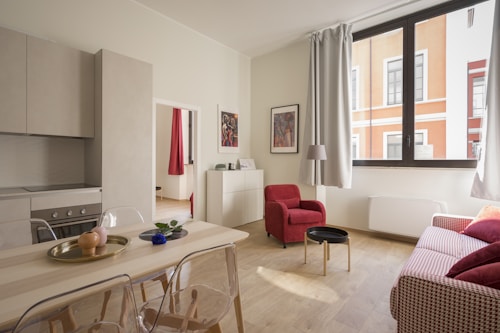
One of the most significant advantages offered by Higashikawa International Culture and Welfare College is its highly developed and mandatory dormitory system, a necessity and a benefit in its regional setting. The presence of dedicated dormitories significantly simplifies the relocation process for international students, removing the stress associated with finding private housing, dealing with initial lease agreements, and securing guarantors—major hurdles often faced by students arriving in major urban centers. The input data explicitly mentions the availability of Single Room options, which is a premium feature, offering students the privacy and quiet environment necessary for intense academic focus, a considerable luxury compared to the typical shared rooms in many urban school dormitories.
The dormitory facilities are designed to be comfortable, secure, and conducive to study, often located within easy commuting distance of the campus. Living in the school dormitories facilitates immediate immersion into the school community, promoting cultural exchange among the international student body. Furthermore, the college’s 'Welfare' mandate extends directly to its housing support, ensuring that facilities are well-maintained and that assistance is readily available for daily living issues, administrative procedures, and emotional adjustment to life in Japan. The living support provided is typically more hands-on than in larger urban settings, given the smaller student body and the school’s regional location.
Living in Higashikawa, Hokkaido, also offers substantial financial advantages. The cost of living, particularly rent and utilities, is significantly lower than in high-demand cities like Tokyo or Osaka. While the specific tuition fees (detailed below) might be competitive with other regional schools, the substantial savings on monthly living expenses—from rent and transportation to groceries and entertainment—mean that the total cost of studying in Higashikawa is often far more manageable. The school’s administration often works closely with local service providers and communal facilities to ensure students have access to essential services and amenities, promoting a comfortable and safe environment where they can focus entirely on their studies. The combination of mandatory, well-managed, and affordable housing, especially the option for private single rooms, makes the residential aspect of studying in Higashikawa highly appealing for serious and independent international students.
Tuition, Fees & Scholarships
The tuition structure at Higashikawa International Culture and Welfare College is generally competitive for a private language institution, especially one offering specialized academic tracks and guaranteed dormitory accommodation. Analysis of the provided course fee data suggests a standard two-tier system, reflective of the most common study periods for university advancement:
- General Course (2 Years): The higher fee of 1,600,000 JPY typically covers a full two-year program (24 months), ideal for students starting from the beginner level (April admission) and aiming for the highest possible proficiency (N1) before university entry.
- General Course (1.5 Years): The fee of 1,220,000 JPY likely corresponds to a 1.5-year program (18 months), suitable for students starting with a foundational level of Japanese (October admission) or those requiring slightly less time to reach their EJU or N2 targets.
It is important to note that these figures usually represent the total tuition and administrative fees paid to the school but exclude mandatory expenses such as dormitory rent, insurance, visas, and textbooks, which must be budgeted separately. Given the remote location, students should confirm if these totals include essential regional expenses or subsidized activity fees.
Estimated Initial Cost Breakdown (First Year)
| Item | Estimated Cost (2-Year Track) | Notes |
|---|---|---|
| Application/Screening Fee | ¥25,000 - ¥30,000 | Non-refundable fee |
| Entrance Fee | ¥50,000 - ¥70,000 | One-time charge upon acceptance |
| Tuition (1 Year) | ¥750,000 - ¥850,000 | Based on the ¥1,600,000 two-year total |
| Facility/Equipment Fee | ¥30,000 - ¥50,000 | Maintenance and classroom technology |
| Activity/Insurance Fee | ¥20,000 - ¥40,000 | Health insurance, student activities |
| Total Estimated Initial Payment | ¥875,000 - ¥1,040,000 | Must be paid before visa application (approx. $5,800 - $7,000 USD) |
Scholarship Opportunities
The school explicitly features Scholarship Programs, which is crucial for international students managing long-term finances. As a Senmon Gakko and a designated institution for higher learning, the school is highly likely to be an eligible participant in the Japanese Government's Monbukagakusho (MEXT) Honors Scholarship for Privately Financed International Students, which offers a monthly stipend (currently around ¥48,000). Beyond national programs, the college may also administer its own internal scholarships based on academic excellence, attendance records, or financial need, reflecting its underlying commitment to student welfare and academic success. Prospective students are strongly advised to inquire directly about the specific criteria, application deadlines, and availability of both public and private scholarship funds to mitigate the overall financial burden of studying in Hokkaido.
Related study abroad guides
Was this page helpful?
Your feedback helps us improve our guides
Related guides
 Budget
Build Your PC in Akihabara: Tsukumo, Dospara, Ark - Student Guide 2026
Budget
Save with Japanese Budgeting Apps: Money Forward ME vs Zaim for Students
 Visa
Visa
My COE was Denied: What to Do Next? A Comprehensive Guide to Re-application
 Housing