Japan International Polytechnic College - Japanese Language Department
千葉県松戸市新松戸3-440
School Overview & Philosophy
The Japanese Language Department of the Japan International Polytechnic College (日本国際工科専門学校日本語科) provides a unique educational environment tailored for international students aiming for higher education or skilled employment in Japan. Located in Matsudo City, Chiba Prefecture, the school's location offers easy access to Tokyo while providing a more affordable and peaceful living environment compared to the city center. The language department's integration within the larger Polytechnic College distinguishes it from typical independent Japanese language schools.
The college's philosophy emphasizes practical application, technical skills, and academic transition into specialized fields like engineering, IT, design, and other vocational disciplines, going beyond purely linguistic study.
With a large capacity of 720 students, the institution employs structured teaching methodologies to ensure consistent quality across all levels. This volume confirms its status as a major player in international education and ensures a robust logistical infrastructure, notably its comprehensive dormitory system, a key advantage for students new to Japan. The fundamental mission is to bridge the language and cultural gap, enabling students to master Japanese communication and acquire the academic skills and domain-specific vocabulary needed to succeed in technical fields or competitive university entrance exams (EJU).
This academic rigor is complemented by extensive student support. The curriculum is designed to handle large cohorts, requiring efficient systems for placement testing, class allocation, and progression monitoring. The school promotes a culture of focused academic achievement, recognizing that its students are primarily on a pathway to specialized higher education (Shingaku), supported by its affiliation with a technical institution. The location in Matsudo, Chiba, minimizes distractions and high living costs associated with central Tokyo, allowing students to focus on their studies while maintaining convenient access to urban centers. The emphasis is on preparing students not just to pass exams, but to thrive in demanding Japanese higher education or professional vocational training environments.
Furthermore, the core philosophy embraces the concept of 'international technical competence.' By positioning Japanese language proficiency as a prerequisite for technical mastery, the school attracts students with clear career objectives, such as entering STEM fields (reflected by the 'Rika'/Science track) or creative industries (indicated by the 'Art' and 'Design' pathways). This targeted approach ensures a motivated student body and allows the school to tailor its support systems, including specialized vocabulary instruction and EJU subject preparation, directly to these high-demand fields. The commitment to providing diverse learning opportunities, including short-term courses alongside standard long-term progression tracks, demonstrates flexibility in catering to various educational needs, from foundational learning to intensive preparatory study.
Courses, Curriculum & Teaching Style
The curriculum at Japan International Polytechnic College Japanese Language Department is known for its progression-oriented structure, designed to prepare students for the Examination for Japanese University Admission (EJU) and university interviews. The school offers standard course lengths:
- 2-year course starting in April
- 1.5-year course starting in October
- 1-year condensed option
These cater to students with varying levels of prior preparation and study timelines. The teaching methodology emphasizes a balanced approach, transitioning from foundational grammar and essential vocabulary (N5/N4 equivalent) to advanced communication, nuanced business Japanese, and specialized academic language (N2/N1 equivalent).
A key distinguishing feature is the establishment of specialized academic tracks early in the student’s program. These tracks include dedicated preparation for:
- STEM (Science/Rika)
- Humanities (Bunkei)
- Creative Arts (Art/Design)
Students in the STEM track receive specialized instruction in Japanese for subjects like Mathematics, Physics, Chemistry, and Biology, incorporating technical terminology relevant to the Polytechnic College environment. Similarly, the Art and Design track focuses on vocabulary necessary for critiques, portfolio presentations, and interviews required by Japanese art universities and vocational design schools, bridging the gap between language acquisition and artistic expression.
Teaching style is characterized by structure and intensity, managing a large student population and achieving strong academic results. Instruction uses communicative teaching methods alongside intensive drill work, ensuring students develop fluency (Conversational Japanese, or 'Kaiwa') and accuracy (grammar for high-stakes testing). Beyond general proficiency, the curriculum emphasizes Business Japanese, including training in keigo (honorific language), business etiquette, and Japanese workplace communication skills, preparing graduates for academia, entry-level jobs, or internships.
EJU preparation is central, running parallel to general Japanese instruction. Students are segmented into EJU classes with subject matter tutoring (Japanese as a Foreign Language, General Knowledge, Mathematics, Science) by experienced educators, maximizing scores for university applications. The school facilitates excellent resource provision, including:
- Extensive test materials
- Simulation exams
- Individualized feedback sessions
These are crucial components for achieving competitive university placements. Furthermore, the commitment to short-term courses indicates flexibility and a capacity to manage diverse student needs, whether for quick skill boosts or basic cultural immersion before committing to a long-term academic pathway.
Student Body & Campus Life
With a capacity of 720 students, the Japan International Polytechnic College Japanese Language Department hosts a large and diverse international student body. This suggests students come from a wide array of countries across Asia, Europe, and other regions, creating a multi-cultural learning environment. Managing such a large population requires effective administrative and counseling systems, ensuring individual student needs are met. The shared ambition for higher education, particularly in technical or design fields, unifies the student cohort, fostering a focused and supportive atmosphere for intensive study.
Campus life is structured yet engaging, aimed at facilitating rapid cultural adaptation alongside academic progression. The dormitory system simplifies the initial transition for new arrivals, providing guaranteed, safe, and potentially subsidized accommodation, a major logistical advantage. Living in school-provided accommodation promotes community interaction, offering opportunities for students from different linguistic backgrounds to practice Japanese and engage in cultural exchange outside of formal classroom settings. This integrated approach to living and learning is a cornerstone of the school’s support strategy.
While the primary focus is academic rigor (EJU, advanced Japanese acquisition), the school integrates cultural activities and extracurricular events designed to deepen cultural understanding and provide conversational practice. These activities reinforce the 'Kaiwa' (conversational) aspect of the curriculum. Events might include:
- Traditional Japanese crafts
- Seasonal festivals
- Trips to historical sites in Chiba and neighboring Tokyo
- Interaction opportunities with students from the main Polytechnic College body, providing native Japanese peer contact for practical language development and networking for future career prospects.
The atmosphere is professional and driven, reflecting the institution's commitment to university and career placement, yet also supportive, utilizing a comprehensive counseling system to address challenges related to visa issues, academic stress, or daily life in Japan.
University & Career Pathways
The Japan International Polytechnic College Japanese Language Department excels in facilitating advanced academic and career progression, largely due to its affiliation with a specialized technical institution. The 'Shingaku' (Academic Progression) focus is tailored to technical universities, specialized vocational colleges (Senmon Gakko), and competitive art schools.
Specialized Progression Advantage: The unique Rika (Science/STEM) and Art/Design pathways are the school's most significant assets. Students pursuing STEM fields benefit from specialized EJU instruction focused on achieving high scores in the science and mathematics components necessary for engineering and technology faculties. The school’s understanding of the technical terminology and entrance requirements for the parent Polytechnic College and affiliated vocational schools provides an advantage. This internal network may offer graduates preferential guidance or smoother transition pathways into technical specializations compared to students graduating from general language schools.
EJU Mastery: The comprehensive EJU preparation includes dedicated coursework, mock exams, and personalized advising, ensuring students are academically prepared to tackle Japan’s most selective universities. The support is holistic, addressing not only the language test but also subject-specific knowledge required by various faculties (e.g., advanced mathematics for engineering, general knowledge for humanities).
Art and Design Excellence: For students targeting creative fields, the curriculum incorporates portfolio consultation, artistic critique vocabulary training, and preparation for entrance examinations often required by art universities (e.g., visual tests, concept interviews). This support ensures that creative aspirations are not hampered by language barriers but are empowered by precise Japanese communication skills relevant to the art world.
Career Preparation: The emphasis on Business Japanese reflects the school's understanding that many graduates will seek employment in Japan. The curriculum provides foundational professional skills, preparing students for internships, part-time work, and the structured formality of Japanese corporate life. By prioritizing both high academic placement and practical career readiness, the institution creates robust pathways for long-term success for its international graduates.
Accommodation & Living Support
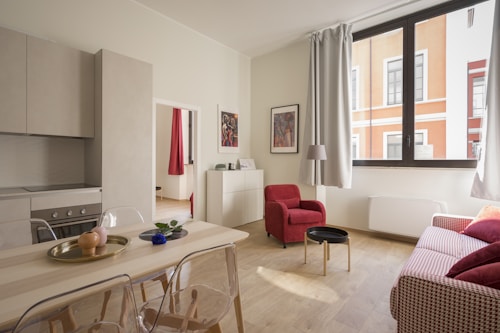
One of the most appealing features of the Japan International Polytechnic College Japanese Language Department is its comprehensive and mandatory dormitory system. For students relocating to Japan, the guaranteed provision of secure, convenient housing eliminates the stress and initial costs associated with finding private rental accommodation, particularly in the greater Tokyo area.
Dormitory Benefits: The dormitory provides a structured and secure living environment, which is especially important for minors or students arriving for the first time. It often includes furnished rooms, shared facilities, and managed services, allowing students to focus on their studies without the distraction of apartment hunting, utility setup, or complex rental contracts. The proximity of the accommodation to the school, or an easy commute facilitated by the school, saves time and travel expenses. The fact that the school, which manages 720 students, guarantees housing is a testament to its logistical capability and commitment to student welfare.
Chiba/Matsudo Location Advantage: The school's location in Matsudo, Chiba, offers a financial advantage. While Chiba is integral to the greater Tokyo metropolitan area, living costs, including rent, food, and daily expenses, are typically lower than in central districts like Shinjuku or Shibuya. Matsudo is a well-developed city with excellent public transport links, allowing students to commute into core Tokyo areas for cultural experiences or university visits, while enjoying the calmer, less expensive daily life of a major suburb. The local environment is well-equipped with necessary amenities—supermarkets, medical facilities, banks—all easily accessible to the large student population.
Welfare and Support: The school's extensive infrastructure extends to comprehensive welfare support. Staff are trained to assist students with daily living issues, administrative procedures (residency renewal, health insurance enrollment), and navigating local resources. The presence of international counselors familiar with the challenges faced by international students ensures a reliable safety net, enhancing the overall study experience.
Tuition, Fees & Scholarships
The tuition structure at the Japan International Polytechnic College Japanese Language Department is competitive, particularly considering the specialized academic and EJU support provided, as well as the inclusion of accommodation services. The availability of scholarships further enhances affordability for high-performing students.
Detailed Course Fees (JPY):
The stated fees generally include admission fees, tuition, facility fees, and potentially some materials, but usually exclude mandatory health insurance and personal living expenses (which are mitigated by the dormitory system).
| Course Length | Admission Month | Total Fees (JPY) | Approximate Annual Cost (JPY) |
|---|---|---|---|
| 1 Year Course | April | 722,000 JPY | 722,000 JPY |
| 1.5 Year Course | October | 1,030,500 JPY | 687,000 JPY/year equivalent |
| 2 Year Course | April | 1,339,000 JPY | 669,500 JPY/year equivalent |
*Note: These total fees are indicative of the initial payment requirements, usually covering the first year's tuition and applicable entrance/facility fees. The fees demonstrate a good value proposition, with the annual cost decreasing slightly for longer enrollment periods.
Scholarship Opportunities:
Recognizing the importance of financial assistance, the school prominently features scholarship programs. These typically fall into several categories:
- Internal Performance Scholarships: Awarded by the school based on excellent attendance, high academic performance (especially EJU scores), and contributions to campus life.
- Attendance/Effort Awards: Smaller grants rewarding perfect attendance or marked improvement in proficiency.
- External Grants: Assistance in applying for recognized external scholarships, such as those provided by JASSO (Japan Student Services Organization) or private foundations supporting international students intending to enter Japanese universities or vocational schools. Given the school's focus on technical progression, it is highly probable that they facilitate applications for specialized scholarships targeting STEM fields. Applicants are strongly advised to inquire directly about the specific criteria and application windows for these financial aid opportunities.
By offering competitive tuition rates and robust scholarship options, the school ensures that its demanding academic programs are accessible to motivated international students committed to successful progression into Japanese higher education.
Related study abroad guides
Was this page helpful?
Your feedback helps us improve our guides
Nearby housing


Related guides
 Budget
Save with Japanese Budgeting Apps: Money Forward ME vs Zaim for Students
 Housing
Find Apartments in Japan: Complete SUUMO, Homes, Apaman Shop Guide
Housing
Student Housing in Japan: Dorms vs Share Houses vs Apartments 2026
Budget