Kokusai Jinbun Foreign Language Academy
東京都中野区南台3-26-13
Kokusai Jinbun Foreign Language Academy: Your Academic Launchpad in Tokyo's Nakano District
Choosing the right Japanese language school is one of the most critical decisions you will make on your journey to higher education in Japan. If your ultimate goal is to enter a prestigious Japanese university, junior college, or vocational school, you need an institution that does not just teach vocabulary, but actively coaches you through the rigorous academic admissions process.
Located in the quiet, student-friendly residential streets of Nakano, Tokyo, Kokusai Jinbun Foreign Language Academy (国際人文外国語学院) is a highly specialized academy designed for this exact purpose. With a boutique capacity of just 160 students, this school offers an intimate, highly focused, and supportive environment that is often missing in giant language institutions. Here is an expert, comprehensive look at what makes this school unique and how it can help you achieve your academic dreams.
1) 🏫 School Overview & Philosophy
Kokusai Jinbun Foreign Language Academy operates on a simple but powerful philosophy: providing a direct, high-quality bridge between international students and Japan's top-tier higher education institutions. The school's name includes the words 'Jinbun' (Humanities) and 'Kokusai' (International), reflecting its commitment to developing culturally fluent, critically thinking individuals who can seamlessly integrate into Japanese academic and social environments.
With a total capacity of only 160 students, Kokusai Jinbun is deliberately small. In the world of Japanese language schools, this is a massive advantage. Rather than being treated as just another number in a lecture hall of hundreds, every student here receives personalized, face-to-face attention from both instructors and academic advisors. The faculty knows your name, your academic strengths, your weaknesses, and your specific university goals.
The academy is situated at 3-26-13 Minamidai, Nakano-ku, Tokyo. This location offers the perfect balance for serious students. Nakano is famous as an energetic academic and subculture hub—home to multiple university campuses (including Meiji University and Teikyo Heisei University) and the legendary Nakano Broadway. However, the school itself is nestled in the southern residential pocket of Minamidai. This means you will study in a peaceful, distraction-free neighborhood, yet you are only minutes away from the bustling hearts of Nakano, Shibuya, and Shinjuku.
2) 📚 Courses, Curriculum & Teaching Style
The curriculum at Kokusai Jinbun is structured entirely around university advancement (進学 - Shingaku). The school does not offer casual tourist programs or general conversation courses; instead, it provides intensive academic pathways tailored to different arrival times throughout the year.
Whether you need a full two years to build your Japanese from scratch or a shorter, high-intensity program to polish your skills before university exams, there is a specific track designed for you. Below are the official course offerings, intake periods, and tuition fees:
Official Course Overview
| Course Name (English) | Course Name (Japanese) | Admission Month | Program Duration | Total Tuition & Fees (JPY) |
|---|---|---|---|---|
| University Prep 2-Year Course | 大学進学2年コース | April | 2 Years | 1,521,000 JPY |
| University Prep 1-Year 9-Month Course | 大学進学1年9か月コース | July | 1 Year, 9 Months | 1,352,750 JPY |
| University Prep 1.5-Year Course | 大学進学1.5年コース | October | 1.5 Years | 1,169,500 JPY |
| University Prep 1.3-Year Course | 大学進学1.3年コース | January | 1 Year, 3 Months | 1,001,250 JPY |
Note: Total fees typically include application screening, admission fees, tuition, and basic facility maintenance. Be sure to confirm the exact breakdown and payment installment schedules directly with the school during your application process.
Curriculum Highlights & Teaching Style
- EJU Specialized Training: The Examination for Japanese University Admission for International Students (EJU) is the most critical hurdle for entering Japanese universities. Kokusai Jinbun integrates EJU preparation directly into its upper-level classes, focusing heavily on academic reading, listening comprehension, and timed essay writing (Shoronbun).
- JLPT Mastery: Achieving JLPT N2 or N1 is a primary milestone. The school uses structured progress tracking, mock exams, and target-oriented training to ensure students are prepared well ahead of the July and December test dates.
- Interactive and Academic Japanese: The teaching style goes beyond rote memorization. You will participate in classroom discussions, present on current events, and practice writing formal academic research plans (Kenkyu Keikakusho), which are essential for graduate school applicants.
3) 👥 Student Body & Campus Life
Because the school has a tight-knit community of 160 students, campus life at Kokusai Jinbun is highly collaborative and warm. Students here are serious about their studies, creating a motivating peer environment where everyone is working toward a shared goal of university admission.
Accommodation & Living
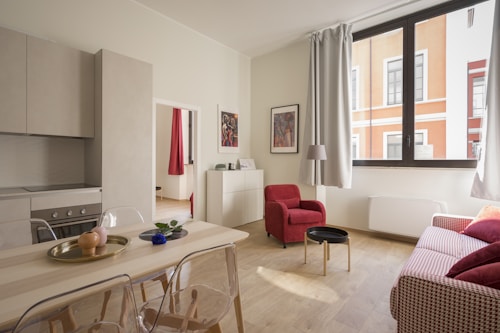
One of the biggest worries for international students moving to Tokyo is finding safe, affordable housing. Kokusai Jinbun addresses this by offering on-campus or affiliated student dormitories. This allows you to secure a place to live before you even board your flight. Living in affiliated housing drastically reduces your initial setup costs (no complex guarantor systems or heavy key money) and gives you an instant community of classmates to commute and cook with.
Living in Minamidai, Nakano-ku
Minamidai is a charmingly authentic Tokyo neighborhood. Unlike the chaotic, crowded streets of Shinjuku, Minamidai offers quiet streets, local Japanese public baths (sento), traditional shopping streets (shotengai), and affordable supermarkets (such as Life and Summit) where you can buy fresh groceries.
* Commuting: The area is exceptionally well-connected. You can easily access the Tokyo Metro Marunouchi Line (via Honancho or Nakano-fujimicho stations) or the Keio New Line (via Sasazuka Station). Additionally, local buses run directly from Minamidai to Shinjuku Station in about 15 to 20 minutes, making weekend exploration or part-time job commuting incredibly simple.
* Bicycle Culture: Most students at Kokusai Jinbun find that a bicycle is their best friend. You can easily ride to class, the local library, nearby parks, and surrounding shopping districts within 10 to 15 minutes.
4) 🎓 University & Career Pathways
The ultimate measure of a language school's success is where its graduates go next. At Kokusai Jinbun, academic progression is not an afterthought—it is the core mission.
One-on-One Academic Counseling
Starting from your very first term, the school’s academic advisors work with you to map out your higher education path. This includes:
1. University Selection: Matching your academic background, EJU scores, and personal interests with the right private or public universities in Japan.
2. Application Coaching: Navigating the complex administrative requirements of Japanese universities, including collecting high school transcripts, writing statements of purpose, and compiling recommendation letters.
3. Interview Preparation: Japanese universities and vocational schools place immense weight on the personal interview (Mensetsu). Advisors conduct multiple rounds of mock interviews with you, refining your posture, polite Japanese honorific language (Keigo), and confidence.
4. Graduate School Prep: For students who already hold a bachelor's degree from their home country, advisors provide specialized support in contacting Japanese professors and drafting rigorous research proposals.
By keeping enrollment small, the school ensures that no student is left behind in the chaotic university application season. You will receive step-by-step guidance right up until you receive your acceptance letter.
5) 💡 Practical Tips for Applicants
If you are considering applying to Kokusai Jinbun Foreign Language Academy, here are some practical, insider tips to help you prepare:
- Align Your Intake Month with Your Goals:
- If you are a complete beginner in Japanese, the April (2-Year) Course is highly recommended. This timeline gives you enough runway to build your language skills from zero to academic fluency before university exams.
- If you already have an N3 level of Japanese, the October (1.5-Year) Course or the January (1.3-Year) Course can save you time and tuition money, helping you bridge the gap to N1/N2 quickly.
- Prepare Early for Visa Applications: The Japanese immigration system requires extensive documentation for the student visa. You should begin your application process 5 to 6 months before your intended start date.
- Budget for Tokyo Life: While Nakano offers cheaper living options than central Shibuya or Roppongi, Tokyo is still a major metropolis. In addition to the tuition fees (which range from approximately 1.0M to 1.5M JPY depending on the course length), you should budget roughly 100,000 to 130,000 JPY per month for rent, food, utilities, and transportation.
- Learn Hiragana, Katakana, and Basic Kanji Before You Arrive: Even if you are entering the beginner course, knowing your basic alphabets and some simple vocabulary before landing in Japan will help you adjust to daily life much faster and allow you to dive straight into grammar during your first week of classes.
Kokusai Jinbun Foreign Language Academy is a fantastic choice for disciplined, ambitious students who want a supportive, family-like community while navigating the demanding path to Japanese higher education. Its strategic location in Nakano, paired with dedicated teachers and affordable tuition, makes it an exceptional launchpad for your life in Japan.
Related study abroad guides
Was this page helpful?
Your feedback helps us improve our guides
Nearby housing


Related guides
 Budget
Build Your PC in Akihabara: Tsukumo, Dospara, Ark - Student Guide 2026
Budget
Save with Japanese Budgeting Apps: Money Forward ME vs Zaim for Students
 Visa
Visa
My COE was Denied: What to Do Next? A Comprehensive Guide to Re-application
 Housing