Meikou Education Japanese Language School
東京都台東区東上野5-15-2 TSSビル
School Overview & Philosophy
Meikou Education Japanese Language School, strategically located in Higashi Ueno, Taito Ward, Tokyo, operates with a philosophy dedicated exclusively to academic excellence and guaranteed progression to highly selective Japanese universities. The name 'Meikou' translates to 'Prestigious School' or 'Elite School,' reflecting its ambitious mission to serve as a rigorous preparatory gateway for international students aiming for the highest levels of Japanese higher education. Unlike many language schools that offer general communicative courses, Meikou is fundamentally structured as a juku (cram school) environment interwoven with intensive Japanese language instruction. Its central location near Ueno—a hub of culture, academics, and transportation—provides students with unparalleled access to major university campuses, national libraries, and cultural institutions, which are essential resources for high-level academic research and preparation.
The school’s core mission is to transform students with foundational Japanese knowledge into candidates who can not only pass the demanding EJU (Examination for Japanese University Admission) and N1 proficiency tests but also thrive within the demanding academic environment of a top-tier Japanese university. This focus necessitates a highly disciplined and structured learning environment. The curriculum is not merely about achieving fluency; it is about mastering the highly specialized academic Japanese required for essay writing, complex seminar discussions, and understanding specialized course material across various disciplines. Meikou recognizes that simply achieving N1 is insufficient; students must possess the academic literacy and critical thinking skills essential for university success, driving the school’s pedagogical approach towards meticulous detail and exhaustive practice.
With a moderate capacity of 225 students, Meikou maintains smaller class sizes compared to larger institutions, allowing for greater individualized attention—a critical factor in progression-focused education. The administration and faculty are typically composed of educators with deep experience in the Japanese higher education system, ensuring that guidance on university selection, application strategies, and interview preparation is highly informed and up-to-date. The school emphasizes continuous performance evaluation, ensuring that any academic weakness is identified and addressed swiftly through supplementary classes or individualized tutoring, thereby maintaining high academic standards across the student body. This intensive, results-oriented environment is perfectly suited for highly motivated students who are committed to making a substantial investment in their future academic career in Japan, particularly those targeting demanding fields such as Science, Engineering, Medicine, or Law, which require superior language and academic foundational knowledge.
Furthermore, the school operates on the understanding that the transition to Japanese academic life involves cultural adaptation. While the primary focus remains academic rigor, Meikou integrates seminars on Japanese etiquette, research ethics, and university life structure, providing a holistic preparation that extends beyond mere linguistic competence. The proximity to hubs like Akihabara and Tokyo Station means students are integrated into a metropolitan environment, fostering rapid cultural assimilation alongside their academic pursuits. The administrative dedication extends to handling the complex documentation required for both visa renewals and university applications, ensuring a streamlined process that minimizes stress for the students, allowing them to concentrate solely on their studies and EJU preparation.
Courses, Curriculum & Teaching Style
Meikou Education Japanese Language School exclusively offers intensive 'Higher Education Progression Courses,' designed to align precisely with the requirements of Japanese university entrance cycles. The available durations—2 years (April intake), 1 year 9 months (July intake), 1 year 6 months (October intake), and 1 year 3 months (January intake)—ensure that students, regardless of their starting proficiency, have the necessary contact hours to reach advanced fluency and complete exhaustive EJU preparation before the main university examination periods.
Curriculum Structure: The Three Pillars of Progression
- Core Japanese Language Mastery: The initial phases focus on achieving functional fluency up to the N2 level. However, the curriculum quickly pivots to academic Japanese, emphasizing advanced grammar structures, formal vocabulary (敬語/polite language), and complex reading comprehension skills necessary for interpreting academic papers and university lecture materials. This includes focused training on reading speed, skimming, and detailed analysis of complex Japanese texts.
- EJU Subject Preparation (Specialization Track): This is the school’s defining feature, particularly the strong emphasis on the STEM Track. For students aiming at Science, Engineering, or Medical faculties, Meikou offers specialized subject preparation in Mathematics (Course 2, the higher difficulty level required for competitive universities), Physics, Chemistry, and sometimes Biology. These classes are typically taught by specialized instructors who have experience teaching these subjects in Japanese, mirroring the content and difficulty of the EJU and specific university entrance exams. This specialized subject preparation is crucial, as many progression schools only offer general EJU preparation, forcing science students to seek expensive private tutoring elsewhere. Meikou internalizes this critical requirement.
- Application and Examination Technique: The final stage focuses intensively on examination strategy. This includes weekly mock EJU tests, timing exercises, essay writing workshops specific to university entrance requirements (often demanding logical argumentation and complex structural organization), and meticulous interview practice. Interview preparation is not generic; it is tailored to the student’s target university and major, covering specialized vocabulary and anticipated questions regarding their Statement of Purpose.
Teaching Methodology:
The teaching style is intensive, demanding active participation and rigorous homework completion. Classes often utilize authentic EJU materials and past university entrance exam papers from the very start. The instructors employ a 'flipped classroom' approach where possible, expecting students to review complex concepts before class, allowing class time to be dedicated to problem-solving, discussion, and practical application. Continuous assessment via monthly tests, quizzes, and regular counseling sessions ensures that the rigorous pace is maintained and that students are always aware of their standing relative to the national EJU benchmarks. For the STEM track, instruction often uses the terminology and structure of Japanese high school textbooks, ensuring seamless integration into the university lecture environment upon admission.
Student Body & Campus Life
The student body at Meikou Education Japanese Language School is overwhelmingly composed of highly motivated international students whose primary goal is entry into competitive Japanese universities. Given the intensive academic nature and specialized science track, the demographic tends to skew towards students from East Asian and Southeast Asian countries (e.g., China, Korea, Vietnam, Indonesia) where the Japanese education system, particularly its STEM fields, is highly valued. These students typically possess a serious, goal-oriented mindset, contributing to a campus culture that prioritizes study and academic achievement above casual language learning.
Campus Culture and Community:
While the atmosphere is academically rigorous, the school fosters a supportive community. The shared struggle of EJU preparation creates strong bonds among students. Study groups are common, extending into late evenings, leveraging the accessible urban location. The school facilitates cultural activities, but these are often strategically placed to relieve study pressure rather than serving as the main focus. Events might include short trips to local museums (utilizing Ueno’s rich cultural resources) or seasonal cultural workshops (e.g., calligraphy, tea ceremony) designed to enhance cultural understanding relevant to interview settings and general knowledge.
Strategic Location Advantage:
Meikou's location in Higashi Ueno is a significant advantage for student life. It offers proximity to essential amenities, affordable student dining options, and excellent transportation links (JR Ueno Station, Metro lines). Crucially, the location provides easy access to the libraries and research facilities of major universities in Tokyo, allowing students to attend open campus events or gather resources needed for their application essays without lengthy commutes. The urban setting provides students with numerous opportunities for part-time work (within visa regulations), though the school strongly advises prioritizing academic work given the demanding curriculum.
Student Support Services:
Academic success is inextricably linked to mental and logistical well-being. Meikou provides robust welfare support, including initial guidance on establishing bank accounts, registering local residency, and managing health insurance. For the intensive nature of the progression course, the counseling service is paramount, offering academic advising to help students select the right universities and majors based on their EJU scores, as well as pastoral care to manage the significant stress associated with high-stakes examinations. Emergency support systems are detailed, ensuring students and their overseas families have clear points of contact for medical or urgent situations. The overall campus environment is designed to minimize external distractions while maximizing academic focus, fostering a truly productive atmosphere for university preparation.
University & Career Pathways
The primary, if not exclusive, pathway promoted by Meikou Education Japanese Language School is progression to four-year undergraduate degrees or, for highly advanced students, direct entry into graduate schools (where applicable). The school's performance is intrinsically measured by the success rate of its graduates entering competitive institutions—particularly the National and Public Universities and the highly selective private institutions (like Keio, Waseda, and Sophia University).
The EJU and University Guidance Cycle:
Meikou organizes the progression cycle into distinct phases:
- Early Planning (First 6 Months): Students receive extensive information on the Japanese university landscape, EJU structure, and required scores. Personalized counseling begins, identifying the student's academic strengths and setting realistic yet ambitious targets (e.g., aiming for Osaka University Engineering vs. local private university).
- Intensive Preparation (Middle Phase): This period focuses on maximizing EJU scores across all required subjects (Japanese, Mathematics, Japan and the World for Humanities, or Science subjects). The school meticulously tracks past EJU trends and adjusts the curriculum to address current examination difficulties. Mock tests are administered under strict conditions, simulating the actual pressure of the national examination.
- Application Strategy and Interview Coaching (Final Phase): This is where Meikou’s expertise in competitive admissions shines. Guidance includes:
- Essay Writing: Specific workshops on writing the shibou riyū-sho (Statement of Purpose), focusing on tailoring the content to the specific university's mission and faculty research areas.
- Interview Mastery: Extensive role-playing and mock interviews conducted by faculty members who understand the difference between humanities and science faculty interview expectations. For STEM students, this includes defending their interest in highly technical fields in Japanese.
- Document Review: Meticulous review of all application materials, including transcripts and certification requirements, ensuring procedural perfection necessary for high-stakes applications.
Specialized STEM Progression:
Given the explicit focus on Science, Meikou excels in placing students in hard science and engineering faculties. The dedicated science track ensures students are not disadvantaged by the subject-specific knowledge deficit often faced by international students in Japan. Success stories often involve placement in demanding fields that require not just high EJU scores but also high proficiency in technical Japanese, demonstrating the school's commitment to specialized academic training. The school maintains active relationships with various university admissions departments, keeping abreast of changes in entry criteria for international students, maximizing the strategic advantage for its highly prepared graduates.
Accommodation & Living Support
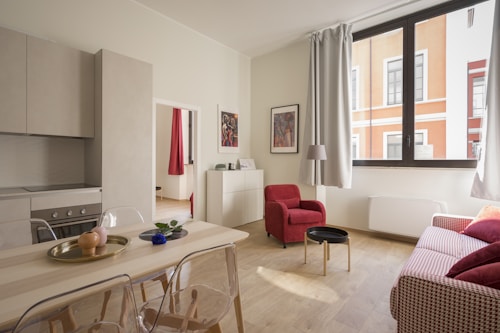
As a highly focused academic institution in central Tokyo, Meikou Education Japanese Language School understands that a stable and supportive living environment is crucial for students undergoing intense university preparation. While it does not typically own expansive, dedicated campus facilities, it maintains partnerships with trusted external accommodation providers to offer several options tailored to different student needs and budgets.
Primary Accommodation Options:
- Designated Student Dormitories (Gakusei Kaikan): This is the most common and recommended option, particularly for students new to Japan. These dormitories, managed by external specialized companies, offer single or twin rooms, providing a secure and structured living environment. Features often include shared common areas, guaranteed internet access, and on-site managers. Critically, these dormitories are usually located along convenient commuting lines to the school, ensuring that the demanding study schedule is not undermined by long travel times. The structured environment helps enforce good study habits and time management.
- Shared Apartments (Geshuku/Share Houses): For students seeking more independence or slightly lower costs, the school assists in coordinating placements in student share houses. These houses offer individual rooms but shared kitchen and living facilities. While offering more flexibility, the school vets these options carefully to ensure they meet minimum standards of safety and proximity, recognizing that a student's living situation directly impacts academic performance.
- Initial Housing Support (for independent search): For older or more experienced students who prefer independent apartment rental, the school provides comprehensive guidance on navigating the complex Japanese rental market, which typically involves substantial initial fees (key money, guarantee fees, agent commissions). The school often acts as a necessary guarantor, easing the application process for international students who lack a local credit history.
Living Support Services:
- Initial Orientation: Comprehensive orientation upon arrival covers public transport usage, local emergency procedures, disaster preparedness (critical in Tokyo), and neighborhood familiarity, helping students settle quickly.
- Health and Safety: Assistance with mandatory national health insurance enrollment and guidance to nearby medical facilities. Given the high-pressure environment, the school maintains awareness of student health and encourages prompt attention to physical and mental well-being.
- Administrative Assistance: Continuous support is provided for official procedures, including visa renewal processes, which are mandatory throughout the student's study period, and necessary documentation for part-time work permits (within the 28-hour weekly limit). The administrative staff understands the critical nature of maintaining valid immigration status while studying, providing proactive reminders and assistance, allowing students to focus entirely on their EJU and university entrance preparations.
Tuition, Fees & Scholarships
Meikou Education Japanese Language School’s tuition structure reflects the high intensity and specialized nature of its academic preparation courses, especially the inclusion of dedicated EJU subject training (including STEM subjects) which often commands a premium in the Tokyo language education market. The fees are comprehensive, covering application processing, enrollment, tuition, and standard facility use, ensuring transparency for international applicants.
Detailed Course Fee Breakdown (Initial Year)
The following table outlines the total fees (inclusive of enrollment, tuition, and miscellaneous fees, but exclusive of external costs like textbooks or insurance) for the various progression course lengths offered, based on the input data:
| Course Name (English Translation) | Admission Month | Duration | Total Fees (JPY) | Approximate USD Equivalent* | Structure Rationale |
|---|---|---|---|---|---|
| Progression 2-Year Course | April | 24 Months | ¥1,600,000 | $10,400 | Standard comprehensive progression track |
| Progression 1 Year 9 Months Course | July | 21 Months | ¥1,405,000 | $9,132 | Designed for students starting in summer |
| Progression 1 Year 6 Months Course | October | 18 Months | ¥1,210,000 | $7,865 | Ideal for those requiring focused EJU prep |
| Progression 1 Year 3 Months Course | January | 15 Months | ¥1,015,000 | $6,598 | Highly accelerated track for semi-advanced students |
*Note: USD equivalent is estimated based on an exchange rate of ¥154 to $1, subject to market fluctuations. Fees typically do not include textbooks (which may cost an additional ¥30,000–¥50,000 per year, particularly for specialized EJU subject materials) or compulsory health insurance premiums.
Payment Schedule and Financial Planning:
Fees are typically requested in two major installments: an initial payment covering application, enrollment, and the first term (usually 6 months of tuition) upon receiving the Certificate of Eligibility (CoE), and subsequent payments billed every six months thereafter. Students are strongly advised to budget for the high cost of living in central Tokyo (accommodation, transport, and daily expenses), which can often exceed tuition fees.
Scholarships and Financial Support:
Meikou Education, as a recognized language institution, facilitates access to several critical scholarship opportunities for its high-performing progression students:
- MEXT (Monbukagakusho) Scholarships: While MEXT scholarships are primarily managed directly by the Japanese government, the school provides intensive assistance with the application process for students seeking MEXT funding before or after enrollment.
- JASSO (Japan Student Services Organization) Scholarship: High-achieving, financially eligible students can apply for the JASSO Honors Scholarship for Privately Financed International Students, which offers a monthly stipend. The school carefully selects and recommends candidates based on their attendance, academic performance, and EJU mock scores.
- Internal Academic Excellence Awards: Meikou often runs internal scholarship programs designed to reward outstanding academic achievement and perfect attendance, particularly focusing on rewarding students who demonstrate exceptional improvement in EJU subject scores or successfully transition to high-ranking universities. These awards serve as both financial aid and powerful motivation within the highly competitive academic environment, reinforcing the school’s dedication to student success and academic rigour.
Related study abroad guides
Was this page helpful?
Your feedback helps us improve our guides