Mihara International Foreign Language Academy (Japanese Department)
広島県三原市宮沖5-8-15
School Overview & Philosophy
Mihara International Foreign Language Academy (MIFA), Japanese Department, is strategically located in Mihara City, Hiroshima Prefecture. It offers a focused and immersive Japanese learning environment, away from the intense competition of Japan's metropolitan areas like Tokyo and Osaka. With a capacity of 120 students, MIFA operates on a philosophy rooted in providing personalized guidance and comprehensive support. This support is necessary for international students to successfully navigate the challenges of the Japanese language and the complexities of higher education progression. Its location in the Chugoku region, an area rich in history and culture yet maintaining a lower cost of living, is a significant advantage. This allows students to maximize their study time without the financial pressures typical of larger cities. The school aims not merely to teach grammar and vocabulary, but to cultivate effective communicators and academically proficient candidates ready for university admission across Japan.
MIFA’s core mission is defined by its dual focus: academic rigor tailored for university entry and the development of robust, practical conversational fluency. This balanced approach ensures that graduates possess the high level of Japanese proficiency (N2/N1) required for demanding academic environments. It also equips them with the practical, everyday language skills necessary for seamless integration into Japanese society and future employment. The smaller school size allows faculty members to maintain a closer relationship with students, monitoring their progress meticulously and adjusting teaching strategies based on individual learning curves and specific goals, whether those goals involve entering a highly competitive national university or pursuing vocational training.
The institution’s commitment to providing a holistic experience is immediately apparent through the inclusion of integrated dormitory facilities. This essential feature addresses one of the primary hurdles for new international students—securing safe, affordable, and convenient accommodation immediately upon arrival. By offering school-managed housing, MIFA ensures a smooth transition, allowing students to dedicate their mental and financial resources entirely to their studies from day one. Furthermore, being located outside the hyper-competitive study hubs means students benefit from a more authentic and less overwhelming cultural experience, fostering deeper local interaction and genuine immersion opportunities crucial for language mastery.
Ultimately, MIFA positions itself as a specialized gateway for serious students aspiring to higher education. Its curriculum is deliberately structured to bridge the gap between intermediate Japanese skills and the advanced academic language proficiency demanded by Japanese universities. By focusing heavily on EJU preparation alongside foundational linguistic skills, the academy provides a clear, structured pathway. The setting in Mihara, Hiroshima, facilitates a high-quality educational experience where resources are concentrated, community support is strong, and distractions are minimal, creating an ideal environment for intensive language acquisition and rigorous academic preparation.
Courses, Curriculum & Teaching Style
MIFA offers a precise selection of courses designed to cater to varying levels of existing Japanese proficiency and specific progression timelines. All courses share a strong emphasis on achieving academic excellence and practical fluency. The curriculum is divided into three primary tracks: the Basic Course and two distinct Advancement Courses (1-Year and 1.5-Year options).
- Basic 1 Year Course: Designed for students typically entering with minimal or no prior Japanese knowledge, this course runs from the April intake. While it provides a comprehensive foundation, the 1-year duration means the pace is rapid and highly intensive. The primary goal is to establish a strong base in grammar, vocabulary, reading, and listening, aiming to bring students to an intermediate level (N3 to low N2). The curriculum structure emphasizes rapid acquisition of core linguistic structures while maintaining the conversation focus, ensuring practical communication skills are developed concurrently with academic proficiency.
- Advancement 1 Year Course: Also commencing in April, this course targets students who may possess existing intermediate Japanese skills (N4/N3 level) or those who demonstrate exceptionally fast learning during the initial period. The curriculum is heavily weighted towards academic skills necessary for university entry, including advanced reading comprehension, essay writing, specialized vocabulary (e.g., scientific or sociological terms), and intensive practice for the EJU and internal university entrance examinations. The high-speed nature of this course demands significant dedication and is ideal for students aiming for rapid entry into undergraduate or graduate programs.
- Advancement 1.5 Year Course: Commencing in October, this is the most common and arguably the most robust pathway for general progression. The extended duration (18 months) provides a crucial period for students starting from a foundational level to build up to N1/N2 proficiency while simultaneously mastering the complexities of EJU and university entrance examination formats. This course allows for a more balanced approach, integrating cultural studies and enhanced conversation practice without sacrificing the rigor of academic preparation. The extended time frame is especially beneficial for students who require additional support in specialized subjects relevant to the EJU, such as Mathematics, Physics, or General Knowledge.
The teaching methodology at MIFA is student-centric and goal-oriented. Classrooms are generally smaller than those in mega-schools, fostering greater teacher-student interaction. The conversation focus confirms the use of communicative teaching techniques, utilizing role-playing, debates, and presentations to ensure students can actively use the language, not just memorize textbook examples. Furthermore, the commitment to EJU (Examination for Japanese University Admission) preparation is integrated directly into the upper-level curriculum, meaning that language lessons often utilize EJU-style questions and formats, preparing students seamlessly for the high-stakes examination environment. Regular simulated exams and detailed feedback sessions are standard components of the Advancement courses, reflecting the school’s core dedication to academic progression.
Student Body & Campus Life
The campus life at Mihara International Foreign Language Academy is characterized by its intimate scale and supportive community atmosphere, largely a benefit of its capacity being capped at 120 students. This smaller size cultivates a tightly knit student body and facilitates deeper cultural exchange among peers from diverse global backgrounds. While the specific demographic breakdown may lean towards students from East and Southeast Asia (a common trend in regional schools focusing heavily on higher education progression), the environment promotes constant communication in Japanese, essential for rapid fluency development.
Studying in Mihara City, Hiroshima Prefecture, provides a distinct advantage often overlooked by students flocking to Tokyo or Kansai. The cost of living is significantly lower, easing the financial burden on international students who often rely on part-time work. Crucially, the local community engagement is often stronger in regional settings. Students at MIFA are encouraged to participate in local events, volunteer activities, and school-organized trips that leverage the cultural richness of the Chugoku region, including visits to historical sites like Miyajima Island and the Peace Memorial in nearby Hiroshima City. These cultural excursions are not merely leisure activities; they are integrated learning opportunities that reinforce the language taught in the classroom through real-world context.
The focused environment of Mihara helps students maintain discipline and concentration on their primary goal: academic progression. The absence of the overwhelming distractions and pressures of a major metropolis allows for better study habits. Campus life is further enhanced by the provision of comprehensive living support, often centered around the school's integrated dormitory system. This provides a safe, familiar base, especially important during the initial acclimation period. Student life support services are highly localized and personalized, dealing with everything from necessary bureaucratic procedures (visa renewal, city registration) to daily life issues (healthcare access, banking, part-time job searching guidance). The school acts as a central hub for all student welfare, ensuring a smooth and productive stay in Japan.
University & Career Pathways
The feature 'Higher Education Progression' is a defining characteristic of MIFA, indicating that the curriculum, teacher training, and support infrastructure are primarily geared towards successfully enrolling students into Japanese universities, graduate schools, or specialized vocational colleges. The school operates as a highly specialized preparatory institution for academic success.
- EJU Preparation Excellence: Central to MIFA’s progression strategy is intensive preparation for the Examination for Japanese University Admission (EJU). This crucial test is the gateway to higher education for most international students. Advancement courses systematically cover all EJU modules, including Japanese as a Foreign Language, Mathematics (Courses 1 and 2), Science (Physics, Chemistry, Biology), and Japan and the World (General Knowledge). Faculty specializing in these subject areas provide supplementary lessons tailored to the EJU format, ensuring students are not only proficient in the Japanese language but also academically competitive in their chosen field of study.
- Personalized Guidance and Application Support: Given the smaller student capacity (120), MIFA excels in providing individualized academic counseling. Guidance counselors work one-on-one with students to identify appropriate target institutions based on their academic scores, financial situation, and career aspirations. This support extends through the entire application process, including:
- Selection of target schools (often regional national universities in the Chugoku/Shikoku area like Hiroshima University or Okayama University, but also competitive private institutions nationally)
- Crafting compelling application essays and research plans
- Preparing for interview simulations (both Japanese and subject-specific)
- Navigating the complex documentation requirements for entrance exams and visa status changes.
The goal is a high acceptance rate, ensuring that the student's investment in time and tuition yields the desired academic outcome.
- Beyond University: While the primary focus is university enrollment, the school also recognizes the diverse ambitions of its students. Support is provided for those seeking entrance into senmon gakkou (vocational colleges) that offer specific technical or professional skills training. For students whose goal is employment, the conversational focus equips them with the high-level practical Japanese needed for professional environments, supplemented by cultural and business etiquette training necessary for entering the Japanese job market after graduation or advanced study.
Accommodation & Living Support
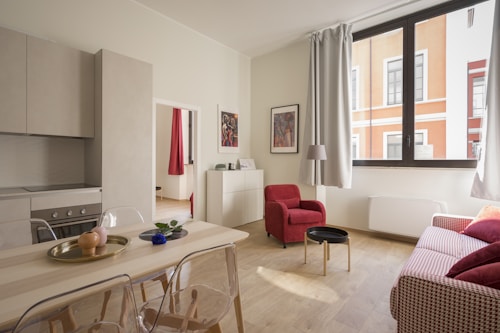
The provision of an integrated dormitory is perhaps the most critical supportive feature MIFA offers, particularly valuable in a regional setting where finding suitable, high-quality private accommodation immediately can be challenging for newcomers. School-managed dormitories eliminate the initial stress of apartment hunting, utility setup, and complex contracts, ensuring students can focus purely on academic acclimation.
-
Dormitory Benefits and Structure:
- Safety and Proximity: Dormitories are typically located within easy commuting distance of the campus, often minimizing travel time and costs. They provide a safe, supervised living environment, crucial for parental peace of mind and student welfare, especially in the initial months.
- Affordability: School-managed housing is generally more cost-effective in the medium term than sourcing private accommodation, as it bypasses high initial costs like key money (reikin), security deposits (shikikin), and agency fees. While monthly rent and utilities are charged, the consolidated fee structure simplifies budgeting.
- Community Building: Living in the dormitory fosters an immediate community among the international students, providing an internal support network for language practice, homework assistance, and cultural adjustment, further reinforcing the conversational skills honed in the classroom.
-
Comprehensive Living Support: The localized presence of MIFA in Mihara means that the support staff can provide attentive, personalized assistance with all aspects of daily life. This includes organizing essential services like National Health Insurance enrollment, guiding students through setting up bank accounts, and assisting with local registration at the municipal office. For part-time work, staff often leverage local business networks in Mihara and the surrounding Hiroshima area to connect students with reliable and appropriate employment opportunities, ensuring compliance with student visa regulations regarding working hours. This extensive, localized living support system is essential for minimizing administrative distractions and maximizing academic focus.
Tuition, Fees & Scholarships
The tuition structure at Mihara International Foreign Language Academy is competitive, especially considering the comprehensive academic support and mandatory EJU preparation embedded in the Advancement courses. Regional schools typically offer lower tuition than their metropolitan counterparts, and MIFA’s fees reflect this regional advantage, providing excellent value for the focused academic output.
Detailed Course Fee Breakdown
| Course Name (English) | Admission Month | Duration | Total First Year Fees (JPY) | Notes on Fees |
|---|---|---|---|---|
| Basic 1 Year Course | April | 12 Months | ¥675,000 | Focus on foundational skills; rapid progression. |
| Advancement 1 Year Course | April | 12 Months | ¥675,000 | Intensive EJU preparation and academic focus. |
| Advancement 1.5 Year Course | October | 18 Months | ¥955,000 | Extended learning period for comprehensive EJU and N1 preparation. |
Note: Total Fees typically include tuition, application fee, enrollment fee, facility fees, and study materials for the first academic year/period. Exact mandatory fees (e.g., insurance, student association dues) may be calculated separately upon enrollment.
- Financial Analysis and Value Proposition:
The ¥675,000 annual fee is highly attractive and below the average for many established language schools in major cities, which often charge between ¥750,000 and ¥900,000 for a similar duration. This affordability, combined with the lower cost of living in the Hiroshima region, makes MIFA an exceptionally budget-friendly option for students dedicated to higher education. The 1.5-year course, while totaling ¥955,000, offers the advantage of an 18-month visa period for only a moderate increase in total cost compared to two separate one-year enrollments elsewhere.
- Scholarship Opportunities: While the data does not specify internal scholarships, it is highly probable that as an accredited institution focused on progression, MIFA actively supports students in applying for external governmental and private scholarships. These typically include the MEXT Scholarship for Privately Financed International Students (Honors Scholarship) provided by JASSO (Japan Student Services Organization). Given the school's focus on EJU performance and academic advancement, high-achieving students are usually prioritized for these external financial aids, further reducing the overall financial burden of studying in Japan. The faculty provides dedicated support for identifying and completing the rigorous application processes required for these merit-based scholarships.
Related study abroad guides
Was this page helpful?
Your feedback helps us improve our guides