Nara Foreign Language Academy
7-2 Hōren-chō, Nara-shi, Nara-ken
Nara Foreign Language Academy: Study Japanese Amidst Living History
Choosing the right environment for your Japanese language journey is one of the most critical decisions you will make. If you are looking for a school that combines rigorous academic preparation with a peaceful, culturally rich setting, Nara Foreign Language Academy (奈良外語学院) offers a unique and highly personalized path. Located in the ancient capital of Nara, this school provides an intimate learning atmosphere where students are treated as individuals, not just numbers.
🏛️ 1. School Overview & Philosophy
Nara Foreign Language Academy is nestled at 7-2 Hōren-chō, Nara-shi, Nara-ken, positioned beautifully in a quiet residential and educational district just north of the city center. Studying here means you are living alongside UNESCO World Heritage sites, historic temples, and the famous roaming deer of Nara Park. Unlike the overwhelming concrete jungles of Tokyo or central Osaka, Nara offers a calm, secure, and focused setting that is highly conducive to deep academic concentration.
With a maximum capacity of only 120 students, Nara Foreign Language Academy operates on a boutique scale. This limited capacity is a deliberate choice. It ensures a warm, family-like community where instructors, administration staff, and students know each other by name. The school’s underlying philosophy centers on "holistic linguistic cultivation"—the belief that mastering Japanese requires not just memorizing characters, but understanding the social, cultural, and historical context behind the language.
For international students, this means your transition to life in Japan is managed with exceptional care. From the day you arrive, the school’s staff supports you in navigating local administrative procedures, opening bank accounts, and settling into your daily routine, allowing you to focus entirely on your academic and career goals.
📚 2. Courses, Curriculum & Teaching Style
The academic framework at Nara Foreign Language Academy is structured to prepare students for higher education, local employment, or specialized academic tracks. The school offers two primary long-term study tracks designed to take students from their current level to advanced proficiency:
Course Overview Table
| Course Name | Admission Month | Duration | Total Fees (JPY) | Main Focus & Suitability |
|---|---|---|---|---|
| General 2-Year Course | April | 2 Years | 1,480,000 | Best for beginners wanting a complete, comprehensive path to N1/N2 and university preparation. |
| General 1.5-Year Course | October | 1.5 Years | 1,140,000 | An accelerated option for students with some prior Japanese knowledge or highly motivated fast learners. |
Specializations & Teaching Methodology
While the primary courses focus on building foundational and advanced Japanese language skills, the curriculum is highly adaptive. Nara Foreign Language Academy stands out by offering targeted pathways and support systems integrated into these general courses:
- EJU (Examination for Japanese University Admission) Preparation: Intensive training in reading comprehension, listening, and academic writing to help students score highly on the EJU.
- Science Course Focus: For students targeting science, technology, engineering, or mathematics (STEM) majors at Japanese universities, the school provides support in grasping complex scientific vocabulary and academic discourse.
- Art & Design Studies: Nara and neighboring Kyoto are rich hubs for the arts. The academy supports students preparing for competitive entrance examinations at Japanese art and design universities, helping them refine their self-recommendation letters and prepare for art-related interviews.
- Conversational & Business Japanese: Beyond textbooks, lessons include practical situational Japanese. You will learn the nuances of formal keigo (polite language), telephone etiquette, and business email writing to prepare you for the Japanese corporate world.
Classes are kept small to encourage active participation. Instructors use an immersive direct method (teaching Japanese in Japanese), supplemented by modern multimedia resources to keep lessons engaging and interactive.
🏡 3. Student Body & Campus Life
Because of its 120-student capacity, the community at Nara Foreign Language Academy is exceptionally close-knit. Students from diverse global backgrounds study together, fostering a multicultural environment where Japanese becomes the common bridge language.
Accommodation & Housing
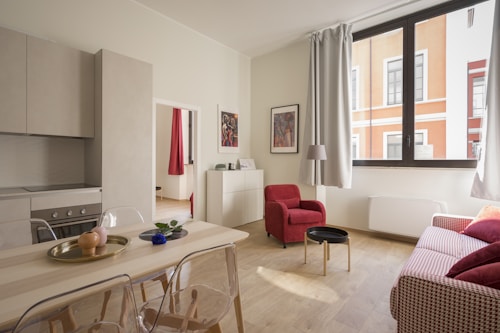
One of the biggest concerns for incoming international students is finding a safe, affordable place to live. The academy offers dedicated housing options, including dormitory facilities with private rooms.
- Private Rooms: Enjoy the peace and independence of your own private space to study, relax, and recharge.
- Convenience: The accommodations are located within easy commuting distance of the school, eliminating long and expensive train rides.
- Affordable Living: Rent in Nara is significantly cheaper than in Tokyo or neighboring Osaka, allowing you to maintain a high quality of life on a reasonable budget.
Experiencing Nara's Cultural Heritage
Campus life here extends far beyond the classroom walls. The school organizes regular cultural immersion activities designed to help you experience the history of Japan firsthand. Students have opportunities to participate in traditional tea ceremonies, try calligraphy, wear yukata, and visit historic landmarks like Todai-ji and Kasuga Taisha. These excursions are not just fun days out; they are integrated into the curriculum to give you real-world contexts for the vocabulary and customs you learn in class.
Additionally, the school supports hardworking students through various scholarship opportunities, rewarding academic excellence, high attendance rates, and positive contributions to the school community.
🎓 4. University & Career Pathways
Graduating from Nara Foreign Language Academy opens doors to various prestigious pathways across Japan. The school’s dedicated career and academic counseling office begins working with you early in your course to map out your post-graduation goals.
Higher Education Pathways
For students looking to advance to higher education in Japan, the academy offers tailored guidance for:
* National and Public Universities: Preparation for rigorous entrance exams and interview coaching.
* Private Universities: Assistance with recommendation-based admission processes.
* Vocational Schools (Senmon Gakko): Perfect for students looking to study specialized fields like hospitality, culinary arts, anime/manga, IT, or automotive mechanics.
With the school's focus on Science Courses and Art/Design Studies, students are uniquely positioned to apply to specialized technical and creative institutions in the Kansai region (including Kyoto, Osaka, and Kobe).
Employment & Career Readiness
For students who already hold a university degree from their home country and wish to work in Japan, the academy provides robust job-hunting support. This includes writing a professional Japanese-style resume (Rirekisho), mastering job interview manners, and connecting with local companies through employment agencies.
💡 5. Practical Tips for Applicants
To ensure a smooth transition and successful application to Nara Foreign Language Academy, keep the following practical advice in mind:
- Plan Around the Admission Months:
- Apply for the April Intake (2-Year Course) if you are a beginner or want the maximum amount of time to prepare for university entrance exams.
- Apply for the October Intake (1.5-Year Course) if you already have some basic Japanese knowledge (N5 level or equivalent) and want a faster track.
- Budgeting for Nara: While tuition fees (1,480,000 JPY for two years or 1,140,000 JPY for 1.5 years) represent a major investment, your daily cost of living in Nara will be remarkably low. Allocate approximately 70,000 to 90,000 JPY per month for rent, food, utilities, and personal expenses.
- Secure Your Dormitory Early: Because private room dormitory slots are highly sought after, make sure to indicate your housing preference as soon as you receive your initial acceptance from the school.
- Embrace the Location: Take advantage of being in Nara. While Osaka and Kyoto are only a 35 to 45-minute train ride away for weekend trips, the peace of Hōren-chō is ideal for daily study. Walk or cycle around the city to practice your conversational skills with friendly local residents, who are known for their warm hospitality toward international students.
Related study abroad guides
Was this page helpful?
Your feedback helps us improve our guides