Sakura International Language Institute Professional Training College
山口県下関市竹崎町3-5-19
School Overview & Philosophy
Sakura International Language Institute (専門学校さくら国際言語学院), located in Shimonoseki City, Yamaguchi Prefecture, is officially designated as a 'Senmon Gakko' or Professional Training College. This distinction sets it apart from standard language schools by placing a stronger emphasis on specialized vocational and higher education preparation. Students not only receive comprehensive Japanese language training but also develop foundational academic skills necessary for direct entry into Japanese universities, vocational schools, or the workforce. The school has a manageable capacity of around 200 students. This small-to-medium size is a deliberate strategic choice to foster a highly attentive and personalized learning environment where instructors can closely monitor each student's progress, something that is often challenging in larger metropolitan schools.
The core philosophy of Sakura International Language Institute is to provide a holistic educational experience that bridges the linguistic gap and facilitates deep cultural integration. Situated outside the highly competitive educational environments of Tokyo or Osaka, Shimonoseki offers a unique advantage: a peaceful, cost-effective, and culturally rich setting that is conducive to focused study. Shimonoseki, historically known as the gateway to Kyushu, provides a balance of urban convenience and traditional Japanese living, allowing students to immerse themselves in authentic Japanese daily life without the overwhelming distractions and expenses of major cities. The school emphasizes preparing students for high-stakes academic challenges, as demonstrated by its comprehensive preparation tracks for the Examination for Japanese University Admission for International Students (EJU) and specialized fields such as Science/STEM and Art/Design—specialties that are particularly strong in regional institutes.
Sakura International Language Institute considers Japanese language proficiency not simply a communication tool, but rather the essential foundation for academic and professional success in Japan. The curriculum is carefully structured to ensure rapid progression from foundational skills to advanced academic competencies, including sophisticated essay writing, technical vocabulary acquisition, and critical discussion skills required for university lectures and research. The school's commitment to student welfare is evident in the provision of dedicated, high-quality dormitory facilities, including the highly desirable single-room option, ensuring international students have a secure and conducive base from which to begin their academic careers. The institution aims to produce graduates who are not only fluent in Japanese but also culturally adept, critically thinking individuals who are prepared to excel in their chosen fields of higher education or professional employment.
In essence, the Senmon Gakko Sakura Kokusai Gengo Gakuin offers a focused, specialized, and supportive pathway for international students aiming for ambitious academic goals in Japan. By leveraging its regional location for cost efficiency and its Professional Training College status for specialized educational content, it provides a high-value alternative to the crowded market of language education in Japan's largest cities, appealing strongly to serious students dedicated to university enrollment in technical, artistic, or business disciplines.
Courses, Curriculum & Teaching Style
The main offering at Sakura International Language Institute is the comprehensive Further Education Course (進学コース), which is designed specifically for students whose primary goal is to enter a Japanese university (undergraduate or graduate), a vocational school (Senmon Gakko), or a specialized college. The course curriculum is dynamic and adapts to the student's entry term, reflecting the typical Japanese academic calendar. The primary entry points are April (2-year program), July (1 year 9 months program), and October (1 year 6 months program), with tuition fees that correspond to the total length of study (e.g., April entry: 1,360,000 JPY; October entry: 1,035,000 JPY total).
Curriculum Structure and Specialization:
The initial phase of the curriculum (Beginner to Low-Intermediate) focuses intensely on establishing a solid foundation in grammar, vocabulary, and the four core skills (reading, writing, listening, and speaking). However, unlike general conversation schools, the intermediate and advanced phases shift sharply towards academic preparation. This is where the school truly distinguishes itself through dedicated specialization tracks:
- EJU/General Advancement Track: This standard university prep track focuses on mastering the general subjects required for the EJU (Japanese as a Foreign Language, Mathematics, and Japan and the World). Emphasis is placed on advanced reading comprehension of complex academic texts, essay composition for university applications, and high-level listening skills needed for lectures.
- Science/STEM Pathway (이과): Recognizing the unique needs of aspiring science and engineering students, this specialized pathway integrates Japanese language study with supplementary instruction for the EJU Science modules (Physics, Chemistry, Biology, and Advanced Mathematics). This is a crucial offering, as finding dedicated EJU Science preparatory classes in regional language schools can be difficult. The school ensures that students acquire the Japanese technical vocabulary and conceptual understanding necessary to succeed in university science entrance exams and subsequent coursework.
- Art & Design Pathway (미술, 디자인): For students aiming for prestigious art universities or vocational design schools, this track combines advanced Japanese language training with practical support for portfolio preparation and specialized entrance examination strategies. This often involves classes focused on descriptive writing, aesthetic critique in Japanese, and, critically, guidance on interviewing and presentation skills essential for art school admissions.
- Business Pathway (비즈니스): Catering to those pursuing commerce, economics, or direct employment, this track includes modules on Japanese business etiquette, practical workplace communication, professional letter writing, and preparation for the BJT Business Japanese Proficiency Test. This focus ensures graduates are not only linguistically equipped but also culturally prepared to navigate the Japanese professional environment.
Teaching Methodology:
The teaching methodology is characterized by a high degree of interaction and practical application, with a particular emphasis on conversational fluency (회화) alongside academic rigor. Classes are structured to foster proactive participation, utilizing task-based learning and group projects. Regular simulated EJU tests and mock interviews are integral components of the advanced curriculum, providing students with realistic pressure testing and strategic feedback necessary to excel in the competitive university admission process. The small class sizes, which are a result of the school's 200-student capacity, allows teachers to provide individualized feedback on complex writing assignments and specialized subject matter, ensuring targeted intervention where needed.
Sakura International also accommodates short-term needs (단기), providing flexibility for students who wish to improve their Japanese temporarily or experience life in Shimonoseki before committing to a longer academic visa course. This combination of specialized academic support and practical communication ensures that the school fulfills its commitment to successful university matriculation.
Student Body & Campus Life
While the specific demographic breakdown of the student body is not provided, Sakura International, as an international language institute (especially one that accommodates up to 200 students), hosts a diverse group of learners primarily from various East Asian and Southeast Asian nations. This mix of backgrounds enriches the campus environment, requiring students to communicate primarily in Japanese, thereby accelerating their fluency. The limited capacity ensures that the student community is close-knit, fostering stronger friendships and peer-to-peer support networks, which are crucial for navigating the challenges of studying abroad.
Location Advantage: Shimonoseki Life
Studying in Shimonoseki offers a distinctly different quality of life compared to major metropolitan centers. Students benefit significantly from lower living expenses, especially concerning rent and daily necessities. The school’s address in Shimonoseki City (Yamaguchi Prefecture) places students in an area rich in history and culture, known for its seafood (especially fugu—pufferfish) and its strategic coastal location. The campus itself is likely situated conveniently close to key transport hubs (like Shimonoseki Station), maximizing accessibility to local amenities, part-time job opportunities, and public services. This convenience, paired with a less chaotic urban environment, allows students to focus intensively on their studies.
Cultural and Extracurricular Integration:
Campus life at Sakura International is designed to extend beyond classroom instruction. Regional language schools often place greater emphasis on local immersion. The institute organizes regular cultural excursions and seasonal events unique to the Yamaguchi region, such as participation in local festivals, visits to historical sites (like the Kanmon Straits), and practical cultural workshops (tea ceremony, calligraphy). These activities are vital for reinforcing language skills in real-world contexts and fostering a deeper appreciation for Japanese customs and societal norms, directly supporting the goal of long-term integration.
Furthermore, the small student population means that academic counseling and daily life support are easily accessible. Staff members are likely highly engaged in students' welfare, assisting with administrative tasks, medical emergencies, and part-time job applications. The secure and comfortable environment provided by the dedicated dormitory facilities (detailed below) further contributes to a stable and focused student life, minimizing the anxieties often associated with initial relocation to a foreign country.
University & Career Pathways
The ultimate goal of the Further Education Course is successful placement into higher education, and Sakura International Language Institute employs specialized strategies to maximize student success, particularly in competitive fields like Science and Art.
EJU Mastery and Specialized Subject Preparation:
The school’s reputation depends on its success in EJU preparation. Students are rigorously trained in the EJU-specific content areas, with a mandatory focus on developing advanced test-taking strategies. The provision of specialized tracks for Science (Mathematics Course 2, Physics, Chemistry) and Art/Design is exceptionally valuable. For science students, the hurdle often lies not in understanding the concepts but in mastering the technical terminology and exam structure in Japanese. Sakura International provides these critical bridging classes, ensuring students can transfer their prior scientific knowledge effectively into the Japanese academic system.
For Art and Design applicants, admissions often rely heavily on portfolio interviews and practical tests. The school provides dedicated guidance on developing a compelling portfolio, structuring artistic arguments in Japanese, and successfully navigating the specialized entrance procedures of institutions like Tokyo University of the Arts or regional equivalents. This comprehensive support extends far beyond standard Japanese vocabulary, encompassing specific terminology related to media, materials, and artistic theory.
Advancement Counseling and Recommendation System:
Given its status as a Professional Training College, the institute maintains strong relationships with universities and vocational schools throughout the Chugoku and Kyushu regions, and potentially beyond. High-performing students often benefit from the internal recommendation system (suisen), which allows them to bypass certain entrance exams or gain preferential consideration at affiliated institutions. Individualized counseling sessions are mandatory, assisting students in selecting appropriate universities based on their EJU scores, desired major, and financial resources. This bespoke guidance is facilitated by the low student-to-teacher ratio.
Career Preparation for Vocational Graduates:
For those aiming for vocational schools (Senmon Gakko) or direct career entry after language study, the Business Pathway provides essential skills. Graduates are equipped with the high-level Japanese required for workplace communication (JLPT N1/N2 equivalent) and a foundational understanding of Japanese corporate culture. The school aids in resume writing, interview practice specifically tailored to Japanese HR standards, and networking opportunities, ensuring that whether the student pursues a Ph.D. or a professional certificate, they possess the necessary linguistic and cultural capital to thrive.
Accommodation & Living Support
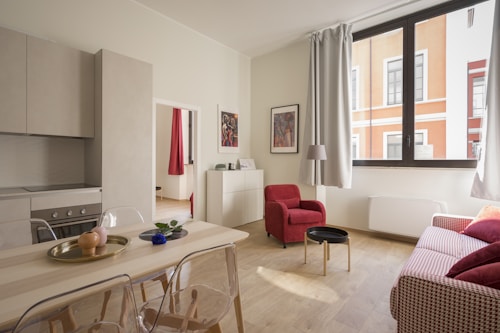
Sakura International Language Institute places a strong emphasis on providing secure and high-quality accommodation, which is a significant factor for international students. The most noteworthy feature is the availability of school-managed dormitories, specifically offering single rooms (1인실).
High-Privacy Dormitory System:
The option for single rooms is a major draw, particularly in Japan where shared or twin rooms are often the standard for school-provided housing. A single room offers students the necessary privacy and quiet environment crucial for intensive academic preparation, especially when juggling advanced language studies with EJU subject preparation. The school manages the dormitory facilities directly, ensuring consistent quality, maintenance, and security protocols. Dormitories are typically located within easy commuting distance of the campus, minimizing daily travel stress and expenses.
Comprehensive Living Support:
Beyond accommodation, the institute provides robust daily life support. The support system assists students with initial settling-in procedures, including registering with the local municipality (residence card processing), opening bank accounts, setting up utilities, and obtaining necessary health insurance. Staff are prepared to handle language barriers encountered in daily life, such as medical appointments or contractual negotiations.
Cost of Living Advantage:
One of the most compelling reasons to choose Shimonoseki is the substantial reduction in living costs compared to major metropolitan hubs. While tuition fees are competitive (see table below), the lower average rent and reduced costs for food and transportation dramatically lower the overall financial burden on international students. This allows students to allocate more of their resources toward educational materials and focused study, rather than grappling with the high expense of city life. The combination of mandatory, affordable single-room dorms and lower regional living costs makes Sakura International a financially sensible choice for ambitious students.
Tuition, Fees & Scholarships
The tuition structure at Sakura International Language Institute is based on the duration of the Further Education Course, reflecting the necessary adjustments for students entering in different academic quarters. The figures provided are the total fees for the entire duration, and they are competitive, especially considering the specialized nature of the academic support provided.
Estimated Tuition Breakdown (Assumptions):
The total fees provided include application fees (estimated at ¥30,000), enrollment/entrance fees, facility fees, and 1.5 to 2 years of tuition. For clarity, the annual tuition is calculated by distributing the total cost across the full study period, though actual payment schedules typically require upfront payment of initial fees (application, enrollment, first-year tuition) followed by half-yearly installments.
| Item | April Entry (2 Years) | July Entry (1 Year 9 Months) | October Entry (1 Year 6 Months) |
|---|---|---|---|
| Total Course Fees (Provided) | ¥1,360,000 | ¥1,197,500 | ¥1,035,000 |
| Estimated Annual Tuition (Approx.) | ¥650,000 - ¥700,000 | ¥680,000 - ¥730,000 | ¥690,000 - ¥740,000 |
| Application Fee (Initial) | ¥30,000 (Estimated) | ¥30,000 (Estimated) | ¥30,000 (Estimated) |
| Entrance Fee (Initial) | ¥50,000 - ¥70,000 (Est.) | ¥50,000 - ¥70,000 (Est.) | ¥50,000 - ¥70,000 (Est.) |
Note: The total course fees listed are the maximum expected payment for the entire duration of the respective programs (24, 21, or 18 months). Final costs are subject to change and may include compulsory insurance or material fees not itemized here.
Scholarship Opportunities:
Sakura International is committed to rewarding academic effort, as shown by the explicit availability of Scholarships (장학금). These opportunities typically include the Japanese Government (Monbukagakusho) Scholarship for outstanding students and, most commonly, the LSH/JASSO Honors Scholarship for Privately Financed International Students. Additionally, the school may offer its own internal scholarships, typically awarded based on high attendance rates, exceptional academic performance (especially high JLPT or EJU scores), and contributions to campus life. Given the school's focus on higher education, staff actively guide eligible students through the complex application processes for external and internal funding, thereby assisting in reducing the overall financial cost of their long-term stay in Japan.
Related study abroad guides
Was this page helpful?
Your feedback helps us improve our guides