Shonan Japanese Academy Hamamatsu Campus
静岡県浜松市中央区入野町6095-1
🏫 School Overview & Philosophy
Choosing the right Japanese language school is one of the most critical decisions you will make on your path to studying, living, or working in Japan. If you are looking for an educational environment that blends academic rigor with a high quality of life, Shonan Japanese Academy Hamamatsu Campus (湘南日本語学園浜松校) is a premier destination. Located in the heart of Shizuoka Prefecture, this school stands out as a specialized, nurturing gateway for international students aiming for higher education and professional careers in Japan.
The philosophy of Shonan Japanese Academy is built on the belief that language learning should not happen in a vacuum. Language acquisition is most successful when integrated with career planning, academic coaching, and cultural adaptation. With a student capacity of 200 students, the campus maintains an intimate, focused atmosphere where teachers and staff can provide personalized, face-to-face attention to every single student. You will never feel like just a number here.
The Hamamatsu Advantage
Hamamatsu is legendary in Japan as a vibrant industrial and technological hub. Known globally as the birthplace of industrial giants like Suzuki, Yamaha, and Honda, the city boasts a thriving "Monozukuri" (traditional craftsmanship and manufacturing) culture. For international students, this means living in a city that is rich in part-time job opportunities, industrial networking, and post-graduation career prospects.
Located at 6095-1 Irino-cho, Chuo-ku, Hamamatsu-shi, Shizuoka, the campus is situated in a peaceful, residential area of the city. It is close to the scenic Sanaru Lake (佐鳴湖), providing a tranquil, green environment that is highly conducive to deep study, while still offering easy, direct access to the bustling center of Hamamatsu City. Here, you get the best of both worlds: a calm sanctuary to focus on your studies and quick access to a major urban center.
📚 Courses, Curriculum & Teaching Style
Shonan Japanese Academy Hamamatsu Campus offers structured, long-term courses designed to take students from their current proficiency level all the way to advanced Japanese academic or professional standard. The curriculum is meticulously divided to cater to different intake periods, helping students align their graduation with the traditional Japanese academic calendar (which begins in April).
Below is the official course structure and tuition schedule for the long-term programs:
| Course Name | Admission Month | Duration | Total Tuition & Fees (JPY) |
|---|---|---|---|
| General 1.5-Year Course (一般1年6か月コース) |
October | 1.5 Years | ¥1,025,000 |
| General 2-Year Course (一般2年コース) |
April | 2 Years | ¥1,340,000 |
Note: Total fees generally include application screening, admission fees, and standard tuition. Please consult the school directly upon application for a breakdown of textbooks, insurance, and potential facility maintenance fees.
Specialized Science Track (Rika) for Engineering Aspirants
One of the most defining and unique features of the Hamamatsu Campus is its Specialized Science Track (Rika). Because Hamamatsu is a manufacturing and technology capital, the school has tailored its preparation pathways for students who wish to enter engineering, information technology, robotics, and design departments at Japanese universities.
Most language schools only teach Japanese, leaving students to struggle on their own with the specialized math and science portions of the Examination for Japanese University Admission (EJU). Shonan Japanese Academy solves this by offering targeted academic support in:
* EJU Physics, Chemistry, and Biology
* Advanced Mathematics (Course II) for engineering majors
* Technical Japanese specifically used in laboratory and university lecture settings
Short-Term Study & Cultural Immersion
For those who cannot commit to a 1.5 or 2-year student visa program, the school also offers flexible short-term options. These courses are ideal for working professionals, working holiday visa holders, or students on tourist visas who want to undergo rapid, intensive language training while immersing themselves in Shizuoka’s rich local culture.
👥 Student Body & Campus Life
Because the student capacity is capped at 200, the student body at Shonan Japanese Academy Hamamatsu Campus enjoys a highly supportive, close-knit community. You will study alongside classmates from a diverse array of countries across Asia, Europe, and the Americas, allowing you to use Japanese as your primary medium of communication daily.
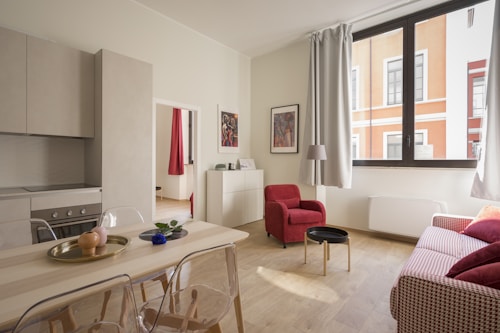
Integrated Dormitory Accommodation
One of the biggest anxieties for international students moving to Japan is finding housing. Shonan Japanese Academy addresses this head-on by providing Integrated Dormitory Accommodation.
- Stress-Free Arrival: The school coordinates your housing before you even land in Japan. There is no need for a Japanese guarantor, complex contract negotiations, or massive upfront "key money" (reikin).
- Community Living: Living in the student dormitories allows you to quickly make friends, share meals, and build a reliable support system.
- Affordability: Shizuoka's housing costs are a fraction of what you would pay in Tokyo or Osaka, allowing you to live comfortably while keeping your monthly living expenses low.
Life in Shizuoka: Nature and Convenience
Hamamatsu is located along the Tokaido Shinkansen line, almost exactly halfway between Tokyo and Osaka. If you want to travel to Tokyo or Kyoto on the weekend, it takes just about 1.5 hours by bullet train.
Locally, the city is famous for Lake Hamana (Hamana-ko), offering beautiful waterfront views, cycling tracks, and water sports. The city is also famous for its culinary delights, particularly Hamamatsu Gyoza (pan-fried dumplings served with bean sprouts) and fresh Unagi (grilled eel). Living here allows you to experience authentic Japanese municipal life without the high-stress, overcrowded environment of the capital city.
🎓 University & Career Pathways
Shonan Japanese Academy does not just teach you how to pass language tests; it prepares you to succeed after you graduate. The school's guidance team works tirelessly to map out individual pathways for every single student.
High-Intensity EJU & University Progression Preparation
For students aiming to enter prestigious private and national universities in Japan, the school conducts intensive academic coaching:
1. EJU Mock Exams & Strategy Lectures: Regular testing under real exam conditions to build stamina and identify weak points.
2. University Essay Writing (Little Thesis / Sholunbun): Universities in Japan require rigorous written statements on complex global or scientific topics. Teachers work one-on-one with you to refine your writing style.
3. Interview Drills: Facing a Japanese admissions panel can be daunting. The faculty conducts mock interviews to ensure you speak confidently, politely, and articulate your academic goals perfectly.
Local University & Industrial Connections
Because Shizuoka Prefecture is an industrial powerhouse, Shonan Japanese Academy leverages its geographical location to connect students with local educational institutions. There are great opportunities to advance into regional public and private universities, such as Shizuoka University (which has an excellent engineering campus in Hamamatsu) and the Shizuoka University of Art and Culture.
For students looking to enter the workforce immediately after vocational school or university, the school provides job hunting seminars, resume translation help, and connects students to job fairs featuring local manufacturing, engineering, and hospitality businesses.
💡 Practical Tips for Applicants
To make your transition to Shonan Japanese Academy Hamamatsu Campus as smooth as possible, keep these practical advisor tips in mind:
-
Plan Around Intake Windows:
If you are a beginner looking for a comprehensive education, the 2-Year Course starting in April is highly recommended as it aligns perfectly with the Japanese academic calendar. If you already have some basic Japanese knowledge (equivalent to N4 or N5) and want to progress quickly into university, the 1.5-Year Course starting in October is an excellent, cost-effective option. -
Budgeting Your Living Costs:
Shizuoka is highly economical. While a student in Tokyo might spend upwards of ¥120,000 to ¥150,000 per month on rent, food, and basic utilities, a student in Hamamatsu can live comfortably on ¥70,000 to ¥90,000 per month, especially when utilizing the school's integrated dormitory accommodation. This makes your total educational investment go much further. -
Start Your Visa Process 5–6 Months Early:
The Japanese immigration process requires extensive documentation. Gather your financial sponsor proofs, academic transcripts, and identity documents well ahead of your desired intake month. -
Embrace the Regional Experience:
Do not make the mistake of thinking you can only succeed in Tokyo. Hamamatsu offers a unique, supportive community, lower crime rates, cheaper rent, and a direct pipeline into Japan’s vital technology and engineering sectors. Be ready to explore the local culture, interact with the friendly locals, and take full advantage of this unique opportunities like the Specialized Science Track.
Related study abroad guides
Was this page helpful?
Your feedback helps us improve our guides