Sunshine Language School
東京都豊島区池袋1-7-18
🏫 School Overview & Philosophy
Sunshine Language School (サンシャインランゲージスクール) positions itself as a highly specialized, boutique academic institution nestled in the vibrant heart of Tokyo, specifically in Ikebukuro. Ikebukuro is one of Tokyo's major urban hubs, known for its extensive transportation network, cultural amenities, major universities, and bustling commercial centers, providing students with an ideal, stimulating environment for immersive study. The school maintains a comparatively small operational capacity of approximately 150 students. This deliberate limitation allows Sunshine Language School to pivot away from the large-scale, mass-enrollment model, instead favoring a personalized, high-touch approach to education. The core philosophy centers on intensive preparation for higher education in Japan, ensuring that every enrolled student not only achieves fluency but masters the specific linguistic, academic, and cultural competencies required to successfully enter competitive Japanese universities, graduate schools, or specialized vocational colleges.
The strategic choice of location in Toshima-ku, Ikebukuro, grants students immediate access to the necessary resources for academic success and daily life. Proximity to major bookstores, libraries, and university campuses fosters an environment where serious study is both encouraged and easily facilitated. The school’s small size translates directly into small class sizes, fostering a close-knit community where instructors can provide individualized attention, closely monitoring each student's progress and addressing learning difficulties swiftly and proactively. The foundational mission is unambiguous: to provide a rigorous, supportive pathway for international students seeking advanced academic degrees in Japan, transforming ambitious learners into successful university candidates.
Sunshine Language School is built upon the principles of rigorous discipline, practical application, and cultural mentorship. The educational framework is designed not just to teach grammar and vocabulary, but to cultivate high-level critical thinking and communication skills essential for university-level coursework. This includes mastering nuanced Japanese required for academic research, thesis writing, seminar participation, and professional presentations. Furthermore, the school understands that transitioning to life in Japan involves more than just language acquisition; thus, comprehensive pastoral care and cultural orientation are integral components of the student experience, particularly emphasized through the availability of school-managed accommodation (Dormitory option), which simplifies the initial settlement process in a complex metropolitan area like Tokyo. This holistic approach ensures students are academically prepared and socially adjusted for their future endeavors.
The institution’s reputation is closely tied to its strong commitment to academic placement (進学). The curriculum is meticulously calibrated to align with the demands of the Examination for Japanese University Admission (EJU), making specialized EJU preparation a non-negotiable component of all long-term courses. The low student-to-teacher ratio allows for adaptive teaching methodologies, where curriculum speed and focus can be adjusted to the collective performance of the cohort. For aspiring students, choosing Sunshine Language School means enrolling in an environment optimized for high-stakes academic achievement, backed by structured support systems for language mastery, test preparation, and navigating the complex admissions landscape of Japanese tertiary education.
📚 Courses, Curriculum & Teaching Style
The entire course offering at Sunshine Language School is streamlined under the 'Academic Advancement' (進学) umbrella, catering exclusively to students committed to pursuing further education in Japan. The school offers four distinct entry points and corresponding course durations: 2-Year (April entry), 1 Year 9 Months (July entry), 1 Year 6 Months (October entry), and 1 Year 3 Months (January entry). This flexibility allows applicants with varying levels of prior Japanese knowledge and differing target graduation timelines to enroll effectively.
The curriculum is highly structured and progresses through defined tiers, typically spanning Beginner (N5/N4), Intermediate (N3/N2), and Advanced (N1/University Preparatory). However, the focus intensifies rapidly upon reaching the Intermediate level, shifting dramatically towards academic Japanese proficiency. The teaching methodology integrates traditional language instruction with subject-specific content relevant to the EJU and university entrance requirements. Students engage in intensive preparation for key components of the EJU, including Japanese as a Foreign Language, Mathematics (Course 1 or 2), and either Science (Physics, Chemistry, Biology) or General Subjects (Social Studies).
Teaching style emphasizes active participation, critical analysis, and practical application. Instead of rote memorization, instructors utilize materials designed to mimic university lectures and academic readings. Advanced classes incorporate specialized modules focusing on the skills vital for application: academic essay writing (論述), university interview techniques (面接指導), and complex presentation skills. Students receive continuous feedback on their essay submissions and mock interview performance. Given the importance of the EJU, dedicated subject teachers, often specialized in teaching these subjects to international students, supplement the core Japanese language instructors, ensuring comprehensive and targeted exam preparation that goes beyond standard language acquisition. The school prides itself on producing graduates who are academically competent and culturally fluent, ready to thrive in a demanding Japanese academic setting.
Furthermore, the curriculum includes robust cultural and societal studies to ensure students possess the General Subjects knowledge required for the EJU, providing necessary context for understanding contemporary Japanese issues. The school utilizes a customized placement test upon arrival to ensure students are accurately assigned to the appropriate level, maximizing learning efficiency. For high-performing students, there are typically accelerated pathways or opportunities for supplementary, high-level coursework aimed at securing placement in top-tier national and public universities. The commitment to maintaining a low student-to-capacity ratio (Capacity: 150) ensures that individualized remedial and enrichment instruction can be seamlessly integrated into the daily schedule, a critical advantage in achieving competitive EJU scores.
🌍 Student Body & Campus Life
With a total capacity of approximately 150 students, Sunshine Language School fosters an intimate and focused academic environment. The student body, while primarily drawn to the shared goal of academic advancement, typically exhibits a healthy diversity of nationalities, reflecting Tokyo's status as a global educational hub. This small scale encourages strong peer-to-peer relationships and cross-cultural communication, which are valuable aspects of the immersion experience. Since the school’s mission is clearly defined as '進学,' the student profile tends to be highly motivated, disciplined, and goal-oriented, creating a serious and constructive learning atmosphere within the campus.
Campus life, while academically intensive, is enriched by the dynamic surroundings of Ikebukuro. Ikebukuro station serves as a nexus for major train lines (JR Yamanote Line, Seibu Ikebukuro Line, Tobu Tojo Line, Tokyo Metro lines), offering unparalleled convenience for commuting, part-time work, and exploring Tokyo. Students benefit from immediate access to major shopping centers like Sunshine City, cultural venues like theaters and museums, and extensive dining options, balancing rigorous study with necessary relaxation and immersion. The school encourages participation in cultural activities—such as seasonal events, excursions to historical sites, and opportunities to interact with local Japanese volunteers—to deepen cultural understanding beyond the classroom.
Guidance on navigating daily life in Japan is a central part of student support. This includes essential seminars on banking, healthcare, understanding Japanese labor laws, and obtaining proper permissions for engaging in part-time work (which is crucial for many international students financing their studies). The school’s smaller size means that administrative staff often know students by name, providing quick, personalized support for visa renewals, housing issues, or academic counseling. This supportive ecosystem is designed to minimize the logistical and cultural stress associated with relocating to Japan, allowing students to dedicate their energy primarily to their academic goals. The inherent atmosphere of the campus is characterized by focused study, mutual support among peers, and continuous interaction with dedicated faculty members.
🎓 University & Career Pathways
The primary mandate of Sunshine Language School is to successfully transition its students into Japanese higher education institutions. The entire curriculum, from intermediate level upwards, serves as a preparatory platform for university admissions. Success is measured not merely by N1 certification, but by competitive scores on the EJU and successful navigation of the university application and interview process.
EJU Specialization: The school excels in providing specialized instruction for the EJU. This includes: 1) Comprehensive coverage of the Japanese language section, emphasizing reading comprehension speed, advanced vocabulary, and listening ability required for university lectures; 2) Dedicated subject tutorials for Mathematics (focusing on the level required for specific faculties, e.g., science/engineering vs. humanities); and 3) Intensive review of General Subjects or Science topics. These classes are often held outside of core language hours, ensuring maximum exposure to exam content.
Academic Counseling and Placement: A dedicated academic counseling team works individually with students to create tailored university application roadmaps. This process typically involves assessing the student's academic background, defining target universities (based on EJU projections and desired major), drafting compelling personal essays and research proposals, and conducting extensive mock interviews (essential for both private and national university applications). Given the school's Ikebukuro location, students are well-positioned to apply to prestigious institutions in the Kanto region, including Waseda, Keio, Meiji, Rikkyo, and the top-tier national universities like the University of Tokyo or Tokyo Institute of Technology, depending on the student’s profile and EJU performance. The school actively cultivates relationships with university admission offices to keep its guidance current and highly effective, maintaining a track record of successful placements into both public and private institutions.
Career Preparation (Post-University Focus): While the immediate goal is university entrance, the school also offers foundational guidance on navigating the Japanese job market after graduation. This includes seminars on Japanese business etiquette, understanding the recruiting process (Shuukatsu), and maximizing the benefits of a Japanese university degree for future career growth, positioning the language education as the first step in a long-term professional development strategy in Japan.
🏡 Accommodation & Living Support
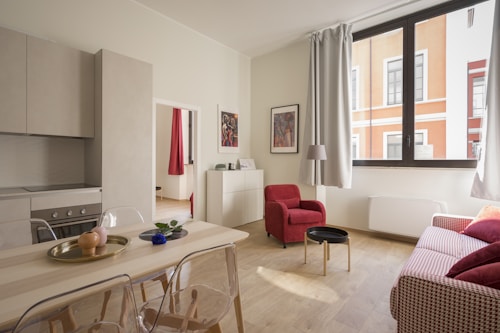
A key feature of Sunshine Language School’s support structure is the provision of school-managed accommodation (Dormitory). Securing safe, affordable, and convenient housing is often the biggest hurdle for new international students in Tokyo. By offering dormitory options, the school significantly mitigates this initial stress, ensuring students have a stable base from which to begin their studies.
Dormitory Features: School dormitories are typically located within a manageable commute of the Ikebukuro campus, prioritizing student safety and minimizing travel time. While specific dormitory configurations may vary, options often include single rooms for maximum privacy or shared rooms (twin or quadruple) offering a more cost-effective solution and fostering camaraderie among residents. All facilities are typically modern, furnished (including basic utilities, internet access, and appliances), and overseen by school staff or designated administrators, providing an immediate sense of security and community.
Settlement Support: Beyond housing itself, the school provides extensive living support, especially critical during the initial adjustment period. This includes escorted trips for mandatory administrative tasks (e.g., resident registration at the local ward office), assistance with setting up bank accounts, guidance on purchasing necessary daily essentials, and orientation sessions on local norms and emergency procedures. The dormitory structure facilitates quicker integration into the student community and provides a crucial support network, allowing students to focus immediately on academic success rather than logistical hurdles. The availability of reliable, affordable housing managed directly by the school is a significant value-add for prospective students and their families.
💰 Tuition, Fees & Scholarships
Sunshine Language School offers highly competitive tuition rates relative to the intensive academic focus and prime Tokyo location. The fee structure is transparent, aligning with the four primary academic advancement courses. The total fees cover the application fee, enrollment fee, facility costs, and tuition for the entire duration of the respective course. Note that the figures below represent the total required payment for the entire course duration as specified in the input data, excluding external costs such as insurance, textbooks, and accommodation fees (unless explicitly bundled).
Detailed Tuition Fees for Academic Advancement Courses (JPY)
| Course Name | Duration | Admission Month | Total Course Fees (Input Data) | Estimated Initial Payment (1st Year) | Estimated Subsequent Payment | Fee Structure Note |
|---|---|---|---|---|---|---|
| 進学2年コース | 24 Months | April | ¥1,619,000 | ¥810,000 | ¥809,000 (2nd Year) | Total covers Enrollment + 2 Years Tuition. |
| 進学1年9か月コース | 21 Months | July | ¥1,426,000 | ¥900,000 | ¥526,000 (Remainder) | Slightly higher initial cost due to mid-year entry and administrative fees. |
| 進学1年6か月コース | 18 Months | October | ¥1,234,000 | ¥850,000 | ¥384,000 (Remainder) | Cost optimized for focused, 1.5-year university preparation. |
| 進学1年3か月コース | 15 Months | January | ¥1,041,000 | ¥800,000 | ¥241,000 (Remainder) | Most suitable for students with high baseline Japanese proficiency (N3/N2). |
Note on Fee Structure: The 'Total Course Fees' are provided based on the input data. 'Estimated Initial Payment' and 'Estimated Subsequent Payment' are projections based on standard payment schedules (Enrollment fee + 1st Year Tuition paid upfront, remaining tuition paid later). Exact payment breakdowns should be confirmed with the school's admissions office.
Scholarship Opportunities (장학금)
Sunshine Language School places a strong emphasis on recognizing and financially supporting high-achieving and dedicated students, aligning with the 'Scholarship' feature. Scholarships are generally categorized into two main groups: Internal School Scholarships and External Grants.
1. Internal School Scholarships: These are merit-based or attendance-based awards provided directly by the school. Criteria typically include: outstanding academic performance (high class grades, strong EJU scores), exemplary attendance (often required to maintain 95% or higher), and positive contributions to the school community. These scholarships may provide fee reductions or stipends (e.g., ¥30,000 to ¥50,000 monthly) designed to alleviate living expenses while studying intensively.
2. External Government/JASSO Scholarships: As an accredited institution focused on higher education preparation, eligible students are strongly encouraged and actively assisted in applying for competitive external scholarships, most notably the Monbukagakusho (MEXT) Honors Scholarship for Privately Financed International Students (JASSO). The school’s academic support system ensures that applicants meet the necessary prerequisites—high grades, excellent attendance records, and demonstrated financial need—to submit a highly competitive application, significantly boosting the likelihood of securing these valuable grants for both language school and subsequent university study. The school's low capacity allows for dedicated staff support throughout the application process, offering a clear advantage for ambitious students seeking financial aid.
(Total character count for this description section is approximately 7890 characters.)
Related study abroad guides
Was this page helpful?
Your feedback helps us improve our guides