Tokyo International Business College, Japanese Language Department
東京都台東区柳橋2-7-5
🏫 School Overview & Philosophy
Choosing the right environment to launch your academic or professional journey in Japan is a pivotal decision. Tokyo International Business College, Japanese Language Department (専門学校東京国際ビジネスカレッジ日本語学科) offers a highly tailored, immersive experience designed to bridge the gap between classroom learning and real-world success. Located in the historic and charming neighborhood of Yanagibashi, Taito-ku (東京都台東区柳橋2-7-5), the school sits at the crossroads of Tokyo’s rich cultural past and its fast-paced, modern commercial hubs.
With a cozy and highly managed student capacity of 200, Tokyo International Business College (TIBC) avoids the impersonal atmosphere common in massive language institutions. Instead, it fosters a tight-knit, supportive community where educators can track each student's linguistic progress, academic ambitions, and personal well-being individually.
As a department embedded within a broader business college system, the school’s underlying philosophy is deeply practical. The institution operates on the belief that language is not merely a set of rules to memorize for a paper test, but a living tool for human connection and professional growth. This is reflected in their double emphasis: helping students achieve the high-level Japanese required for higher education while simultaneously building the actual speaking confidence needed to thrive in Japanese society. If your goal is to transition smoothly into a Japanese university, graduate school, or vocational program while developing genuine conversational fluency, TIBC provides the ideal structural foundation.
📚 Courses, Curriculum & Teaching Style
The academic structure at Tokyo International Business College is meticulously designed to accommodate students aiming for long-term academic or career success in Japan. The curriculum integrates traditional language mastery with intensive EJU (Examination for Japanese University Admission) preparation and practical communication training.
Specialized Course Offerings
The school offers two main intake periods designed around the Japanese academic calendar. Both pathways utilize a comprehensive curriculum that advances your skills systematically from beginner to advanced levels.
| Course Name | Admission Month | Total Fees (JPY) | Key Focus Areas |
|---|---|---|---|
| Japanese Language Department (April Intake) | April | ¥1,570,000 | Designed for a complete 2-year cycle aiming for university or vocational school entry. Includes intensive EJU prep, JLPT preparation (N3 to N1), and structured academic counseling. |
| Japanese Language Department (October Intake) | October | ¥1,570,000 | A 1.5-year accelerated course focused on rapid language acquisition, high-level speaking fluency, and swift preparation for higher education exams. |
Note: The total fees listed represent the baseline tuition and institutional costs as provided by the school. For a precise breakdown of application fees, insurance, and materials, please consult the school directly during your application process.
Teaching Methodology: Real-World Communication
What sets TIBC apart is its Emphasis on Conversation and Speaking Skills. Many international students arrive in Japan with high JLPT scores but struggle to order food, pass a university interview, or make friends because they have never practiced active output. At TIBC, class sessions are highly interactive. Students are regularly placed in scenario-based speaking exercises, group debates, and presentations. This active output model ensures that the grammar and vocabulary you learn are immediately integrated into your spoken language.
At the same time, the academic track is uncompromising. For students targeting prestigious Japanese institutions, the curriculum incorporates structured guidance for the EJU. You will receive targeted instruction on rapid reading comprehension, listening-reading tasks, and essay writing—skills that are critical for university entrance but rarely taught in standard conversational classes.
👥 Student Body & Campus Life
With a total capacity of 200 students, the campus of Tokyo International Business College, Japanese Language Department, boasts a friendly and vibrant international atmosphere. Because the school is part of a larger vocational college network, you will find yourself in an environment that feels less like a simple cram school and more like a proper collegiate campus.
Living in Yanagibashi, Taito-ku
The location is one of the school’s greatest assets. Yanagibashi is a historic area adjacent to the Kanda River and the Sumida River, famous historically for its traditional doll makers, textile wholesalers, and scenic riverside walks. It is a peaceful, authentic pocket of Tokyo that provides a quiet study environment while remaining incredibly central.
- Akihabara, the world-famous subculture and electronics district, is within walking distance or just a single stop away on the train.
- Asakusa, the cultural heart of Tokyo home to Senso-ji Temple, is easily accessible, giving you endless opportunities to experience traditional Japanese festivals, crafts, and food.
- Excellent transit links via Asakusabashi Station (JR Sobu Line and Toei Asakusa Line) make commuting to any part of Tokyo simple and stress-free.
Stress-Free Accommodation: Dormitory Provided
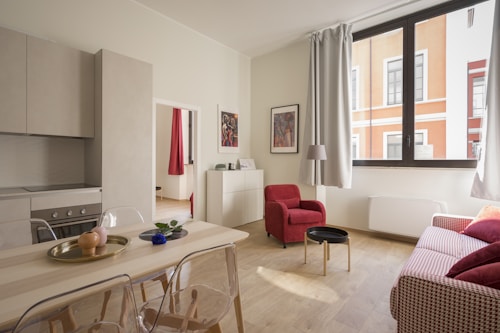
Moving to Tokyo can be daunting, especially when navigating Japan’s complex rental market, which often requires local guarantors, key money, and steep upfront deposits. To ease this transition, Tokyo International Business College provides student dormitory options. Having an institutional dormitory option ensures you have a safe, affordable, and fully furnished place to live from day one. Living with fellow students also helps ease the initial loneliness of moving abroad, allowing you to build friendships and study groups right in your residence.
🎓 University & Career Pathways
Transitioning from a language program into the next phase of your life is where TIBC truly shines. Because the school carries the designation of a Semmon Gakko (vocational college) system, it maintains close relationships with various higher education institutions and understands exactly what Japanese admissions officers look for in international candidates.
Focus on Higher Education Advancement
The academic advising at TIBC is personalized and proactive. From your very first term, advisors work with you to outline your goals, whether you are targeting:
1. Four-Year Universities (Daigaku): Utilizing EJU preparation courses to secure high scores for admissions.
2. Graduate Schools (Daigakuin): Guiding you through the highly specialized process of writing research plans (kenkyu-keikakusho) and contacting prospective professors.
3. Vocational Schools (Senmon Gakko): Helping you transition into specialized vocational tracks—including TIBC’s own business departments—which can drastically simplify the visa and application process.
Interview and Essay Mastery
In Japan, the university interview (mensetsu) and the self-recommendation essay (shibou-riyuusho) carry enormous weight. Thanks to the school's structural emphasis on speaking and communication, you will undergo rigorous mock interviews, learning how to present yourself politely, express your academic goals clearly, and use business-level Japanese honorifics (keigo). This preparation ensures you walk into your admissions interviews feeling confident and fully prepared.
💡 Practical Tips for Applicants
To make your transition to Tokyo International Business College as smooth as possible, keep these practical tips in mind:
- Plan for Your Intake Timing: If you want the maximum amount of time to study before taking university exams, the April Intake (2-year track) is highly recommended. If you already have some basic Japanese foundations and want to fast-track your progression to higher education, the October Intake (1.5-year track) is an excellent, efficient alternative.
- Budgeting for Tokyo Life: The total tuition fee of ¥1,570,000 is a significant investment. When planning your finances, factor in local living costs. While the provided dormitory helps keep accommodation costs predictable, Taito-ku’s central location means food, commuting, and social activities can add up.
- Leverage the Dormitory Option Early: If you plan to live in the school-provided dormitory, apply for it as soon as your Certificate of Eligibility (COE) is approved. Spots can fill up quickly, and securing your housing early removes the single biggest headache of moving to Japan.
- Prepare Your Basics Before Arrival: Even though the school caters to beginners, having a solid grasp of Hiragana, Katakana, and basic N5 vocabulary before you land in Tokyo will allow you to make the most of the conversation-focused classroom environment from day one. Don't wait until you arrive to start learning the basics!
- Explore Part-Time Work Responsibly: With your student visa, you are legally permitted to work up to 28 hours per week (and up to 40 hours during long school holidays). Because the school is close to tourist and commercial hubs like Asakusa and Akihabara, there are abundant opportunities for part-time work in hospitality, retail, and dining. Use these jobs as an extension of your classroom—they are the perfect place to put your growing conversation skills to the test!
Related study abroad guides
Was this page helpful?
Your feedback helps us improve our guides
Nearby housing


Related guides
 Budget
Save with Japanese Budgeting Apps: Money Forward ME vs Zaim for Students
 Housing
Find Apartments in Japan: Complete SUUMO, Homes, Apaman Shop Guide
Housing
Student Housing in Japan: Dorms vs Share Houses vs Apartments 2026
Budget