Waseda Language Academy
東京都新宿区早稲田鶴巻町543番地
🏫 School Overview & Philosophy
Waseda Language Academy (早稲田言語学院) is a premier Japanese language institution strategically situated in the academic heart of Tokyo: Waseda Tsurumakicho, Shinjuku-ku. With a generous student capacity of 736 students, the school operates with a clear, unwavering primary mission: guiding ambitious international students toward high-level academic advancement in Japan's most competitive universities and graduate schools.
Unlike schools that focus primarily on casual conversation or basic vocational training, Waseda Language Academy is tailored for academic high-achievers. The school's philosophy is rooted in the belief that mastering Japanese is not just about memorizing words, but about developing the cognitive, analytical, and linguistic tools required to succeed in a demanding Japanese collegiate environment.
Its strategic location in Shinjuku-ku places it in immediate proximity to major academic institutions, most notably the main campuses of Waseda University. This location creates a highly motivating educational atmosphere. The neighborhood of Waseda Tsurumakicho blends the quiet, focused energy of a historic university district—complete with academic bookstores, student-friendly cafes, and quiet residential lanes—with the unparalleled transit convenience and dynamism of central Tokyo. Students here are constantly surrounded by Japanese peers and academic role models, reinforcing their drive to succeed.
📚 Courses, Curriculum & Teaching Style
The curriculum at Waseda Language Academy is rigorous, structured, and designed to meet the precise entry timelines of Japanese higher education. Because the standard Japanese academic year begins in April, all courses are designed to optimize preparation and timing for college admissions.
The academy offers four primary long-term academic tracks, tailored to different starting points and language proficiencies:
| Course Name | Admission Month | Total Fees (JPY) |
|---|---|---|
| 進学課程2年コース (2-Year Academic Advancement Course) |
April | 1,542,200 |
| 進学課程1年9か月コース (1-Year 9-Month Academic Advancement Course) |
July | 1,360,700 |
| 進学課程1年6か月コース (1-Year 6-Month Academic Advancement Course) |
October | 1,179,200 |
| 進学課程1年3か月コース (1-Year 3-Month Academic Advancement Course) |
January | 997,700 |
Specialized Curriculum & Teaching Methodology
- Comprehensive EJU Preparation Tracks: The Examination for Japanese University Admission for International Students (EJU) is the most critical hurdle for undergraduate applicants. Waseda Language Academy integrates intensive EJU preparation directly into its daytime curriculum, focusing on academic reading comprehension, listening-reading comprehension, and timed essay writing. The academy also offers supplementary guidance in other required EJU subjects such as Mathematics, General Studies (Japan and the World), and Sciences.
- Graduate School Research Planning: For students aiming for master's or doctoral programs, the academy offers a highly specialized curriculum focused on academic writing and research planning. Writing a compelling Research Proposal (研究計画書) is often the single most difficult challenge for graduate applicants. Instructors guide students step-by-step through choosing a viable topic, analyzing existing Japanese literature, drafting the proposal in formal academic style (such as the de aru form), and practicing the precise presentation styles expected by Japanese professors.
- Active Communication & Interview Practice: To pass university entrance examinations, students must excel in oral interviews. The academy places a strong emphasis on mock interviews, teaching students how to articulate their research interests or academic goals confidently while using natural, polite honorific Japanese (Keigo).
👥 Student Body & Campus Life
The campus of Waseda Language Academy is vibrant and highly focused. The student body consists of ambitious young people from across Asia and the globe who are collectively working toward academic goals. This shared ambition creates a healthy, cooperative atmosphere where classmates motivate and push one another to study harder.
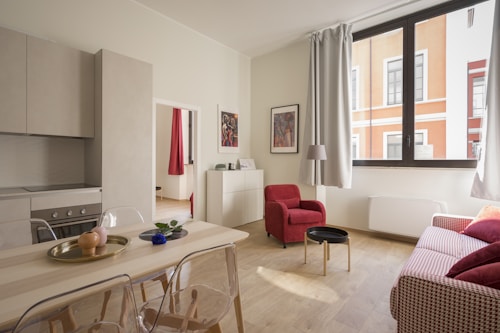
To ensure a smooth transition into life in Japan’s bustling capital, the academy provides excellent on-campus or affiliated dormitory support in central Tokyo. Finding private housing in Tokyo can be complex for international students due to guarantor requirements and upfront costs. The school's housing support ensures that students have safe, clean, and fully furnished accommodations close to the school, allowing them to focus entirely on their studies from the moment they arrive.
Beyond the classroom, student life is enriched by the unique character of Shinjuku and the surrounding neighborhoods. Located on the eastern side of Shinjuku-ku, the school is within walking or short cycling distance from historic spots like Kagurazaka (often called Tokyo's "Little Paris" for its traditional stone-paved streets and modern cafes) and the beautiful parks along the Kanda River. Students can easily enjoy affordable student-priced dining halls, historic libraries, and diverse cultural events, ensuring a well-rounded and memorable experience in Japan.
🎓 University & Career Pathways
Achieving admission into a top-tier Japanese university requires a highly strategic approach. Waseda Language Academy doesn't just teach the language; it functions as a comprehensive college preparatory counseling center.
The school provides individualized academic counseling that begins shortly after enrollment. Career advisors work closely with each student to establish a realistic timeline, select target universities, and master the specific entry requirements for each institution.
Pathways to Top Institutions
Graduates of Waseda Language Academy consistently secure placements in some of the country’s most prestigious institutions, including:
* Elite National Universities: The University of Tokyo, Tokyo Institute of Technology, Kyoto University, Osaka University, and Yokohama National University.
* Top-Tier Private Universities: Waseda University, Keio University, Sophia University, and the prestigious "MARCH" group (Meiji, Aoyama Gakuin, Rikkyo, Chuo, and Hosei Universities).
* Renowned Graduate Schools: Comprehensive assistance is provided to match students with appropriate research advisors and laboratories across Japan's leading academic departments.
For students who decide to transition into the Japanese workforce after their studies, the academy offers basic guidance on business manners, resume writing, and preparing for job interviews, capitalizing on Tokyo's massive corporate market.
💡 Practical Tips for Applicants
If you are planning to apply to Waseda Language Academy, here are several practical insights to ensure your application and subsequent study plan are successful:
- Select Your Intake Wisely based on Current Proficiency: If you are a beginner or lower-intermediate Japanese learner, it is highly recommended to apply for the April (2-Year) or July (1-Year 9-Month) intake. Reaching the N1 or N2 level required for academic success takes time, and these longer courses provide the necessary runway to build a strong foundation before the EJU exams.
- Acquire Basic Japanese Prior to Arrival: Because the academy's curriculum moves at a fast, academic pace, having at least a basic knowledge of Hiragana, Katakana, and elementary grammar (JLPT N5 equivalent) prior to arrival is immensely beneficial. It will prevent you from falling behind in the opening weeks and allow you to quickly join the academic advancement tracks.
- Utilize the School’s Dormitory Network: Renting apartments independently in central Tokyo can be incredibly expensive. Utilizing the academy’s affiliated dormitory services not only secures you an affordable room but also integrates you into a community of classmates who can study and commute together.
- Prepare Academic Documents Early: Admission to a language school and the subsequent visa application process requires official transcripts, graduation certificates, and financial sponsorship documentation. Gather these documents several months in advance, ensuring all details are consistent and accurate.
- Formulate a Research Direction (for Graduate Applicants): If you are aiming for graduate school, do not wait until you arrive in Japan to think about your major. Start reading basic literature in your field and formulate a general idea of what you want to research. This preparation will allow you to make immediate, effective use of the school's specialized research planning resources from day one.
Related study abroad guides
Was this page helpful?
Your feedback helps us improve our guides