Yokkaichi Japanese Language School
三重県四日市市西新地13-13
🏫 School Overview & Philosophy
Choosing the right Japanese language school is one of the most critical decisions you will make on your academic journey. If you are looking for a school that combines rigorous academic preparation with a peaceful, cost-effective, and supportive living environment, Yokkaichi Japanese Language School (四日市日本語学校) deserves to be at the top of your list. Located in Yokkaichi City, Mie Prefecture (三重県四日市市西新地13-13), this school is a hidden gem for students who want to avoid the overwhelming crowds and high living costs of Tokyo or Osaka while still receiving top-tier education.
With a cozy and highly manageable student capacity of 180 students, Yokkaichi Japanese Language School prides itself on a personalized, family-like educational philosophy. Here, you are not just a number in a massive lecture hall. The faculty and staff are deeply invested in each student's personal growth, language acquisition, and future academic or career success.
The school’s educational philosophy centers on bridging the gap between language theory and real-world application. Whether your goal is to enter a prestigious Japanese graduate school, secure a job at a Japanese corporation, or master conversational Japanese for everyday life, the school adapts its guidance to fit your unique trajectory. Situated in a region known for its robust industrial presence and natural beauty, the school provides a quiet, distraction-free environment that is highly conducive to focused, serious study.
📚 Courses, Curriculum & Teaching Style
The academic framework at Yokkaichi Japanese Language School is highly structured, aiming to take students from their current proficiency level to advanced academic or professional fluency. The school offers two main long-term tracks designed around the Japanese academic calendar, which starts in April and October.
Core Course Offerings
| Course Name | Admission Month | Total Fees (JPY) | Duration & General Focus |
|---|---|---|---|
| Progression Course II (進学Ⅱコース) | April | ¥1,355,000 | 2 Years: A comprehensive, step-by-step program starting from foundational Japanese (N5/N4) up to advanced academic levels (N1/N2). Ideal for absolute beginners aiming for highly competitive universities. |
| Progression Course I (進学Ⅰコース) | October | ¥1,045,000 | 1.5 Years: An accelerated track designed for students who already possess basic Japanese knowledge and want to fast-track their admission into university or vocational school. |
Note: Tuition fees are subject to change by the institution; always verify current rates directly with the school during your application process.
Specialized Curriculum Features
- Dedicated EJU & JLPT Prep: The school does not just teach general Japanese; it integrates focused preparation for the Examination for Japanese University Admission for International Students (EJU) and the Japanese Language Proficiency Test (JLPT). Specialized classes target reading comprehension, listening-reading comprehension, and essay writing.
- Specific Academic Tracks (Science, Liberal Arts, Art & Design): This is where Yokkaichi Japanese Language School truly stands out. Recognizing that university entrance exams differ vastly across disciplines, the school offers targeted academic tracks. If you are a Science student, you will receive support tailored to technical terms and scientific concepts. If you are aiming for Art & Design programs, the instructors will help guide you on how to present your ideas and portfolios in Japanese.
- Practical Business Japanese & Conversational Fluency: For those looking to enter the Japanese workforce, the school places a heavy emphasis on natural pronunciation, business etiquette (keigo), resume writing, and job interview simulations. Classes are interactive, encouraging students to speak actively rather than just memorizing grammar rules passively.
👤 Student Body & Campus Life
With a capacity of 180 students, the school fosters a warm, multicultural community where students from various countries study, collaborate, and grow together. This medium-scale environment ensures that classmates get to know one another quickly, and the teachers can provide individual attention to every single student.
Outstanding Accommodation: On-site Dormitories
One of the most significant advantages of choosing Yokkaichi Japanese Language School is its comprehensive on-site dormitory facilities. Finding an apartment in Japan as an international student can be notoriously difficult, requiring guarantors, agency fees, and expensive "key money" (reikin).
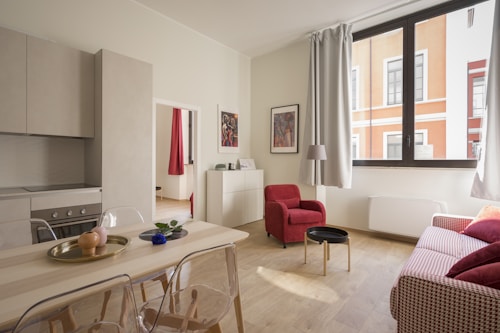
At Yokkaichi, the school provides convenient housing options with single rooms available. Having your own private space to study, relax, and rest is an absolute game-changer for your mental well-being and academic performance. The dorms are fully equipped with essential amenities, allowing you to settle into your new life in Japan smoothly and without unnecessary stress.
Life in Yokkaichi and Mie Prefecture
Yokkaichi is the most populous city in Mie Prefecture, known internationally as a major industrial port city, yet it is surrounded by incredible natural beauty.
* Convenient Access: The school is situated near the heart of the city (Nishishinchi). Yokkaichi is exceptionally well-connected; you can hop on the Kintetsu Line and reach Nagoya—Japan's third-largest metropolitan area—in under 40 minutes. This gives you easy access to major city life, shopping, and job-hunting opportunities while enjoying a much calmer home base.
* Local Attractions: Mie Prefecture is famous for the Suzuka Circuit (host of the Formula 1 Japanese Grand Prix), the breathtaking Ise Grand Shrine, and the stunning Yunoyama Onsen and Mount Gozaisho.
* Community Integration: The school regularly organizes cultural excursions, seasonal events, and exchange programs with local Japanese residents, giving you plenty of opportunities to practice your conversational skills in real-world settings.
🎓 University & Career Pathways
Transitioning from a language school to higher education or a professional career in Japan can feel daunting, but Yokkaichi Japanese Language School provides robust, step-by-step pathway guidance.
Higher Education Progression
Whether your goal is a national university, a prestigious private university, a graduate school (daigakuin), or a specialized vocational school (senmon gakko), the school's career counseling department offers extensive one-on-one guidance:
* Graduate School Preparation: Finding a research advisor and writing a convincing research proposal (kenkyu keikakusho) are critical for graduate school admission. Instructors here walk you through the academic writing process, ensuring your proposal meets the high standards of Japanese professors.
* University Interview Prep: Faculty members run rigorous mock interviews to help you build confidence, refine your posture, and articulately explain your academic goals under pressure.
* Art & Design Pathways: For students pursuing creative fields, teachers assist in navigating the unique application procedures of Japanese art colleges.
Career Guidance & Scholarships
If you intend to transition directly into the Japanese workforce, the school helps you navigate the complex Japanese job-hunting (shukatsu) ecosystem. You will learn how to draft a Japanese-style CV (rirekisho), practice corporate interview etiquette, and connect with local enterprises looking for global talent.
To help alleviate the financial pressures of studying abroad, the school offers generous scholarship opportunities based on academic performance, attendance records, and character evaluations. Receiving these scholarships can significantly offset your daily living expenses, allowing you to dedicate more time to your studies.
💡 Practical Tips for Applicants
If you are planning to apply to Yokkaichi Japanese Language School, here are several practical tips from an expert advisor perspective to ensure a successful application and a smooth transition:
- Plan According to Your Starting Proficiency:
- If you are an absolute beginner, aim for the April Intake (Progression Course II). The two-year timeline gives you a comfortable runway to master the language thoroughly.
- If you already have some prior Japanese language education (equivalent to N4 or N5), the October Intake (Progression Course I) is highly efficient and cost-effective.
- Take Advantage of the Single Dormitories: Apply for housing as early as possible. Having a private single room is a rare luxury among Japanese language school dorms, and securing your spot early will save you time, money, and stress.
- Budget Realistically: While the tuition for the courses is competitive, you will also need to factor in living costs. Fortunately, Mie Prefecture is far more affordable than Tokyo. Your monthly budget for rent, food, and utilities here can be up to 40% cheaper than in the capital, making your savings stretch much further.
- Embrace the Regional Advantage: Don't view studying outside of Tokyo as a disadvantage. In a city like Yokkaichi, you will hear and speak far more Japanese in your daily life than you would in highly internationalized Tokyo neighborhoods. This immersion is the absolute fastest way to build genuine, fluent conversational skills.
Related study abroad guides
Was this page helpful?
Your feedback helps us improve our guides