ZERO Japanese Language School
兵庫県尼崎市西難波町4-6-26 ZEROビル2F
1. School Overview & Philosophy 🌟
Welcome to ZERO Japanese Language School (ZERO日本語学校), a unique and highly supportive educational institution located in the heart of Amagasaki, Hyogo Prefecture. The name "ZERO" reflects the school’s core philosophy: no matter where you start—even if your Japanese language ability is at absolute zero—this school is dedicated to helping you build your skills, confidence, and future career from the ground up.
Unlike massive language academies where students can easily feel like just another number in a crowded lecture hall, ZERO Japanese Language School maintains a strict, small-scale capacity. With a maximum student capacity of only 100 students, the school is purposely designed to offer an intimate, family-like environment. Here, every teacher, counselor, and administrative staff member knows your name, your strengths, your academic weaknesses, and your long-term career dreams. This high level of personalization ensures that you never feel lost or left behind during your study abroad journey in Japan.
The Strategic Advantage of Amagasaki, Hyogo
ZERO Japanese Language School is located at 4-6-26 Nishi-Naniwacho, ZERO Building 2F, Amagasaki-shi, Hyogo (兵庫県尼崎市西難波町4-6-26 ZEROビル2F). For international students, Amagasaki is one of the best-kept secrets of the Kansai region:
- Incredible Access: Amagasaki sits right on the border of Hyogo and Osaka prefectures. By train, you can reach the bustling commercial hub of Osaka (Umeda) in under 10 minutes, and the chic, international port city of Kobe in about 20 to 25 minutes.
- Affordable Cost of Living: While you enjoy lightning-fast access to Osaka’s job market and entertainment, the rent, food, and daily shopping expenses in Amagasaki are significantly lower than in central Osaka or Tokyo.
- Authentic Local Vibe: Amagasaki is a warm, down-to-earth city known for its friendly residents, historic shopping streets (shotengai), and delicious local food. It is the perfect place to immerse yourself in natural daily Japanese conversations and experience the famous warmth of Kansai culture.
2. Courses, Curriculum & Teaching Style 📚
At ZERO Japanese Language School, the academic curriculum is structured to turn language acquisition into a practical tool rather than just a memorization exercise. The school specializes in bridging the gap between classroom theory and real-world application, offering intensive preparation for higher education alongside everyday communicative fluency.
Official Course Offerings
The school provides highly structured multi-year tracks aimed at preparing students for academic success in Japanese higher education. Below are the details of the primary long-term courses:
| Course Name | Admission Month | Duration | Total Tuition & Fees (JPY) | Aim & Target Audience |
|---|---|---|---|---|
| University & Vocational Prep Course (A1) 大学・専門学校進学2年課程(A1) |
April | 2 Years | ¥1,698,400 | For students aiming for prestigious universities, public institutions, or technical schools requiring comprehensive EJU preparation. |
| University & Vocational Prep Course (A2) 大学・専門学校進学2年課程(A2) |
April | 2 Years | ¥1,698,400 | A parallel academic track focusing on robust academic writing, intensive JLPT N2/N1 prep, and vocational matchmaker guidance. |
Note: Total fees listed above cover the standard two-year enrollment, tuition, facility usage, and core learning materials. For the most up-to-date breakdown of initial registration deposits and payment installment schedules, please consult the school directly.
Specialized EJU Tracks (Science, Art & Design)
One of the most remarkable features of ZERO Japanese Language School—especially for a boutique academy of 100 students—is its ability to provide Specialized EJU Preparation Tracks.
- Science Track: For students aiming to enter STEM fields in Japanese universities, the school provides support in grasping complex scientific terminology in Japanese, which is often the biggest hurdle for international students.
- Art & Design Track: Entering a Japanese art university (such as Kyoto Kyoto University of the Arts or Osaka Kansai-area art programs) requires a highly specialized portfolio, essay writing skills, and interview preparation. ZERO offers dedicated guidance to help creative students navigate these artistic admission requirements.
Practical Conversation & Business Training
In addition to academic preparation, the school places a strong focus on practical conversation skills. Classes are highly interactive, utilizing role-plays, group presentations, and real-life scenarios. For students aiming to transition directly into the Japanese workforce, the school incorporates Business Japanese Language Training, teaching formal business etiquette (keigo), email writing standards, and Japanese corporate culture.
3. Student Body & Campus Life 🏫
Because of the school’s cozy size, the student body at ZERO quickly forms a tight-knit, supportive community. Students come from diverse international backgrounds, creating a multicultural hub right within Hyogo Prefecture.
On-Site Accommodation: Your Private Sanctuary
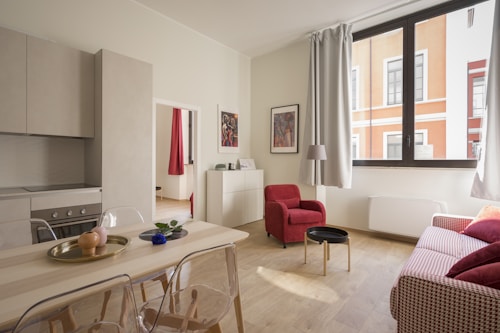
One of the greatest logistical headaches for international students is finding safe, clean, and affordable housing. ZERO Japanese Language School solves this completely by offering on-site accommodation options with private single rooms.
- No Commute Stress: Located in the same building or immediately adjacent to the school facilities, you can roll out of bed and be in class within minutes, saving hundreds of hours and thousands of yen on daily train commutes.
- Ultimate Privacy: Unlike traditional shared dormitories where you must share a bedroom, ZERO’s private single rooms give you the quiet space you need to study, rest, and recharge in your own personal sanctuary.
- Fully Furnished & Secure: Rooms are designed for international students, equipped with essential utilities, internet access, and secure entry, giving your family peace of mind back home.
Daily Life in Amagasaki
When you are not studying, the neighborhood around the school offers a rich array of local life. You can explore cheap supermarket chains, affordable 24-hour diners, public parks, and traditional sports centers. The school staff regularly organizes cultural exchange events, seasonal field trips (such as visiting nearby historical sites in Kyoto, Kobe, or Nara), and local community volunteer activities that allow you to practice your Japanese with native residents of Amagasaki.
4. University & Career Pathways 🎓
Navigating the college or job application process in Japan can be incredibly complex. ZERO Japanese Language School provides Intensive University and Vocational School Placement Guidance that leverages its small student capacity to give every single student one-on-one counseling.
Step-by-Step Academic Counseling
- Early Goal Setting: From your very first semester, counselors work with you to identify your dream universities, junior colleges, or vocational schools (senmon gakko) across the Kansai region and beyond.
- EJU & JLPT Masterclass: Target scores are established, and mock exams are conducted frequently to track your progress and identify areas needing improvement.
- Application & Essay Crafting: Writing a persuasive statement of purpose (shigodoki-sho) is crucial in Japan. Your teachers will personally review, edit, and polish your essays dozens of times until they meet the highest academic standards.
- Rigorous Mock Interviews: Students undergo realistic, videotaped interview practices to build confidence, master polite body language, and learn how to answer difficult questions naturally under pressure.
Financial Support & Scholarships
To ease the financial burden of studying abroad, the school provides active assistance in applying for various Scholarships and Financial Aid. Students with outstanding academic records, excellent attendance, and a strong drive to succeed can qualify for internal school recommendations for prestigious honors scholarships, such as those provided by JASSO (Japan Student Services Organization) and various private foundations.
5. Practical Tips for Applicants 💡
If you are considering applying to ZERO Japanese Language School, here are several practical recommendations from an advisor's perspective to ensure a smooth transition:
- Apply Early for the April Intake: The primary 2-year university preparation courses begin in April. Because the school has a strict capacity limit of 100 students, slots fill up much faster than at larger institutions. It is highly recommended to start your application process 6 to 8 months in advance to secure your spot and ensure your Certificate of Eligibility (COE) is processed smoothly by Japanese Immigration.
- Prepare Your Study History: Even if your goal is to start from "zero" at the school, having at least 150 hours of documented Japanese study (or holding an introductory JLPT N5/NAT-TEST certificate) prior to arrival dramatically increases your COE approval rate.
- Utilize the On-Site Dorms: If you value privacy and want to avoid the high start-up costs of renting a private apartment in Japan (which often requires key money, agency fees, and a Japanese guarantor), reserve an on-site private single room as soon as you receive your school acceptance letter.
- Budgeting for Kansai: While Amagasaki is highly affordable, you should still prepare a realistic budget. We recommend having at least ¥80,000 to ¥100,000 per month for living expenses (food, phone bill, utilities, and leisure) outside of your tuition. Once you obtain your work permit (Shikakugai Katsudo), the school’s staff can help you find local part-time jobs in convenience stores, restaurants, or logistics centers nearby to help offset your living costs.
Choosing ZERO Japanese Language School means choosing an environment where you will never be overlooked. With its highly specialized academic tracks, unparalleled individual attention, cozy private dorms, and unbeatable Kansai location, it is the perfect launchpad to transform your life from zero to fluent!
Related study abroad guides
Was this page helpful?
Your feedback helps us improve our guides
Nearby housing


Related guides
 Budget
Save with Japanese Budgeting Apps: Money Forward ME vs Zaim for Students
 Housing
Find Apartments in Japan: Complete SUUMO, Homes, Apaman Shop Guide
Housing
Student Housing in Japan: Dorms vs Share Houses vs Apartments 2026
Budget