Japan Women's University
2-8-1 Mejirodai, Bunkyo-ku, Tokyo 112-8681, Japan
🏫 University Overview
Japan Women's University (JWU), or Nihon Joshi Daigaku, stands as a pioneer in the landscape of Japanese higher education. Founded in 1901 by the visionary educator Jinzo Naruse, it holds the distinction of being the first private women's university in Japan. Naruse's founding philosophy was built upon three pillars: "True Conviction," "Creativity," and "Cooperation." For over 120 years, JWU has remained dedicated to the mission of empowering women to be autonomous individuals and active contributors to society. Today, it is recognized as one of the most prestigious women's institutions in the country, consistently producing leaders in academia, industry, and the arts.
In a significant strategic move to enhance its academic environment, the university recently completed the integration of all its faculties into the Mejiro Campus in Bunkyo-ku, Tokyo. This central location offers students a vibrant urban experience while maintaining a serene, academic atmosphere. The campus is known for its lush greenery and historic architecture, including buildings designed by the renowned architect and JWU alumna, Kazuyo Sejima. For international students, this move means being at the heart of Tokyo's educational hub, surrounded by other prestigious institutions like Waseda University and Gakushuin University. This proximity facilitates the "f-Campus" system, a credit transfer agreement between five universities (JWU, Gakushuin, Gakushuin Women's, Rikkyo, and Waseda), allowing JWU students to take courses at these neighboring institutions, vastly expanding their academic horizons.
🎓 Faculties & Departments
JWU offers a diverse range of undergraduate and graduate programs across five primary faculties, each designed to combine theoretical rigor with practical application.
1. Faculty of Home Economics (Kasei-gakubu)
This is the university's flagship faculty and is widely regarded as one of the best in Japan. It goes far beyond traditional domestic science, focusing on the "Science of Living." Departments include:
- Food and Nutrition: Renowned for training registered dietitians and food scientists.
- Child Studies: Focusing on child development and education from psychological and sociological perspectives.
- Clothing and Architecture: A unique blend of lifestyle design, covering everything from textile science to urban planning.
2. Faculty of Humanities (Bungakubu)
This faculty delves into the depths of human culture and expression. It is ideal for students with a strong interest in language and history. Departments include:
- Japanese Literature: Deep study of classical and modern texts.
- English Literature: Focus on English-speaking cultures and high-level linguistic competence.
- History: Analyzing Japanese, Asian, and Western histories.
3. Faculty of Integrated Arts and Social Sciences (Ningen-shakai-gakubu)
This faculty is dedicated to understanding the complexities of modern society and human behavior. It encompasses:
- Social Welfare: Preparing students for roles in social policy and care.
- Education: Focusing on pedagogy and the role of learning in society.
- Psychology and Sociology: Using empirical methods to study individual and group dynamics.
4. Faculty of Science (Rigakubu)
Notably, JWU is one of the few women's universities in Japan with a full Faculty of Science. This reflects the institution's commitment to women in STEM. Departments include:
- Mathematical and Physical Sciences: Covering advanced calculus, physics, and computational science.
- Chemical and Biological Sciences: Focusing on molecular biology, organic chemistry, and environmental science.
5. Faculty of International Studies (Kokusai-gakubu)
Launched to meet the demands of a globalized world, this faculty focuses on international relations, global economics, and cross-cultural communication. It is particularly popular among international students and those looking to work in multinational corporations or international NGOs.
🌍 International Student Support
Japan Women's University provides a nurturing environment specifically tailored to help international students navigate the challenges of living and studying in Japan. The Center for International Exchange (CIE) serves as the primary hub for support, offering guidance on visas, health insurance, and daily life.
Financial Aid & Scholarships
JWU offers several internal scholarships specifically for international students, such as the "Japan Women's University Scholarship for International Students," which can cover a significant portion of tuition. Additionally, the university actively assists students in applying for external honors from organizations like JASSO (Japan Student Services Organization) and various private foundations. Most international students qualify for a 30% tuition reduction based on financial need and academic performance.
Housing
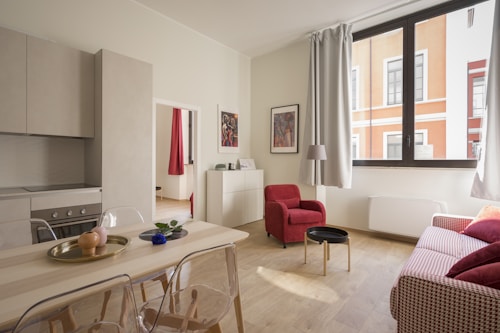
The university operates the Mejiro Dormitory, located within walking distance or a short commute from the campus. The dormitory provides a safe, community-oriented living space where international and Japanese students live together, promoting cultural exchange. For those preferring private apartments, the university provides guarantor services through partner agencies.
Academic Support & Language Learning
To help students keep up with lectures conducted in Japanese, JWU offers specialized Japanese language courses and "Academic Japanese" tutorials. There is also a "Tutor System" where senior Japanese students are paired with international newcomers to help with study skills, report writing, and adjusting to Japanese campus culture. The "Global Lounge" on campus acts as a social space where students can practice languages and participate in seasonal cultural events like the Tea Ceremony or Kimono workshops.
💰 Tuition & Fees
As a private institution, the costs at JWU are higher than at national universities but are competitive with other top-tier private universities in Tokyo. Below is a breakdown of the estimated costs for the first year of undergraduate studies (amounts are in Japanese Yen):
- Admission Fee: Approximately 200,000 JPY (Paid once upon entry).
- Yearly Tuition: Ranges from 750,000 JPY to 1,100,000 JPY depending on the faculty. The Faculty of Science generally has higher tuition due to lab fees, while Humanities is on the lower end.
- Facilities & Lab Fees: Approximately 200,000 to 350,000 JPY annually.
- Estimated Total for Year 1: Between 1,200,000 and 1,600,000 JPY.
It is important to note that JWU has a robust tuition reduction system. Most international students on a student visa can apply for a tuition waiver/reduction, which can lower the annual tuition burden by 30%. When combined with internal scholarships, the financial path becomes much more manageable.
Regarding living expenses, students should budget approximately 120,000 to 150,000 JPY per month for rent, food, and miscellaneous costs in Tokyo. The university’s location in Bunkyo-ku is convenient because it is surrounded by affordable student housing and local supermarkets, which can help keep daily expenses under control.
🚀 Career & Employment Prospects
One of the strongest selling points of Japan Women's University is its extraordinary employment rate, which consistently exceeds 98-99%. The university has a dedicated Career Support Office that focuses specifically on the challenges women face in the Japanese labor market. For international students, this includes support for job hunting in Japan, such as resume (shokurekisho) workshops, mock interviews, and specialized seminars on Japanese business etiquette.
Top-tier companies in finance, aviation, manufacturing, and technology actively recruit from JWU. The university's strong alumni network (the 'Sakuramukai') provides students with invaluable connections to mentors who are already successful in their fields. International graduates often find success in Japanese companies looking to expand globally or in foreign multinational firms operating in Tokyo. For those wishing to continue their studies, JWU's graduate schools provide a seamless path into advanced research and academia.
Related study abroad guides
Was this page helpful?
Your feedback helps us improve our guides
Nearby housing


Related guides
 Budget
Save with Japanese Budgeting Apps: Money Forward ME vs Zaim for Students
 Housing
Find Apartments in Japan: Complete SUUMO, Homes, Apaman Shop Guide
Housing
Student Housing in Japan: Dorms vs Share Houses vs Apartments 2026
Budget