Kyoto Prefectural University of Medicine
465 Kajii-cho, Kawaramachi-Hirokoji, Kamigyo-ku, Kyoto 602-8566, Japan
🏫 University Overview
Founded in 1872, Kyoto Prefectural University of Medicine (KPUM), known in Japanese as Kyoto Furitsu Ika Daigaku, stands as one of the oldest and most respected medical institutions in Japan. For over 150 years, it has remained at the forefront of medical education, clinical practice, and advanced research. Unlike larger comprehensive universities, KPUM is a specialized medical university, which allows for an incredibly high concentration of resources, expertise, and focus on health sciences.
The university's history began in the early Meiji era, established to bring modern Western medicine to Kyoto. Since its inception, it has evolved into a powerhouse that produces top-tier physicians, researchers, and nurses. For an international student, KPUM offers a unique environment where tradition meets cutting-edge technology. The university is situated in the heart of Kyoto, the cultural capital of Japan, providing an atmosphere of intellectual rigor surrounded by historical beauty.
🎓 Academic Excellence & Specialized Faculties
KPUM is divided into two primary undergraduate schools and a robust graduate school system:
1. School of Medicine
This is the flagship program of the university. The curriculum is a rigorous six-year program designed to mold students into expert clinicians and researchers. The early years focus on the liberal arts and basic sciences, transitioning into specialized medical subjects such as anatomy, physiology, and pharmacology. The latter half of the program is dedicated to clinical clerkships at the University Hospital, where students observe and participate in real-world medical scenarios under the guidance of world-class professors.
2. School of Nursing
The School of Nursing at KPUM is highly regarded for its emphasis on humanistic care combined with scientific proficiency. The program prepares students not only to pass the national nursing examination but to become leaders in the healthcare field, capable of handling the complexities of modern medical environments.
3. Graduate School of Medical Science
For international students, the Graduate School is often the primary point of entry. It offers Master's and Doctoral programs in a wide array of specialized fields, including Molecular Medicine, Genomic Research, and Public Health. The graduate school is known for its high publication output in international medical journals and its collaborative atmosphere.
🧪 Research Powerhouse and Clinical Facilities
Research is the lifeblood of KPUM. The university hosts several state-of-the-art research centers that focus on the most pressing health issues of the 21st century. Key areas of strength include:
- Oncology: The university hospital is a leader in cancer treatment and research, focusing on innovative surgical techniques and molecularly targeted therapies.
- Cardiovascular Medicine: KPUM has a long history of breakthroughs in heart disease treatment and regenerative medicine.
- Neuroscience: Researching the complexities of the brain and developing treatments for neurodegenerative diseases like Alzheimer's and Parkinson's.
The University Hospital, located on the Kawaramachi Campus, is a designated advanced treatment hospital. With nearly 1,000 beds and the most advanced diagnostic equipment in the region, it serves as a critical medical hub for the Kyoto prefecture. For students, this means unparalleled access to clinical cases and hands-on training that is rare in smaller institutions.
🌍 Admissions Guide for International Students
Applying to KPUM as an international student is a challenging but rewarding process. Because it is a specialized medical school, the standards are exceptionally high.
Undergraduate Admission
International applicants for the School of Medicine must typically take the Examination for Japanese University Admission for International Students (EJU). High scores in Japanese as a Foreign Language, Chemistry, Biology, and Physics are essential. Additionally, applicants must sit for the university's own entrance exam, which includes science tests, an essay, and a rigorous interview conducted in Japanese. Proficiency in Japanese (JLPT N1 level) is practically mandatory for success in the medical curriculum.
Graduate Admission
For Master’s and Ph.D. programs, the process is slightly more flexible. Candidates must find a potential supervisor in their field of interest before applying. Admission is based on previous academic performance, a research proposal, and an entrance examination (which can sometimes be conducted in English depending on the lab). International students often enter through the MEXT Scholarship program or as self-funded researchers.
💰 Tuition and Financial Support
As a prefectural (public) university, KPUM offers a significantly lower tuition rate compared to private medical universities in Japan, which can cost millions of yen per year.
- Admission Fee: Approximately 282,000 JPY for residents of Kyoto Prefecture and 423,000 JPY for those from outside the prefecture (including international students).
- Yearly Tuition: Standardized at approximately 535,800 JPY.
Various scholarships are available for international students, including the Monbukagakusho (MEXT) Scholarship, honors scholarships from JASSO, and private foundations. The university also offers tuition exemption programs (full or half) for students experiencing financial hardship who maintain excellent academic records.
🏮 Campus Life & The Kyoto Experience
Living and studying at KPUM means being immersed in the unique culture of Kyoto. The campus is located near the Kyoto Imperial Palace (Kyoto Gyoen) and the Kamo River, offering a serene environment for study and reflection.
Student Life
Despite the heavy academic workload, students at KPUM are active in various clubs (bukatsu). From medical research clubs to traditional arts like Kendo or Tea Ceremony, these organizations are the heart of student social life. For international students, joining a club is the fastest way to integrate into the Japanese student body and improve language skills.
Housing
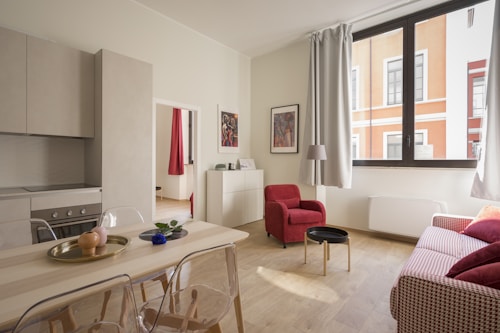
While KPUM does not have a large on-campus dormitory for all students, there are specific residences for international researchers and students. Most students live in private apartments near the Kawaramachi or Hirokoji campuses. Kyoto is a very student-friendly city with a wide range of affordable housing and excellent public transportation.
🚀 Career Prospects and Medical Licensing
Graduating from KPUM opens doors to the highest levels of the Japanese medical system. However, international students must be aware of the licensing requirements:
- National Medical Practitioners Qualifying Examination: To practice medicine in Japan, you must pass this national exam, which is conducted entirely in Japanese. KPUM has a consistently high pass rate, often exceeding the national average.
- Language Proficiency: A near-native level of Japanese (JLPT N1) is required to interact with patients and pass the licensing exams.
- Global Careers: Many graduate students return to their home countries or move to the US/Europe to pursue careers in medical research or academia, leveraging the prestige of a KPUM degree.
💡 Why Choose KPUM?
Choosing Kyoto Prefectural University of Medicine is a commitment to excellence. It is ideal for students who are:
- Deeply committed to medical science: The focus is narrow and deep; this is not a place for generalists but for future specialists.
- Respectful of tradition: You will be studying in an institution that has seen the birth of modern Japan.
- Ambitious: You will be surrounded by some of the brightest minds in the country, pushing you to your intellectual limits.
In conclusion, KPUM offers a world-class medical education in one of the most beautiful cities on Earth. For the dedicated international student, it provides the tools, the network, and the prestige to make a significant impact on the global healthcare stage.
Related study abroad guides
Was this page helpful?
Your feedback helps us improve our guides
Nearby housing


Related guides
 Budget
Save with Japanese Budgeting Apps: Money Forward ME vs Zaim for Students
 Housing
Find Apartments in Japan: Complete SUUMO, Homes, Apaman Shop Guide
Housing
Student Housing in Japan: Dorms vs Share Houses vs Apartments 2026
Budget