Tsuda University
2-1-1 Tsuda-machi, Kodaira-shi, Tokyo 187-8577, Japan
🏫 University Overview
Tsuda University (津田塾大学) stands as one of the most prestigious and historic private women's universities in Japan. Founded in 1900 by Umeko Tsuda, a pioneer in women's education who was part of the Iwakura Mission at a young age, the institution was originally established as the 'Women's Institute for English Studies' (Joshi Eigaku Juku). For over 120 years, Tsuda University has maintained its commitment to providing a high-level liberal arts education that empowers women to be independent and contribute to global society. In Japan, the university is often referred to as 'The Harvard of Women's Universities' due to its rigorous academic standards and the high social status of its graduates.
The university's philosophy is rooted in the 'Tsuda Spirit,' which emphasizes the development of 'all-round women'—individuals who possess not only specialized knowledge but also broad perspectives and critical thinking skills. This is reflected in the university's motto, 'Make a Difference,' encouraging students to use their education to effect positive change in the world. As of 2024, the university operates two campuses: the main Kodaira Campus in suburban Tokyo, characterized by its lush greenery and historic architecture, and the Sendagaya Campus in the heart of Tokyo, which houses the modern Faculty of Policy Studies. For international students, Tsuda offers a unique environment where they can immerse themselves in Japanese academic culture while benefiting from an exceptionally high teacher-to-student ratio and a supportive, close-knit community.
🎓 Faculties & Departments
Tsuda University is organized into two primary undergraduate faculties, each offering distinct pathways for international students. The curriculum is designed to be challenging, with a heavy emphasis on language proficiency and interdisciplinary research.
1. Faculty of Liberal Arts (Kodaira Campus)
This is the historical core of the university. It is divided into several prestigious departments:
- Department of English: Renowned nationwide for its intensity. Students do not just learn the language; they dive into English linguistics, literature, and cultural studies. For international students, this provides a platform to master both Japanese and English at a professional level.
- Department of International and Cultural Studies: This department focuses on global issues, including international relations, sociology, and anthropology. It is highly popular among students interested in NGOs, international organizations, and diplomatic careers.
- Department of Mathematics: Tsuda has a long-standing tradition of women in STEM. The mathematics program is rigorous and prepares students for research or roles in data analysis and education.
- Department of Computer Science: Focusing on the intersection of technology and society, this department teaches programming, AI, and information systems, promoting women's participation in the tech industry.
2. Faculty of Policy Studies (Sendagaya Campus)
Established in 2017, this faculty is located near the National Stadium in Tokyo. It aims to cultivate leaders who can solve complex social issues through data-driven policy making. The curriculum integrates social sciences (law, economics, politics) with data science. International students here often focus on issues such as migration, urban planning, and international cooperation, benefiting from the campus's proximity to government offices and corporate headquarters.
🌍 International Student Support
Tsuda University offers a comprehensive support system designed to help international students navigate the challenges of living and studying in Japan. Since the student body is relatively small, the support is highly personalized.
Admissions and Entrance Exams
International applicants typically undergo a 'Special Entrance Examination for International Students.' This process generally requires the Examination for Japanese University Admission for International Students (EJU). Proficiency in Japanese is critical, as most undergraduate lectures are conducted in Japanese. Applicants are usually required to submit scores for Japanese as a Foreign Language, and depending on the faculty, Mathematics or Japan and the World. A rigorous interview and an on-campus essay exam are also standard parts of the evaluation, focusing on the applicant's logical thinking and motivation.
Scholarships and Financial Aid
Tsuda offers several internal scholarships specifically for international students, such as the 'Tsuda University Scholarship for International Students' and the 'Umeko Tsuda Memorial Scholarship.' These are merit-based and can significantly offset tuition costs. Additionally, the university assists students in applying for the Japanese Government (MEXT) scholarship and the JASSO Honors Scholarship. The International Center provides timely information on various private foundation grants available to foreign residents.
Housing and Campus Life
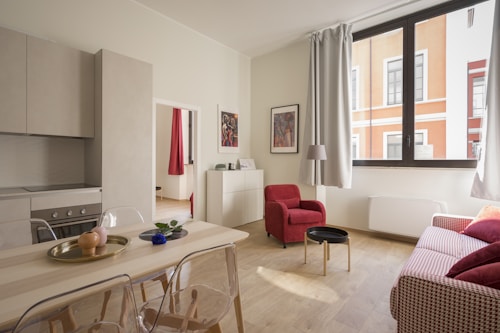
The university provides dedicated housing options. The 'Ume House' and other dormitories offer a safe and affordable living environment where international students live alongside Japanese students, fostering cross-cultural friendships. For those seeking private apartments, the university provides guidance and resources to find suitable housing in the Kodaira or Sendagaya areas.
The International Center and L-café
The International Center is the primary hub for administrative and emotional support. They organize orientations, cultural exchange events, and field trips. A unique feature is the 'L-café,' a space dedicated to language exchange and international interaction. Here, students can practice their Japanese in a relaxed setting while helping Japanese students with their native languages.
💰 Tuition & Fees
Investing in a Tsuda education is comparable to other top-tier private universities in Tokyo. While the costs are significant, the university's reputation often leads to a high return on investment in terms of career opportunities.
Breakdown of Costs (Approximate)
- Admission Fee: 200,000 JPY (Paid only in the first year).
- Annual Tuition: Approximately 800,000 to 900,000 JPY.
- Facilities and Laboratory Fees: Roughly 250,000 to 300,000 JPY depending on the department (STEM fields usually have higher laboratory fees).
- Total First-Year Cost: Roughly 1,350,000 to 1,450,000 JPY.
Living Expenses
Students should budget approximately 120,000 to 150,000 JPY per month for living expenses in Tokyo, including rent, food, and transportation. Tsuda’s Kodaira campus is located in a residential area where the cost of living is slightly lower than in central Tokyo, making it a more budget-friendly option for many. The university also permits students to engage in part-time work (up to 28 hours per week with a permit) to help cover their expenses, and the career center often provides information on appropriate part-time opportunities.
Career Prospects
One of Tsuda's greatest strengths is its career support. The university boasts one of the highest employment rates for women in Japan. The 'Tsuda-kai' (Alumnae Association) is a powerful network of successful women in various fields, from government and media to finance and technology. International students are fully integrated into this network, receiving specialized guidance on job hunting in Japan, including resume workshops and mock interviews. Graduates are highly sought after by major Japanese corporations and multinational firms who value the discipline and language skills that a Tsuda education instills.
Related study abroad guides
Was this page helpful?
Your feedback helps us improve our guides
Nearby housing


Related guides
 Budget
Save with Japanese Budgeting Apps: Money Forward ME vs Zaim for Students
 Housing
Find Apartments in Japan: Complete SUUMO, Homes, Apaman Shop Guide
Housing
Student Housing in Japan: Dorms vs Share Houses vs Apartments 2026
Budget