Saitama International Academy
埼玉県熊谷市桜木町2-101
🏫 School Overview & Philosophy
Saitama International Academy (埼玉国際学園), located in Kumagaya City, Saitama Prefecture, positions itself as a specialized institution primarily dedicated to the academic advancement (Shingaku) of its international student body. Established in the Kanto region, but outside the immediate high-density urban core of Tokyo, the academy offers a focused and structured learning environment conducive to intense preparation for higher education. Kumagaya, while known for its robust transport links—acting as a significant hub on the Joetsu and Hokuriku Shinkansen lines and the Takasaki Line—provides a lower cost of living and less distracting atmosphere compared to Tokyo, making it an ideal setting for students whose primary goal is academic success.
The school’s philosophical core is centered on transforming intermediate Japanese language ability into the rigorous academic Japanese proficiency required by competitive Japanese universities, both national and private. With a moderate capacity of approximately 240 students, the academy aims to maintain a manageable class size, ensuring that individualized attention remains a cornerstone of their educational delivery. This controlled environment is crucial for tailoring guidance, particularly for students embarking on complex applications for specialized fields. The strategic location in Kumagaya allows the school to leverage the resources and accessibility of the Kanto area while providing the tranquility necessary for focused study.
The institution places a paramount emphasis on competitive entrance examinations, highlighted by its explicit focus on the Examination for Japanese University Admission (EJU). This commitment transcends mere JLPT preparation; it requires specialized faculty who can instruct subject matter in Japanese (such as Mathematics, Physics, Chemistry, and specialized liberal arts topics) alongside general language instruction. The curriculum is meticulously designed not just to teach Japanese, but to utilize Japanese as the medium of instruction for future academic and professional pursuits. This dual approach ensures that students are not merely conversational but are equipped with the specialized terminology and analytical reading skills necessary to thrive in Japan's higher education system.
The school's comprehensive approach integrates practical living support with academic intensity. Recognizing that international students face significant challenges adapting to life in Japan, the provision of dedicated dormitory facilities (기숙사) addresses the immediate concern of secure and accessible housing. Furthermore, the commitment to providing robust scholarship opportunities (장학금) underscores the academy's dedication to supporting talented students regardless of their financial background, ensuring that high educational aspirations are attainable. The underlying mission is to serve as a high-efficiency springboard, launching students into successful undergraduate and graduate careers across Japan.
📚 Courses, Curriculum & Teaching Style
The curriculum at Saitama International Academy is highly diversified, reflecting a modern approach to language education that acknowledges the varied academic goals of its international cohorts. While the core foundation involves intensive preparation for standardized tests like the JLPT (levels N3 through N1), the true differentiating factor lies in its multi-track specialization, explicitly targeting Science (STEM, 이과), Art/Design (미술, 디자인), and general Humanities/Business advancement.
Upon entry, students are typically placed into courses based on their initial proficiency assessment and their long-term academic goals. The standard progression involves mandatory general Japanese classes covering reading comprehension, writing (essay and report structure), listening, and grammar. However, for those targeting university advancement, the curriculum swiftly bifurcates into advanced tracks:
1. EJU and Science Track (STEM Focus): This track is indispensable for students aiming for Engineering, Natural Sciences, or Medicine. Saitama International Academy provides dedicated subject instruction for the EJU Science modules, including Japanese Mathematics (Course 1 or 2), Physics, Chemistry, and Biology. Crucially, these classes are often taught by instructors with experience in high school or preparatory school subject teaching, ensuring that the content mirrors the standard required for competitive university entrance. This specialization is rare and highly valuable, simplifying the complex task of preparing for subject exams alongside demanding language study.
2. Art and Design Track: Catering to the increasing number of international students pursuing creative fields, this specialized track focuses on the distinct vocabulary, conceptual language, and portfolio preparation required by Japanese art universities (such as Tama Art University or Musashino Art University). Instruction involves integrating Japanese language practice with critiques of artistic work, preparing students for the interview and presentation components that are critical in art school applications. The curriculum also addresses the nuanced cultural and aesthetic concepts inherent in Japanese art history and contemporary design.
3. Business and Conversation Track: For students intending to pursue vocational schools, general humanities degrees, or direct employment, the curriculum incorporates practical Japanese communication (회화) and business Japanese (비즈니스). This track emphasizes keigo (honorific language), workplace etiquette, business writing, and practical scenarios necessary for navigating the Japanese professional environment. The goal here is immediate application and professional readiness, shifting the focus from purely academic theory to practical, high-level interaction.
Teaching methodology utilizes a balanced approach, combining structured lectures with interactive, student-centered activities. Emphasis is placed on output and practical application, ensuring students can effectively utilize complex grammatical structures in real-world scenarios, academic writing, and competitive examinations. The teaching staff is expected to possess expertise not only in Japanese language instruction but also in the specific requirements and scoring mechanisms of the EJU and various university entrance procedures. The availability of short-term courses (단기) further demonstrates the school’s flexibility, catering to those seeking intensive language boosts or immersion experiences before committing to a long-term visa program.
🌍 Student Body & Campus Life
With a capacity of 240, Saitama International Academy fosters a close-knit and supportive student environment, differentiating itself from the massive language schools found in central Tokyo. This manageable size facilitates stronger interpersonal relationships among students from diverse geographical backgrounds, typically including cohorts from China, Korea, Vietnam, Nepal, and other regions across Asia. The shared experience of preparing intensely for higher education creates a highly motivated atmosphere where academic success is the central focus.
Campus life in Kumagaya offers a distinct advantage: the cost of living is noticeably lower than in metropolitan Tokyo, allowing students' scholarship funds or savings to stretch further. Furthermore, while maintaining excellent transport links (Kumagaya Station is a major hub), the relative quietness of the city compared to Shinjuku or Shibuya provides an ideal backdrop for deep concentration and study. Students can access various part-time job opportunities, though the volume might be slightly less than in Tokyo, the competitive pressure is also reduced.
The academy actively supports the integration of international students into Japanese society. Beyond the classroom, campus life includes essential cultural orientation sessions designed to mitigate culture shock, covering everything from municipal registration processes and healthcare to local customs and social norms. The school likely organizes various seasonal events, cultural field trips, and speech contests. These activities are critical for allowing students to practice their Japanese in authentic, low-stakes settings, developing confidence alongside linguistic skills. The focus remains heavily academic, meaning extracurricular activities often align with academic development, such as university campus visits, mock entrance exam sessions, and group study sessions facilitated by the school.
Student governance, where applicable, allows students to provide feedback and participate in minor organizational roles, enhancing their sense of belonging and responsibility. Crucially, the smaller community size ensures that student welfare and academic progress are more closely monitored by dedicated staff, providing an essential safety net for those navigating the complexities of studying abroad for the first time.
🎓 University & Career Pathways
Saitama International Academy’s primary metric for success is its students' placement into prestigious Japanese universities. The school's structured guidance system is specifically designed to maximize students' EJU scores and navigate the competitive application landscape, particularly within the specialized tracks of Science and Art.
Strategic Advancement Guidance: The core of the school's pathway support involves detailed, one-on-one academic counseling that starts early in the student’s tenure. Counselors assist students in defining realistic academic goals based on their current Japanese level, EJU potential, and financial capabilities. This guidance is critical for selecting the appropriate preparatory courses and determining which universities align best with their specific specialization (e.g., highly technical engineering programs versus humanities).
EJU & Subject Preparation: For students aiming for national or highly selective private universities, successful EJU performance is paramount. The academy's explicit inclusion of STEM subject classes (Mathematics, Physics, Chemistry) provides the crucial foundation that many language schools lack. Guidance counselors track performance in these subjects closely, advising on supplementary study and external tutoring if necessary. Mock EJU examinations are regularly administered under test conditions, simulating the actual examination environment to build resilience and test-taking strategy.
Specialized Application Support: Applying to Japanese universities is often a multi-stage process involving written applications, required essays, internal examinations, and interviews. The academy provides intensive preparation for the interview stage, which is often conducted entirely in Japanese. This includes rigorous mock interviews tailored to the specific demands of the intended major—whether it involves defending a technical hypothesis for a science program or articulating an artistic vision for a design school. For Art and Design students, portfolio submission guidance and critique sessions are mandatory, ensuring their work meets the exacting standards of Japanese art institutions.
Career and Vocational Pathways: While university advancement is the focus, the business track ensures support for students pursuing vocational training or immediate employment. This includes workshops on Japanese corporate culture, resume/CV writing (Rirekisho), and preparation for professional certifications. The school helps connect students with local or regional job opportunities appropriate for international students, emphasizing the long-term goal of professional establishment in Japan.
🏡 Accommodation & Living Support
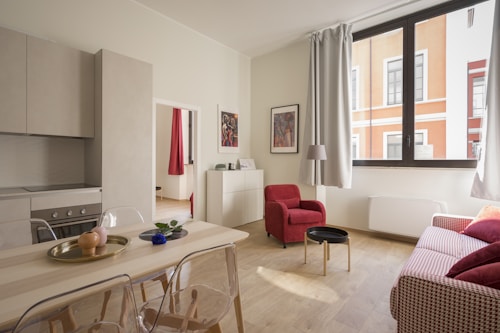
The provision of housing is a significant benefit offered by Saitama International Academy, addressing one of the most stressful aspects of studying abroad. The feature listing specifically confirms the availability of a dormitory (기숙사), which guarantees students immediate, safe, and often affordable housing upon arrival.
Dormitory Benefits: Located either on campus or nearby, the dormitory eliminates the initial hurdles of finding an apartment, dealing with complex real estate contracts (which often require guarantors and involve expensive initial key money payments), and purchasing essential furnishings. Dormitory life also fosters a sense of community, allowing new students to rely on peers and school staff for guidance during their transition. Accommodation typically includes single or shared rooms, with common areas for cooking, studying, and socializing.
Comprehensive Logistical Support: The academy’s support services extend well beyond housing. Upon arrival, staff assist students with mandatory administrative procedures, including:
- Immigration and Residency: Registration at the local municipal office (shiyakusho) to obtain the necessary resident card and permission for part-time work.
- Healthcare and Insurance: Guidance on enrolling in the National Health Insurance system, which is compulsory for all residents.
- Banking: Assistance with opening a local bank account, essential for managing tuition, living expenses, and part-time wages.
- Part-Time Employment: Counseling on securing permissible part-time work (up to 28 hours per week during term time). While Kumagaya may have fewer high-volume jobs than Tokyo, the school assists in navigating local opportunities that fit students' schedules and language abilities.
Living in Kumagaya, while outside the hyper-convenience of central Tokyo, offers excellent access to shopping, amenities, and recreational facilities without the premium price tag. The school's proximity to Kumagaya Station ensures that metropolitan Tokyo is easily accessible for university visits, specialized shopping, or cultural excursions, providing the perfect balance between focused study and regional connectivity.
💰 Tuition, Fees & Scholarships
Saitama International Academy offers competitive tuition pricing for a Kanto-region preparatory school, especially considering the specialized EJU and subject-specific instruction provided. The pricing structure is based on the duration of the course, providing flexible entry points throughout the year.
Detailed Course Fees (Approximate Total for Duration)
| Course Length | Admission Month | Duration (Years & Months) | Total Estimated Tuition & Fees (JPY) |
|---|---|---|---|
| Two-Year Course | April | 2 years (24 months) | ¥1,550,000 |
| Long Course A | July | 1 year 9 months (21 months) | ¥1,372,500 |
| Long Course B | October | 1 year 6 months (18 months) | ¥1,195,000 |
| Long Course C | January | 1 year 3 months (15 months) | ¥1,012,500 |
Note: These figures represent the total estimated fees for the entire duration of the course, often including initial application fees, enrollment fees, tuition, and facility fees. Exact annual breakdown should be confirmed with the school, but this total provides a reliable estimate for budgeting.
Cost Analysis: At ¥1,550,000 for a two-year program, the monthly cost averages approximately ¥64,583. This competitive pricing, combined with the lower living expenses associated with studying in Kumagaya rather than Tokyo, makes the academy a financially pragmatic choice for students committed to higher education advancement.
Scholarship Opportunities (장학금): The explicit inclusion of 'Scholarship' as a key feature confirms the school's commitment to financial assistance. Common scholarship opportunities available to students at Saitama International Academy include:
- MEXT Honors Scholarship for Privately Financed International Students: This highly desirable scholarship, provided by the Japanese government, offers a monthly stipend to students who demonstrate excellent attendance and academic performance.
- Institutional Scholarships: The school itself likely offers merit-based or attendance-based awards, often providing partial tuition remission or small stipends to motivate high-achieving students.
- Local/Private Foundation Scholarships: Located in Saitama, the school is well-positioned to access scholarships funded by local foundations or private companies supporting international education in the region.
Students are rigorously evaluated for these opportunities based on factors such as attendance rate (typically requiring 90% or higher), JLPT/EJU scores, and classroom demeanor. The scholarship support system is crucial for enabling continuous study, particularly for students transitioning into demanding, specialized EJU courses.
Related study abroad guides
Was this page helpful?
Your feedback helps us improve our guides
Related guides
 Budget
Build Your PC in Akihabara: Tsukumo, Dospara, Ark - Student Guide 2026
Budget
Save with Japanese Budgeting Apps: Money Forward ME vs Zaim for Students
 Visa
Visa
My COE was Denied: What to Do Next? A Comprehensive Guide to Re-application
 Housing