Shinsekai Japanese Language School
東京都新宿区百人町2-7-9 STKビル2F
🏫 School Overview & Philosophy
Choosing the right Japanese language school is one of the most critical decisions you will make on your journey to living, studying, or working in Japan. Nestled in the heart of Tokyo’s most energetic and internationally diverse ward, Shinsekai Japanese Language School (新世界語学院) offers an intimate, highly focused, and supportive launchpad for your academic dreams. Located in Hyakunincho, Shinjuku-ku, the school sits at a strategic geographic crossroads, providing unparalleled urban convenience alongside a structured, rigorous educational environment.
Unlike massive, factory-like language academies where students can easily feel like just another number, Shinsekai operates with a highly focused student capacity of 180. This deliberate, boutique scale ensures that the school maintains an exceptionally close-knit atmosphere. Here, the philosophy is simple: academic excellence is achieved through highly personalized attention, rigorous discipline, and proactive daily support. The school specializes in bridging the gap between foreign educational backgrounds and the highly demanding expectations of Japanese higher education.
Shinsekai’s core mission revolves around three key pillars:
1. Intensive Academic Progression Focus: Every class is engineered to prepare students for the intellectual rigor of Japanese universities and graduate schools.
2. Specialized EJU Preparation: Rather than offering Japanese language study as a mere hobby, the curriculum heavily integrates systematic training for the Examination for Japanese University Admission (EJU).
3. Guaranteed Dormitory Accommodation Support: Recognizing that moving to Tokyo can be an administrative and financial hurdle, the school proactively eliminates housing stress for its students from day one.
For students who want to fast-track their language skills in a vibrant urban environment while receiving personalized academic coaching, Shinsekai Japanese Language School stands out as a premier boutique option.
📚 Courses, Curriculum & Teaching Style
At Shinsekai, time is treated as a premium resource. The curriculum is meticulously structured around specific intake months, allowing you to synchronize your language studies perfectly with the Japanese academic calendar (which traditionally begins in April). The school offers three core academic progression pathways, each designed to take students from their current proficiency level to advanced, university-ready fluency.
Available Courses and Fee Structure
| Course Name (English) | Course Name (Japanese) | Admission Month | Study Duration | Total Fees (JPY) |
|---|---|---|---|---|
| Academic 2-Year Course | 進学2年コース | April | 2 Years | 1,460,000 |
| Academic 1.9-Year Course | 進学1.9年コース | July | 1 Year 9 Months | 1,295,000 |
| Academic 1.6-Year Course | 進学1.6年コース | October | 1 Year 6 Months | 1,130,000 |
Note: Tuition fees are subject to change and should be verified during the final application process. The total fees include basic tuition, registration, and administrative costs for the full duration of the specified course.
Teaching Methodology & EJU Focus
Shinsekai’s curriculum does not just focus on conversational Japanese. From the intermediate level onward, the coursework pivots sharply toward academic literacy. This means you will spend significant time learning how to read academic papers, write structured essays (shorombun), and comprehend fast-paced university lectures.
For those targeting undergraduate programs, the school’s Specialized EJU Preparation is a core feature. The EJU is notoriously challenging, testing not only Japanese language proficiency but also subject-specific knowledge (such as mathematics, science, and Japan and the World). Shinsekai integrates targeted EJU prep into its daily learning tracks, offering simulated test runs, timing strategies, and intensive vocabulary drills.
Classrooms are highly interactive but demanding. Teachers employ a rigorous, systematic teaching style, ensuring that homework, kanji quizzes, and progress tests are a regular part of your weekly routine. If a student falls behind, teachers are quick to offer remedial guidance, ensuring nobody in this 180-capacity school is left in the dark.
🌏 Student Body & Campus Life
While precise demographic percentages and specific nationality breakdowns are not publicly disclosed by the school, Shinsekai's compact student capacity of 180 fosters a highly cooperative, international community. Because the student body is relatively small, you will find yourself interacting daily with classmates from various global backgrounds, sharing a common language: Japanese.
Living in Shinjuku-ku (Hyakunincho)
The school's location at 2-7-9 STK Building 2F, Hyakunincho, Shinjuku-ku places you in one of Tokyo’s most exciting neighborhoods. Hyakunincho is situated directly adjacent to Shin-Okubo and Okubo stations, famous for being Tokyo’s premier multicultural hub.
* The Neighborhood: Steps away from the school, you will find an incredible array of international supermarkets, affordable eateries, cozy study cafés, and bustling shops. The area is filled with energetic street life, making it virtually impossible to feel homesick.
* Commuting & Access: Being in Shinjuku means you have direct, lightning-fast access to the Yamanote Line, Chuo-Sobu Line, and major subway networks. You can easily travel to any corner of Tokyo within minutes, making both exploration and part-time commuting exceptionally convenient.
Guaranteed Dormitory Support
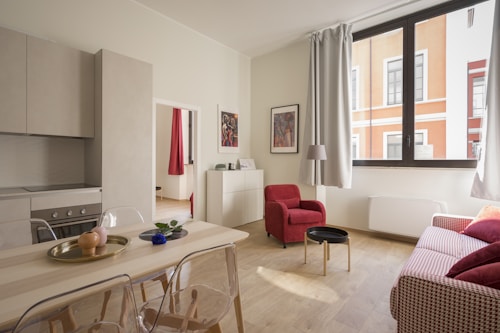
One of the biggest anxieties for international students is finding a place to live in Tokyo. Landlords in Japan frequently require Japanese guarantors, extensive upfront key money (reikin), and complex multi-year contracts. Shinsekai removes this massive obstacle by offering Guaranteed Dormitory Accommodation Support. The school partners with local housing providers and manages student residences to ensure that every incoming student has immediate access to safe, clean, and affordable housing. This guarantees you a soft landing in Tokyo, allowing you to focus on your studies from your very first week without worrying about lease negotiations.
🎓 University & Career Pathways
Shinsekai Japanese Language School is unapologetic about its academic focus. The institution is specifically designed for students who view Japanese language school not as a final destination, but as a crucial stepping stone toward higher education in Japan.
Systematic Progression Guidance
Navigating the admissions process for Japanese universities and graduate schools is incredibly complex. Unlike Western universities, which often rely primarily on standardized high school grades and statement letters, Japanese institutions almost always require independent entrance exams, specialized interviews, and research proposals.
To address this, Shinsekai provides comprehensive, step-by-step pathway guidance:
* University Selection: Counselors work individually with you to match your academic strengths, budget, and future career goals with the right public or private universities across Japan.
* Graduate School Prep: For students who already hold a bachelor's degree from their home country, teachers offer specialized coaching on how to write a compelling research proposal (kenkyu-keikakusho) and how to professionally contact prospective university professors.
* Mock Interviews: Culturally, Japanese university interviews require a high level of formal etiquette (keigo), precise body language, and articulate self-expression. Shinsekai conducts multiple rounds of realistic mock interviews to ensure you can present your ideas with confidence and polish.
While specific university acceptance lists are not published in their raw dataset, the school’s academic curriculum is engineered precisely to pave the way into reputable domestic higher education institutions.
💡 Practical Tips for Applicants
To make your transition to Shinsekai Japanese Language School as smooth as possible, keep these expert-level tips in mind:
- Choose Your Intake Month Strategically:
- If you are a beginner or lower-intermediate speaker, the April Intake (Academic 2-Year Course) is highly recommended. It gives you a full 24 months to master the language, pass the JLPT N1 or N2, and take multiple attempts at the EJU.
-
If you already possess an N3 or higher, the October Intake (1.6-Year Course) or July Intake (1.9-Year Course) can save you both time and money, allowing you to transition into higher education faster.
-
Start Your Visa Process 5 to 6 Months Early:
-
The Japanese Immigration Services Agency requires extensive documentation for the Certificate of Eligibility (COE). Start gathering your financial sponsor’s tax returns, bank statements, and proof of relationship as early as possible to avoid missing deadlines.
-
Prepare for the Cost of Tokyo Living:
-
While Shinsekai's tuition is highly competitive (ranging from 1,130,000 JPY to 1,460,000 JPY depending on duration), living in Shinjuku-ku requires careful budgeting. Secure your dormitory spot through the school’s guaranteed support early to locks in predictable, lower-cost housing compared to renting an independent private apartment in central Tokyo.
-
Balance Work and Study Rules:
-
With a student visa, you are legally permitted to work part-time up to 28 hours per week (and up to 40 hours during official school holidays). Shinjuku offers an abundance of part-time jobs in convenience stores, restaurants, and logistics. However, remember that your primary goal is academic progression; do not let late-night shifts interfere with your morning EJU and kanji preparation classes.
-
Learn Hiragana, Katakana, and Basic Grammar Before Arrival:
- Hit the ground running. Even if you are entering a beginner track, knowing basic kanji and daily vocabulary beforehand will help you settle into Shinjuku life much faster, allowing you to use your classroom hours for rapid progression rather than basic alphabet memorization.
Related study abroad guides
Was this page helpful?
Your feedback helps us improve our guides
Nearby housing


Related guides
 Budget
Save with Japanese Budgeting Apps: Money Forward ME vs Zaim for Students
 Housing
Find Apartments in Japan: Complete SUUMO, Homes, Apaman Shop Guide
Housing
Student Housing in Japan: Dorms vs Share Houses vs Apartments 2026
Budget